
The dishwasher is easily one of the hardest-working appliances in any modern kitchen, but it is also prone to accumulating trapped food particles, grease, and grime over time. When these organic materials break down in a warm, moist environment, they trigger nasty, persistent odors. Fortunately, cleaning experts outline an easy, cost-effective sanitizing method using just two simple pantry staples: distilled white vinegar and baking soda.
According to standard appliance maintenance recommendations, running these household items through separate cycles strips away greasy residue and neutralizes foul odors without damaging internal components. To ensure your appliance runs efficiently and smells fresh, follow this step-by-step deodorizing guide.
Step-by-Step Deodorizing Guide
Before applying any natural cleaning agents, you must prepare the appliance and clear out physical blockages. Here is how to thoroughly clean your unit from the inside out:
1. Clean the Drain Filter
No part of your dishwasher is more responsible for strange odors than the drain filter. Inspect the cylindrical filter located at the bottom of the tub. Pull it out and rinse away all trapped food particles, grease, and debris that could choke drainage. Use dish soap, warm water, and a bottle brush to scrub hard-to-reach sections.
2. Add White Vinegar
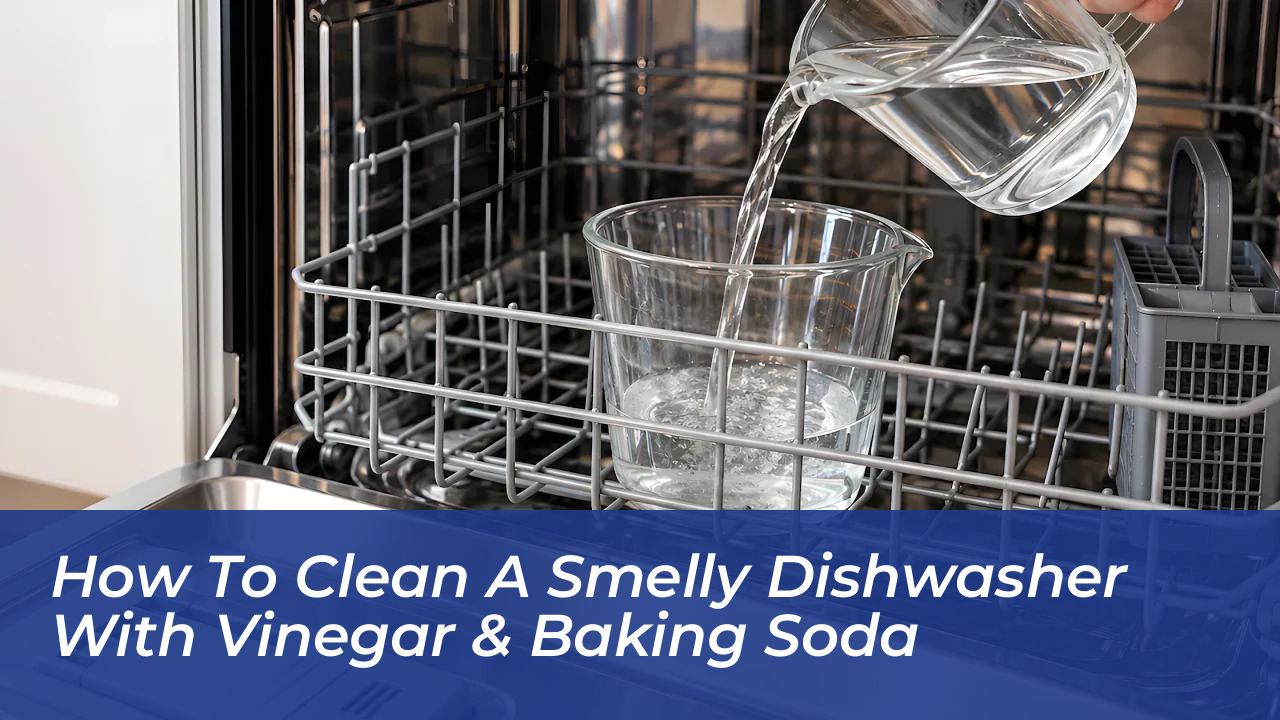
Measure two cups of distilled white vinegar and pour it into a dishwasher-safe glass bowl. Place the open container upright on the bottom rack of an otherwise empty dishwasher. The in the vinegar helps break down hard water scale, soap scum, and lingering grease.
3. Start an Empty Wash Cycle
Run a regular wash cycle on empty. Do not add any dish detergent, and make sure that the heated dry setting is turned completely off so it does not interfere with the cleaning process.
4. Add Baking Soda
When the vinegar cycle finishes, sprinkle one full cup of baking soda directly across the floor of the dishwasher tub. Baking soda acts as a powerful, organically approved odor neutralizer.
5. Run a Second Wash
Start a short cycle using hot water to clear out any remaining residue and completely freshen the drum. When this cycle concludes, your dishwasher should be sparkling clean and odor-free.
Crucial Rule: Never run vinegar and baking soda together at the same time. Because vinegar is acidic and baking soda is basic, they will simply neutralize each other on contact, completely destroying their cleaning power.
Why Do Bad Smells Appear in the Dishwasher?
Unpleasant smells generally stem from decomposing food residue and greasy buildup lodged in hidden areas like the drain filter, spray arms, and rubber door seals. Because these blockages rot quickly in warm, dark environments, clearing out the mechanical filter is always the mandatory first step before applying vinegar and baking soda.
Common culprits behind bad dishwasher odors include:
- Food Debris: Rice, pasta, fruit particles, and sauce residue trapped in the filter or spray arm holes.
- Mold and Mildew: Spores thriving in damp rubber door gaskets and tight corners.
- Grease Buildup: Oils from pots and pans coating the interior walls.
- Standing Water: Stagnant water caused by a clogged drain hose or improper plumbing installation.
Preventive Maintenance Tips
Once you have successfully deodorized your appliance, establishing a few healthy maintenance habits will prevent bad smells from returning:
- Scrape excess food particles off plates before loading them into the racks.
- Leave the dishwasher door slightly ajar after every cycle to let moisture evaporate and prevent mold growth.
- Wipe down the rubber door gasket and lower edges weekly with warm soapy water.
- Run a vinegar cleaning cycle once a month to keep mineral scale and grease under control.
Always check your appliance user manual before deep cleaning, as individual manufacturers may have specific guidelines or restrictions depending on your specific model.
Frequently Asked Questions
Can I use apple cider vinegar instead of white vinegar?
It is best to use distilled white vinegar. Apple cider vinegar has a much stronger residual scent and can leave behind organic compounds that may attract bugs or fail to cut through grease as cleanly.
What should I do if my dishwasher still smells after using vinegar and baking soda?
If the odor persists, the issue is likely outside the main tub. Check your garbage disposal connection, inspect the drain hose for kinks or blockages, and ensure your drain line features a proper high loop to prevent dirty sink water from flowing back into the appliance.
How often should I clean my dishwasher filter?
You should inspect and clean your dishwasher drain filter at least once a month, or every couple of weeks if you run multiple loads of dishes daily.
Is it safe to use bleach with baking soda?
No. Never mix bleach with vinegar, baking soda, or other cleaning chemicals, as dangerous chemical reactions and toxic fumes can result.
Why is there standing water at the bottom of my dishwasher?
A small puddle of clean water near the filter can be normal on certain models to keep seals moist, but deep standing water usually indicates a clog in the drain basket, filter, or household plumbing.