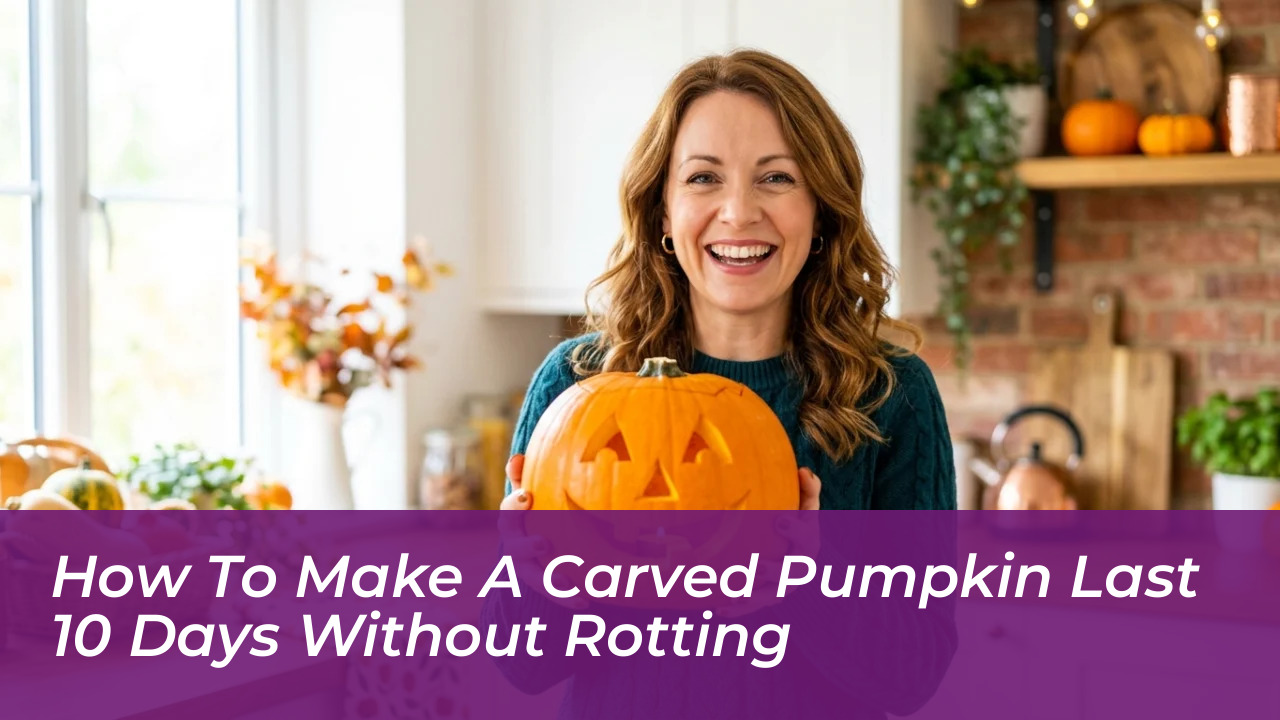

A standard carved pumpkin typically survives only five to ten days before mold and rot cause the shell to collapse. By disinfecting exposed surfaces and applying protective moisture barriers, you can prevent premature shriveling and keep your jack-o’-lantern firm all the way to Halloween night. The speed at which a gourd decays depends on moisture loss and microbial invasion.
When pumpkin flesh is cut open, bacteria and fungal spores quickly populate the exposed tissue while natural water content evaporates rapidly. Halting this process requires strategic preparation before the first cut and targeted maintenance once the design is finished.
Choose the Right Specimen and Prep the Rind
Longevity begins at the patch or grocery store. A gourd that already carries soft spots or hidden bruises will decay within days. Selecting a firm, undamaged pumpkin ensures the biological integrity remains intact prior to carving. Washing the exterior before carving is essential to prevent driving surface pathogens directly into the flesh with your blade.
“Choose firm, undamaged pumpkins to start with.” – Mary Jane Duford, certified master gardener at Home for the Harvest
Scrubbing the rind thoroughly with mild soap and water removes field dirt and latent mold spores. After cleaning the rind, interior surfaces also need attention immediately after scooping out the pulp.
Disinfect to Halt Rapid Bacterial Growth
Common household myths suggest that simply drying out a pumpkin will preserve it, but unchecked microbes thrive on ambient humidity and cause the walls to soften. Decontaminating freshly exposed surfaces kills these destructive organisms on contact. A 10-minute soak in a diluted disinfectant bath acts as the first line of defense. Gardeners recommend using either 3% hydrogen peroxide or a precise mix of one tablespoon of household bleach per gallon of water.
“It kills mold and bacteria on the cut surfaces, which are what make pumpkins collapse fastest.” – Chris Link, garden expert at Plant Addicts
If full submersion is impractical due to the size of the gourd, thoroughly misting all interior cavities and sliced details with a bleach-and-water solution provides substantial antimicrobial protection.
Lock in Moisture: Oils, Sealants, and Protectants
Once the pumpkin dries completely after sanitizing, exposed edges must be shielded against dehydration. Without a protective seal, the open plant tissue loses water rapidly, creating the puckered, shriveled look typical of aging jack-o’-lanterns.
- Petroleum jelly or vegetable oil: Apply a thin coat directly along cut edges using a paper towel or brush to slow moisture evaporation.
- Wilt Pruf: This organic protectant film-commonly utilized by florists on holiday greenery-keeps the gourd hydrated and forms a barrier against mold.
- Clear polyurethane spray: A light coating seals porous surfaces, though neither this spray nor commercial plant protectants are food-safe.
Preservation Methods Comparison
| Preservation Method | Primary Function |
|---|---|
| Mild soap wash | Removes exterior dirt and surface microbes before cutting |
| Dilute bleach or peroxide soak | Destroys mold and bacteria on raw cut edges |
| Petroleum jelly or oil coat | Creates a moisture barrier to prevent shriveling |
| Wilt Pruf or polyurethane spray | Forms an external protective film against drying and spores |
Manage Temperature, Sunlight, and Illumination
Display conditions dictate whether preservation efforts succeed. Direct sunlight heats the gourd and accelerates cellular breakdown, while freezing weather causes water inside the plant cells to expand, turning the walls mushy overnight. Position the pumpkin in a shaded area, such as a covered porch, away from intense midday sun. Move the gourd indoors into a cool room, or even the refrigerator, during hot daylight hours or whenever frost threatens.
Replace real wax candles with battery-operated LED tea lights or fairy lights. Flame heat cooks the flesh from within and rapidly accelerates decay.
Frequently Asked Questions
How long does a carved pumpkin typically last?
A standard carved pumpkin usually lasts between 5 to 10 days before mold and decomposition take over. Proper cleaning, bleaching, and moisturizing can stretch this lifespan to the 10-day mark.
Can I use bleach on a pumpkin if wildlife might eat it later?
No. Once treated with a bleach solution, the pumpkin should not be fed to wildlife, livestock, or added to compost where animals might forage.
Does petroleum jelly stop mold from growing?
Petroleum jelly does not kill mold or bacteria. Its primary purpose is to lock in moisture and prevent the cut edges from drying out and curling.
What is the best lighting to use inside a carved pumpkin?
Battery-operated LED candles or fairy lights are ideal because they do not emit heat, preventing the interior flesh from cooking and rotting prematurely.
Can you revive a shriveled pumpkin?
If your pumpkin is dehydrated and starting to wrinkle, you can submerge it face down in cold water overnight to rehydrate the plant tissues, provided mold has not already set in.