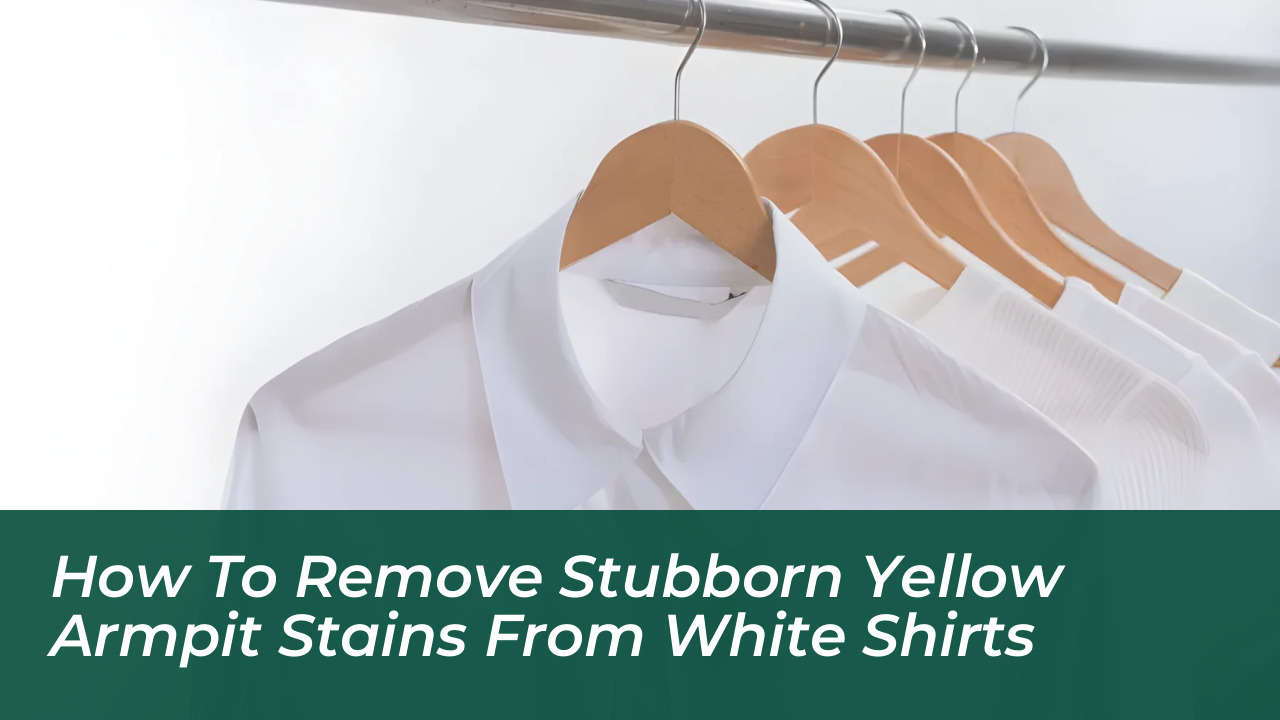
Stubborn yellow underarm stains on white shirts are not caused by perspiration alone. They result from a chemical reaction between sweat, natural body oils, and the aluminum commonly found in antiperspirants. Standard wash cycles rarely break down this bonded residue. This leaves unsightly marks on cotton, polyester, and blended fabrics. Fortunately, targeting the buildup with enzyme-based formulas or a concentrated paste of baking soda and 3% hydrogen peroxide lifts the discoloration and revives white garments.
Most people assume heavy sweating ruins clothing permanently. This leads many to prematurely throw away perfectly good shirts. In reality, the staining is an accumulated physical barrier woven into textile fibers. It requires specific chemical breakdown rather than stronger bleaching agents.
The Real Culprit Behind Underarm Discoloration
Underarm yellowing is an accumulation of trapped matter rather than simple fabric wear. Cleaning specialist Renata Cruz points out that these stubborn marks stem from a mix of dead skin cells, skincare formulas, perspiration, and residual detergent that fails to rinse away during regular cycles. Antiperspirants pose the greatest challenge due to their aluminum compounds.
Throughout the day, friction forces antiperspirant deep into the weave alongside natural skin oils, forming an insoluble crust. “When mixed with oils and sweat, the result is yellowing of the fabric,” notes Cruz. While commercial bleach is often the instinctive response for whitening garments, chlorine can chemically react with these protein-heavy sweat deposits. This permanently darkens the yellow tone instead of lifting it.
Step-by-Step Method to Remove Yellow Sweat Stains
This proven restoration routine works safely on white cotton, synthetic polyester, and cotton-poly blends without degrading the weave structure.
- Review the care label: Check garment tags to confirm the shirt is washable. Determine the maximum safe water temperature and acceptable cleaning solutions.
- Flush from the reverse: Turn the shirt inside out. Run lukewarm or cold water directly through the back of the stain. Pushing water from the reverse forces trapped residue out rather than deeper into the face of the fabric.
- Apply an enzyme pre-treatment: Coat the yellowed areas with an enzyme-rich liquid laundry detergent. Use a soft-bristled toothbrush to work the liquid gently into the fibers. Let it rest for 15 to 30 minutes.
- Apply an oxygen-baking soda paste for stubborn marks: Laundry expert Stacee Parker recommends mixing equal parts 3% hydrogen peroxide and baking soda into a thick paste for set-in discoloration. Spread the paste generously over both sides of the stain, rub it in gently, let it sit for one hour, and rinse thoroughly with cold water.
- Launder on the warmest permitted setting: Wash the garment according to label directions using the highest allowable water temperature to melt and flush freed residues.
- Inspect before drying: Check the underarm zones while the fabric remains damp. Heat from a tumble dryer permanently bakes remaining oils into the weave. Repeat the cleaning steps if any faint yellowing remains.
Stain Removal Treatments
Different levels of buildup require specific application methods for optimal results:
- Enzyme Detergent: Best for routine yellowing; sit time of 15 to 30 minutes.
- Peroxide & Baking Soda Paste: Best for set-in buildup; 1:1 paste ratio with a 1-hour sit time.
Preventing Armpit Stains Before They Form
Preventative fabric care keeps white apparel bright and prevents chemical crusts from taking hold in the underarm seam. Implementing consistent laundry and grooming habits drastically extends the lifespan of your wardrobe.
- Wash promptly: Launder white garments within one to two days of wear before body oils oxidize and set permanently.
- Allow deodorant to dry: Apply antiperspirant to clean, fully dry skin. Wait until the formula dries completely before putting on a shirt.
- Pre-treat high-contact zones: Spot-treat collars and armpit zones regularly before running standard cycles.
- Measure detergent accurately: Avoid overloading detergent. Excess soap fails to rinse cleanly and attracts airborne dirt and oils.
Does Laundry Detergent Expire? What You Need to Know
The age of your cleaning supplies also dictates how effectively they remove body residues. While laundry detergent does not spoil like perishable food, it degrades over time, alters in texture, and loses its enzyme potency when sitting on a shelf for extended periods. Check your laundry cupboard to ensure your cleaning supplies and stain fighters are fresh and active. Inspect your favorite white shirts before tossing them into the dryer, ensuring lingering stains are fully treated while damp.
Frequently Asked Questions
Can I use chlorine bleach on yellow armpit stains?
No. Chlorine bleach can chemically react with the aluminum and protein deposits in sweat and antiperspirant. This causes the yellow stain to turn a permanent, darker orange or rusty color.
Why does sweat turn yellow on white shirts?
Yellowing is caused by a chemical reaction between your natural body sweat, skin oils, dead skin cells, and the aluminum compounds found in most commercial antiperspirants.
Is it safe to use hydrogen peroxide on all fabrics?
3% hydrogen peroxide is generally safe for white cotton and durable polyester blends. However, it can have a mild bleaching effect on colored garments and should always be spot-tested first.
Can heat from a clothes dryer set armpit stains?
Yes. The high heat of a tumble dryer permanently bakes remaining oils, proteins, and residues into the fabric weave, making the discoloration nearly impossible to remove later.
How can I prevent future armpit stains on my shirts?
Switching to an aluminum-free deodorant, allowing your antiperspirant to dry completely before dressing, and washing garments promptly can stop yellow stains from forming.