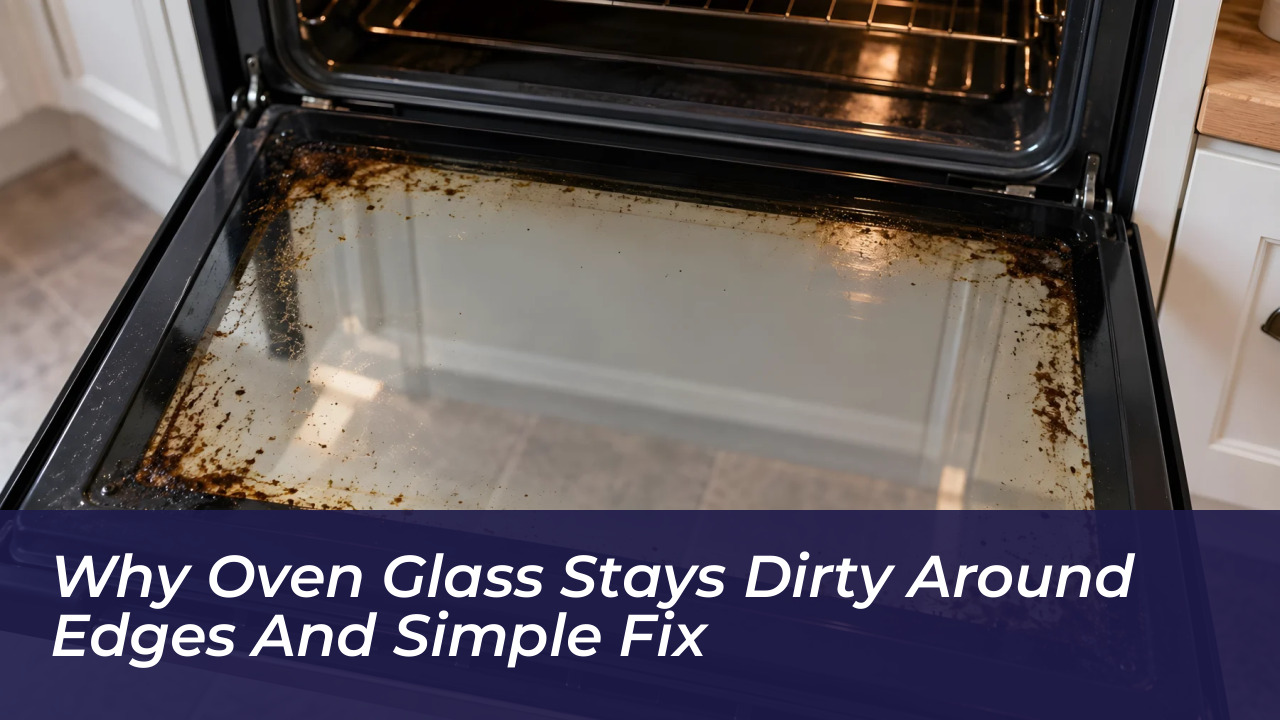
Dark discoloration lingering around oven door edges is not permanent damage; it is baked-on grease and vapor residue trapped along the frame where standard cleaning tools cannot reach. Wiping the broad middle pane leaves perimeter buildup untouched. A targeted paste of baking soda and water softens these baked deposits without scratching sensitive materials. During standard cooking cycles, airborne fat droplets and hot steam migrate toward the cooler perimeter of the door. As cooking heat repeats cycle after cycle, these peripheral deposits bake directly into the glass surface, hardening into a dark, stubborn halo that resists everyday spray detergents.
Due to high traffic on this story, please verify you are not a bot to instantly unlock the remaining content. Takes only 5 seconds!
Verify & Continue ReadingWhy Dark Rings Form Along Oven Door Frames
The primary barrier to a spotless appliance door is physical geometry. Oven doors feature metal retaining frames and heat-resistant rubber gaskets that create tight, recessed channels along the boundary of the transparent panel. Bulky household sponges compress across the flat glass center but bridge right over recessed edges. Grease settles deep into these perimeter junctures, accumulating layer upon layer. Over time, high operating temperatures transform soft cooking splatters into tough, carbonized residue that ordinary friction cannot dislodge.
A common mistake is applying aggressive force with steel wool or razor blades. This permanently damages tempered glass coatings and tears delicate perimeter seals. Many homeowners assume aggressive scraping is the only way to remove baked rings. In reality, abrasive pads and metal scrapers produce microscopic gouges on tempered glass and degrade rubber seals. This creates safety hazards and accelerates future grime accumulation.
How to Safely Remove Edge Residue Without Scratches
Restoring clarity requires chemical softening rather than mechanical force. A homemade mixture of equal parts baking soda and water creates an alkaline paste. This paste breaks down acidic grease molecules without gouging the glass surface.
| Door Area | Recommended Cleaning Technique |
|---|---|
| Center Glass Pane | Standard microfiber cloth with mild detergent |
| Perimeter Frame & Crevices | Baking soda paste applied with a thin, wrapped tool |
| Rubber Gaskets | Soft damp cloth without abrasive compounds |
| Removable Inner Glass | Manufacturer-guided disassembly and flat soaking |
Patience plays a vital role in dislodging hardened grease. Allowing the paste to sit undisturbed gives the solution time to penetrate the crust. This loosens the bond between the glass and the carbonized grease.
Step-by-Step Edge Cleaning Method
To safely clean oven glass along narrow borders, work only on a completely cold appliance to avoid thermal shock and product evaporation:
- Mix baking soda with small amounts of water until it forms a spreadable, non-runny paste.
- Apply the paste directly along the dark edge bands, avoiding direct saturation of the rubber gasket.
- Allow the mixture to sit for several minutes so the alkaline paste can penetrate stubborn residue.
- Wrap a thin microfiber cloth around a flat, blunt kitchen utensil to reach into tight corners without applying excessive pressure.
- Gently wipe away the softened grime using smooth, even strokes, repeating the process if thick residue remains.
- Wipe the area clean with a damp, fresh cloth to remove any powdery baking soda traces.
Proper appliance maintenance requires specialized care around seals and multi-pane doors.
Handling Multi-Pane Glass and Long-Term Prevention
Certain stubborn marks do not sit on the exterior or accessible interior face at all. Modern ovens frequently utilize double- or triple-pane construction designed to keep the outer glass cool during high-heat operation. Vapors can enter the internal air channels between these panes through perimeter vents. If dark stains remain visible after thorough surface cleaning, consult the official appliance user manual before attempting any disassembly. Many modern units feature release tabs that allow safe removal of internal glass panels. However, forcing components that are permanently sealed will void warranties and risk shattering the door.
Before using baking soda, vinegar, or commercial cleansers, verify manufacturer guidelines. Individual gasket materials and coated finishes react differently to common household agents.
The simplest way to prevent dark edge banding is regular maintenance. Wiping the perimeter seals with a damp microfiber towel once the oven cools prevents grease particles from baking into stubborn carbon rings during subsequent cooking sessions. Regular light cleanings eliminate the need for heavy scrubbing down the road. Check your appliance manual before detaching any internal glass panels.
Frequently Asked Questions
Why does oven grease collect mostly around the edges?
Airborne fat and hot steam migrate toward the cooler perimeter of the door during cooking cycles. Because standard sponges bridge over the recessed channels around the metal frame, grease accumulates and bakes into a hard carbon ring layer by layer.
Can I use a razor blade to scrape off edge grime?
Scraping with metal blades or steel wool is strongly discouraged. It creates microscopic gouges on tempered glass, ruins protective coatings, and can tear fragile rubber door gaskets.
Is baking soda safe for all oven glass types?
Yes. Baking soda is a mild, alkaline abrasive that is softer than tempered glass, making it completely safe for breaking down acidic grease without causing scratches.
What should I do if the stain is trapped between glass panes?
Internal stains inside double- or triple-pane doors require checking your appliance user manual. Many modern models feature release tabs for safe inner panel removal, whereas permanently sealed units should not be forced open.
How can I prevent dark edge rings from returning?
The best prevention method is wiping down the perimeter seals and glass edges with a damp microfiber cloth once the oven has fully cooled after every few cooking uses.