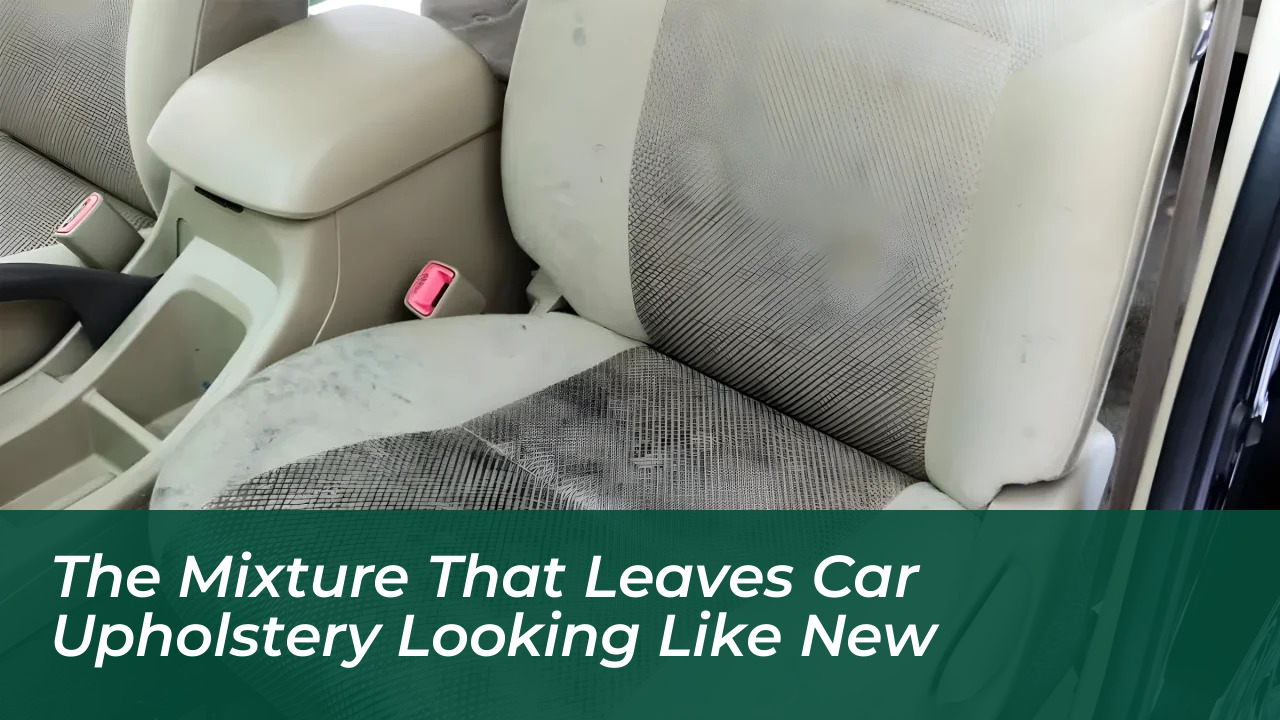

Keeping a vehicle’s interior clean is a daily challenge. Between spilled coffee, dust from road trips, and everyday wear, seats quickly lose their factory finish. A simple DIY mixture solves this problem completely. This household combo has become a massive trend among drivers because it is low-cost and highly effective. It brings car seats back to life quickly without requiring expensive professional detailing.
The Mixture That Makes Car Upholstery Look Brand New
Auto care specialists point out that you do not need complicated chemical formulas to achieve professional results. The secret lies in blending two pantry staples found in nearly every home: baking soda and white vinegar. Baking soda and vinegar solve this issue and many other household headaches.
Baking soda acts as a potent natural abrasive cleanser and a powerful odor neutralizer. White vinegar serves as a heavy-duty disinfectant that breaks down stubborn grime and set-in stains that traditional detergents fail to lift. Together, they create a safe, chemical-free option that revitalizes your car’s interior without damaging delicate fibers or harming the environment.
Step-by-Step Guide to Applying the Trick
Before jumping in, experts recommend prepping the area properly to protect the seat fabric and underlying foam cushion from saturation damage. Follow these step-by-step instructions to get the best results:
- Thorough vacuuming: This is the non-negotiable first step. Before applying any liquid, vacuum the seats thoroughly using upholstery attachments to lift all surface dust, pet hair, and loose debris from crevices and seams.
- Mix the solution: In a clean container, combine half a cup of white vinegar, one tablespoon of baking soda, and two cups of warm water. Expect an immediate fizzing reaction; this is completely normal and activates the cleaning power.
- Application: Lightly spray or mist the solution evenly over soiled or stained areas. Let it sit for a few moments so it can penetrate the grime without soaking the underlying foam.
- Scrub and dry: Work the area using a soft-bristled brush in gentle, circular motions without applying harsh pressure. Wipe away residue with a clean, damp microfiber cloth. Once the fabric air-dries completely, run the vacuum one last time to leave a crisp, spotless finish.
Quick Breakdown of the DIY Upholstery Solution
If you need a fast reference guide for your next vehicle cleaning session, keep these core takeaways in mind:
- Homemade formula: A balanced mix of white vinegar, baking soda, and warm water designed specifically for automotive fabrics.
- Main benefits: Cuts through stubborn grease, lifts set-in stains from coffee and food, and eliminates lingering interior odors naturally.
- Application process: Vacuum thoroughly first, mist the mixture, scrub gently, and finish with a clean wipe and dry pass.
Related Home and Auto Solutions
The cleaning versatility of baking soda and vinegar extends far beyond your car seats. You can easily apply similar frugal methods around your home and garage:
- Fixing drywalls: Use the quick trick involving household glue and baking soda to patch nail holes and minor wall cracks fast.
- Natural remedies: Discover how combining onion extract and raw honey provides an effective home approach for hair thinning.
- Deep cleaning tiles: Blending hydrogen peroxide with liquid dish soap wipes out bathroom grout mold in fifteen minutes flat.
Frequently Asked Questions
What is the best homemade car upholstery cleaner?
A homemade car upholstery cleaner can be made using vinegar and baking soda. Mix equal parts of vinegar and water, then add a tablespoon of baking soda. Apply the mixture to stains and scrub gently to effectively remove stains and odors.
Is a homemade vinegar and baking soda cleaner safe for all fabrics?
Yes, homemade cleaners are generally safe for most automotive upholstery types. However, always test a small, hidden area of the fabric first to ensure colorfastness and prevent any unexpected discoloration.
Can vinegar remove lingering odors from car seats?
Yes, vinegar is excellent for removing stubborn odors from car upholstery. Its acidic nature neutralizes unpleasant smells at the molecular level. Spray a diluted vinegar solution onto the affected area and let it dry completely.
How often should I clean my car upholstery?
Experts recommend deep cleaning your car upholstery every three to six months for optimal maintenance. Always address spills and liquid stains immediately to avoid permanent fabric damage or mold growth.
What tools do I need for DIY car upholstery cleaning?
To execute this cleaning method successfully, you will need a vacuum cleaner, a spray bottle, a soft-bristled brush, and clean microfiber cloths to wipe away lifted dirt and residue.