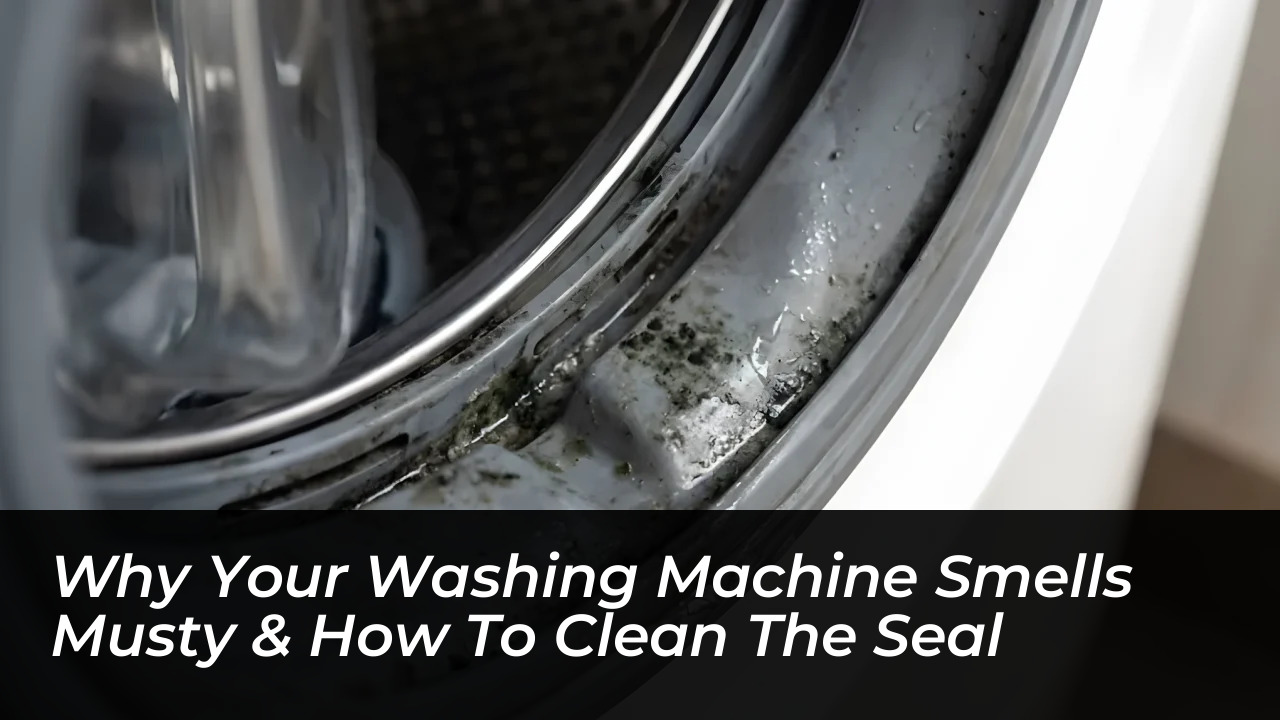

Over time, washing machines can develop a musty smell. This happens when detergent, fabric softener, dirt, and water residues remain inside the appliance. While leaving the door open helps ventilate the interior, persistent foul odors usually point to the rubber seal around the door. Cleaning experts note that neglected buildup and mold within these hidden folds cause the damp odor.
Why a Musty Smell Appears in the Washing Machine
The door seal contains folds where water, lint, soap residue, and dirt collect after every wash. If left uncleaned, these materials accumulate and promote mold growth. This creates visible stains on the rubber and a musty smell that permeates the machine.
Closing the door immediately after a cycle also contributes to the problem. The unventilated interior stays damp, preventing the rubber seal from drying. This trapped humidity breeds microorganisms that produce an earthy, stale scent every time you open the drum.
Step by Step: How to Clean the Washing Machine’s Rubber Seal
Before you begin, inspect the folds of the rubber seal and manually remove loose dirt. Follow these steps to restore freshness:
- Inspect the folds: Open the folds of the rubber seal and check the entire surface, especially the lower section where water pools.
- Clear debris: Remove traces of lint, hair, dirt, or detergent residue trapped within the rubber crevices.
- Wipe down surfaces: Clean the rubber seal with a damp cloth and a mild cleaning solution, focusing on dark stains and heavy residue spots.
- Dry completely: Dry the surface with a clean microfiber cloth to prevent lingering moisture from fueling new mold growth.
- Promote airflow: Leave the washing machine door open after cleaning to ventilate and dry the internal drum and gasket.
Pay close attention to the inner folds, as water and foul-smelling residues collect there. Neglecting these hidden pockets causes the odor to return quickly, even after standard commercial clean cycles.
How to Prevent the Musty Smell from Returning
Routine cleaning is essential, but good habits help maintain your washing machine long term. Prevention focuses on controlling moisture and eliminating soap scum.
Leave the door open after each wash so the interior can air out and dry. Periodically check the detergent drawer as well. Product residue left in the drawer combines with humidity to generate slime, mold, and bad odors that travel into the drum.
Preventing trapped moisture is key. Frequent cleaning of the rubber seal, detergent drawer, and other water-prone areas keeps the appliance clean and free of damp odors.
Frequently Asked Questions
Why does my washing machine have a musty smell even after running a clean cycle?
Odors persist because residue, lint, and mold hide in the rubber door seal folds or inside the detergent drawer. Standard wash cycles often miss these crevices.
How often should I clean the rubber seal on my washing machine?
Experts recommend inspecting and wiping down the rubber seal at least once a month. Wiping it dry after your final weekly load also reduces mold growth.
Is leaving the washing machine door open really effective?
Yes. Leaving the door ajar circulates air to evaporate residual moisture inside the drum and gasket, removing the damp environment that mold needs to thrive.
Can detergent buildup cause bad odors in the washing machine?
Yes. Excess laundry detergent and fabric softener leave a sticky residue inside the dispenser drawer and drum. This residue traps dirt and organic matter, creating foul odors over time.
What should I use to clean mold off the washing machine rubber seal?
You can use warm water with mild dish soap, a diluted bleach solution, or white vinegar with baking soda. Always dry the area thoroughly with a clean cloth afterward.