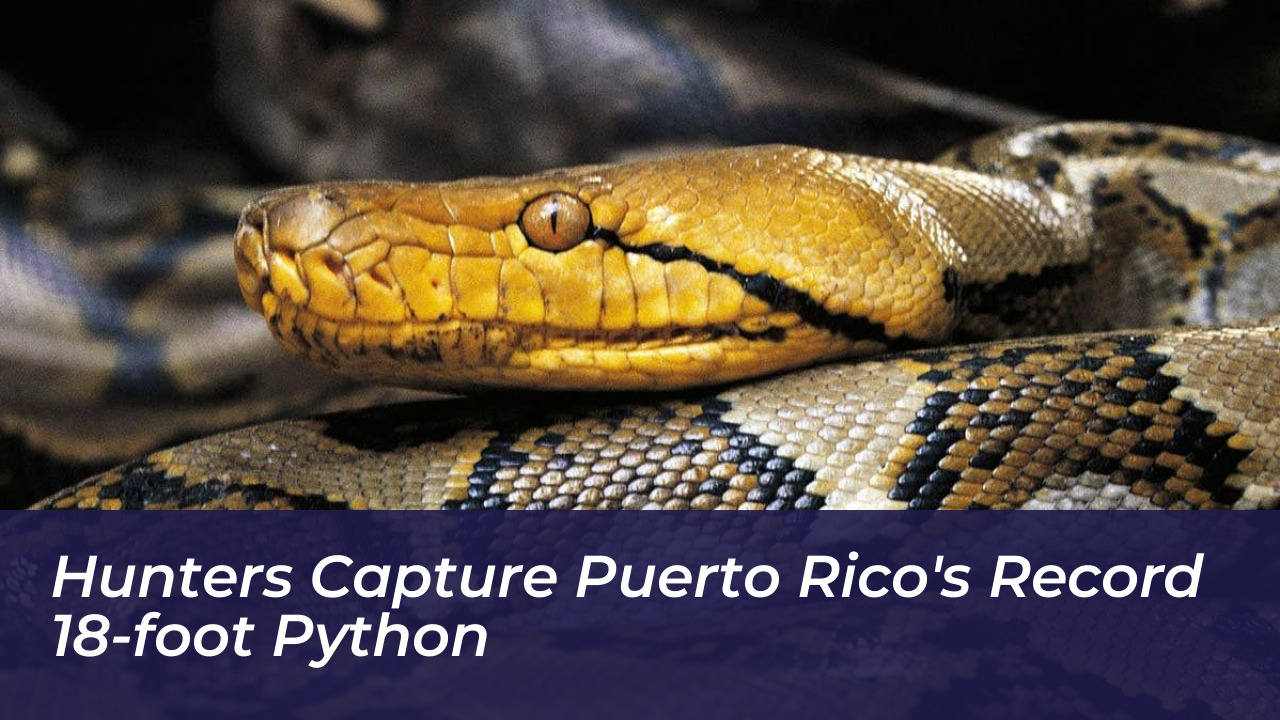

Wildlife hunters in Puerto Rico have successfully captured an 18-foot-4-inch reticulated python. This marks the longest live-captured specimen of its kind ever recorded on the island. The massive snake was located behind a residential property where eyewitnesses reported it actively constricting a pet cat.
Professional snake hunter Kevin Pavlidis, widely known as Snakeaholic, spearheaded the operation alongside Proyectos Retic, a local conservation and wildlife data collection group. Following the capture, eight individuals had to stand side-by-side holding the enormous reptile to adequately demonstrate its staggering length for documentation.
The Tracking and Capture Operation
The incident unfolded when residents spotted the giant predator attempting to kill a domestic pet. The snake managed to retreat into the dense surrounding jungle before authorities and specialists arrived at the scene.
Pavlidis detailed the tracking process in public statements following the catch. He noted that it required specialized tracking skills and roughly 20 minutes of searching through rugged terrain down in the jungle. Reports published on October 19, 2026, confirmed the details of the operation, though officials did not disclose the immediate condition or fate of the pet cat involved in the initial encounter.
Growing Concerns Over Invasive Species in Puerto Rico
Giant constrictors have long been a well-documented ecological challenge in regions like the Florida Everglades, where Burmese pythons have established thriving breeding populations. However, the discovery of such a massive reticulated python in Puerto Rico has heightened alarm among conservationists.
Experts emphasize that the reticulated python is a distinct species from the Burmese python. Both share the capacity to act as apex predators capable of severely disrupting delicate island ecosystems. Because these snakes lack natural predators in their non-native habitats, wildlife officials worry about the establishment of a self-sustaining breeding population.
"Removing this invasive apex predator is one more step towards restoring the delicate balance of the ecosystem out here in Puerto Rico and I am proud to be a part of this incredible conservation work," Pavlidis stated following the removal.
Conservation groups continue to monitor the region for additional specimens. They urge residents to report unusual wildlife sightings immediately to prevent further ecological damage caused by the human introduction of non-native animals.