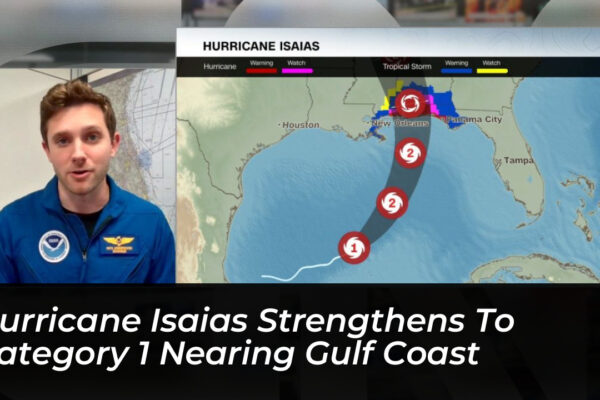


Hurricane Isaias rapidly strengthened over the Gulf of Mexico, becoming the first hurricane of the 2026 Atlantic hurricane season to form late in the year. In response to the intensifying system, Florida Governor Ron DeSantis declared a state of emergency across 25 counties. He ordered preemptive evacuations, suspended classes in select Panhandle districts, and mobilized state and local rescue resources ahead of its expected landfall.
According to the U.S. National Hurricane Center (NHC), Isaias upgraded from a tropical storm to a hurricane with maximum sustained winds near 80 mph. Data collected by a U.S. Air Force Reserve reconnaissance aircraft confirmed this intensification. Forecasters warn that the system could approach the northern Gulf Coast between Friday night and early Saturday morning, bringing life-threatening storm surges, heavy rainfall, flash flooding, damaging winds, and isolated tornadoes.
State of Emergency and Evacuations Across Florida Panhandle
Governor DeSantis signed Executive Order 26-202 to mobilize state resources and coordinate emergency preparations with local authorities. The declaration covers 25 counties in the Panhandle and Big Bend regions, including:
- Baker
- Bay
- Calhoun
- Columbia
- Dixie
- Escambia
- Franklin
- Gadsden
- Gilchrist
- Gulf
- Hamilton
- Holmes
- Jackson
- Jefferson
- Lafayette
- Leon
- Liberty
- Madison
- Okaloosa
- Santa Rosa
- Suwannee
- Taylor
- Walton
- Wakulla
- Washington
Local authorities in counties like Okaloosa issued local states of emergency and mandatory evacuation orders for coastal residents and tourists, directing them to move inland. Emergency shelters opened in designated safe zones to accommodate displaced individuals.
Deployment of Specialized Rescue Task Forces
To prepare for immediate post-landfall operations, swift- and high-water rescue units from South Florida deployed to the Panhandle. Miami-Dade Fire Rescue’s Urban Search and Rescue Florida Task Force One dispatched an 88-member team complete with medical specialists, K-9 units, and specialized watercraft. Miami Fire Rescue Task Force Two also sent an 80-member team to assist with damage assessments, canvassing impacted zones, and performing water rescues.
The Florida State Emergency Response Team staged critical supplies-including generators, fuel, flood barriers, bottled water, shelf-stable meals, tarps, Tiger Dams, and sandbags-in Tallahassee and the Santa Rosa area for rapid distribution.
Expected Weather Impacts, Storm Surge, and Rainfall
The National Hurricane Center issued hurricane watches and warnings along a wide corridor of the northern Gulf Coast. Anticipated hazards include:
- Storm Surge: Inundation levels of 3 to 7 feet are expected from Ocean Springs, Mississippi, to Indian Pass, Florida, with localized flooding potentially reaching up to 10 feet in vulnerable coastal spots.
- Rainfall: Widespread accumulations of 3 to 7 inches are forecast from southeastern Louisiana through the Florida Panhandle, with isolated totals of up to 10 inches. Remnant moisture may also drop 1 to 3 inches across the Southeast, Tennessee Valley, and Carolinas.
- Winds and Tornadoes: Hurricane-force winds threaten the immediate coast, while strong gusts push inland into Alabama and Georgia. Isolated tornadoes are possible in coastal areas ahead of the storm’s core.
Energy companies operating in the region also responded to the severe weather threat. Offshore oil and gas producers temporarily halted roughly 25% of regional crude production, evacuating several manned platforms in the Gulf of Mexico as a precautionary measure.
Frequently Asked Questions About Hurricane Isaias
When did Hurricane Isaias officially form?
Isaias intensified into a hurricane late Wednesday evening after developing earlier in the week from Tropical Depression Nine over the warm waters off eastern Mexico.
How many Florida counties are under the state of emergency?
Governor Ron DeSantis declared a state of emergency for 25 counties primarily located across the Florida Panhandle and Big Bend regions.
What are the primary threats associated with the storm?
The main threats include dangerous storm surges ranging from 3 to 7 feet, hurricane-force winds, heavy rainfall totals up to 10 inches, flash flooding, and potential tornadoes across the northern Gulf Coast and parts of the Southeast.
Are evacuations mandatory in the affected areas?
Yes, local officials in vulnerable coastal areas, such as parts of Okaloosa County, issued mandatory evacuation orders and opened local shelters for residents moving inland.
How is the energy sector responding to the storm?
Offshore oil and gas operators in the Gulf of Mexico temporarily shut down approximately 25% of regional production and evacuated select manned platforms ahead of the system’s arrival.