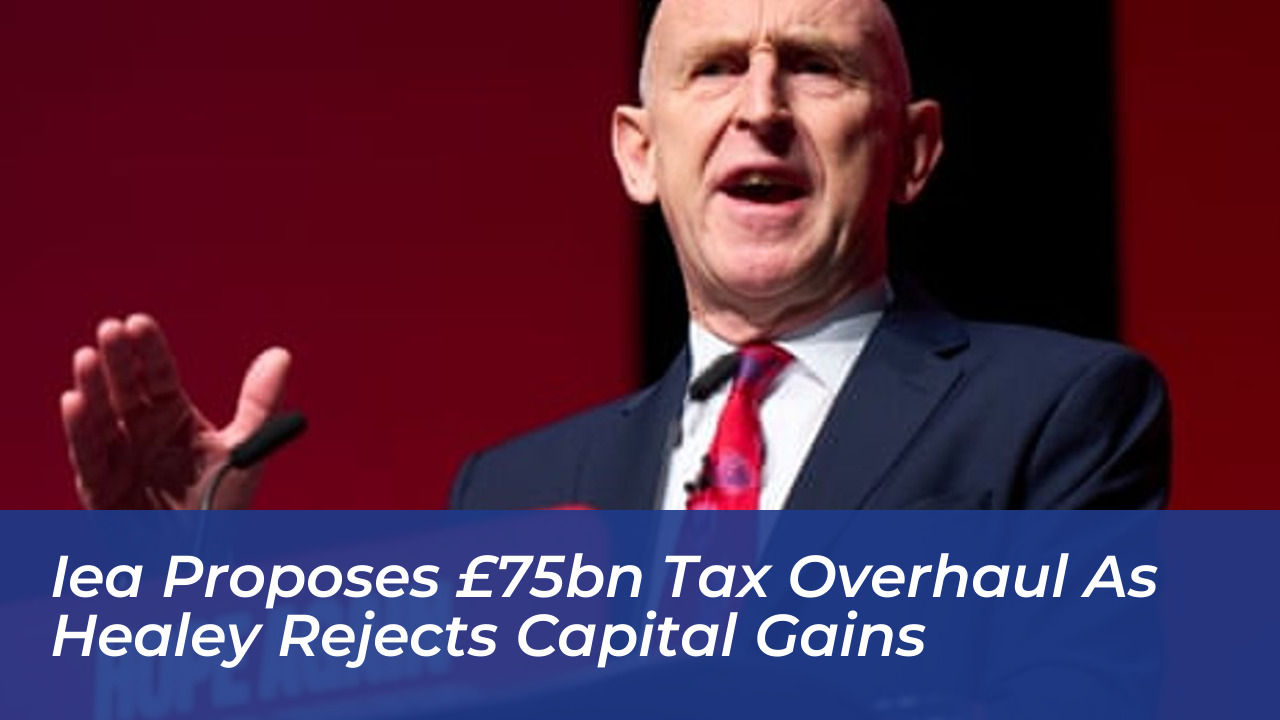

Britain faces competing proposals for tax reform and public spending as Chancellor John Healey prepares his budget for October 28, 2026. While the Treasury is expected to reject calls to increase capital gains tax, the Institute of Economic Affairs (IEA) has advanced a radical £75bn alternative package combining tax cuts, broader consumption taxes, and tighter pension spending controls.
The IEA’s proposals, outlined in its Alternative Budget 2026, seek to address persistent fiscal deficits and rising national debt without relying on faster economic growth. Covered extensively by policy analysts, the think tank’s plan focuses heavily on reducing structural burdens on employment and property transactions while widening the base for consumption taxes.
Key Elements of the IEA’s £75bn Alternative Budget
The IEA package outlines major adjustments across corporate and personal taxation, aiming to stimulate labor markets and consumer spending through targeted reductions. Under the proposed framework, structural changes include:
- Employer National Insurance: Employer contributions would fall to a flat rate of 11.5%, saving businesses nearly £21bn in the 2027-28 period.
- Personal Income Tax: A worker earning the median wage would save £644 annually through lower income tax and reduced employee National Insurance contributions.
- Total Labor Tax Savings: Combined reductions in taxes on a median-paid job would reach about £1,300 a year when factoring in employer contributions.
- Consumption Tax Realignment: The plan advocates extending the existing 20% value-added tax (VAT) rate to additional goods and services currently exempt or reduced.
- Public Spending Controls: The package introduces stricter limits on pension spending to offset tax reductions and balance the fiscal ledger.
Treasury Position on Capital Gains Tax
As the debate surrounding fiscal policy intensifies ahead of the autumn statement, Treasury sources cited by The Guardian indicate that Chancellor John Healey is expected to resist mounting calls to increase capital gains tax (CGT). Government insiders suggest that maintaining stability in investment and entrepreneurial sectors remains a priority for the administration.
The divergence between the Treasury’s cautious approach and the IEA’s aggressive tax-shifting strategy highlights the ongoing challenge facing policymakers: balancing public service funding against the need to incentivize business growth and protect household disposable incomes amid economic headwinds.
Broader Economic Implications
Economists and business leaders continue to debate the feasibility of broadening consumption taxes like VAT to offset cuts to employment levies. Proponents argue that shifting the tax burden away from labor encourages hiring and wage growth. Critics, however, point to the potential regressive impact that expanded VAT coverage could have on lower-income households.
With the October 28 budget date approaching, markets and taxpayers await official confirmation on which structural levers the Treasury will pull to stabilize public finances over the medium term.