
Selecting low-maintenance trees for a residential yard requires balancing mature size, soil adaptability, and climate conditions before buying a sapling. Horticultural professionals emphasize that evaluating sunlight exposure, natural drainage, and growth patterns prevents costly problems like invasive roots damaging home foundations or messy fruit drops ruining driveways. When selecting landscape trees, homeowners often prioritize persistent evergreen shade or seasonal flower production. Finding species that thrive without relentless pruning, chemical treatments, or excessive irrigation is entirely feasible when matching the specimen to native site conditions.
“In order to choose what trees to plant in your home, first consider your site’s conditions. Make sure the tree you’d like to plant can survive in your climate and ensure you have suitable soil conditions for it to prosper. Sun exposure, wind, and drainage are also important considerations in regards to proper site conditions,” explains Stephen McFarlane, Regional Landscape Manager at Sandals Resorts International.
Sun-Drenched Ornamental Specimens
Larger properties with unobstructed sunlight offer an ideal setting for flowering varieties that establish strong root structures and natural resilience against common diseases.
Jacaranda
The jacaranda is suited for expansive outdoor areas in warmer growing regions that receive intense sun exposure. The species shows strong disease resistance, pest resistance, and drought tolerance once firmly established in the ground. Landscape managers note that jacarandas should not be placed directly adjacent to swimming pools, water features, or finished patios. The striking lavender and blue blossoms naturally shed alongside foliage, though in large open lawns, fallen blooms can simply be mown over rather than raked.
Frangipani
Frangipani functions as a fast-growing, compact specimen that yields generous clusters of flowers under direct sun. While adaptable across numerous soil types, it requires sharp soil drainage to thrive and easily withstands extended periods of dry weather.
Coastal and Tough-Climate Survivors
Challenging environments with high winds, ocean spray, or extreme midsummer heat demand durable botanical selections capable of thriving without daily intervention.
Sea Grape
Native to Florida, the sea grape serves as an adaptable plant easily trained into a small tree. It tolerates partial shade to full sun alongside high wind, sandy soils, and salt air, making an exceptional choice for coastal properties. Gardeners can prune it regularly for defined structure or leave it untrimmed for a natural growth habit.
Crepe Myrtle
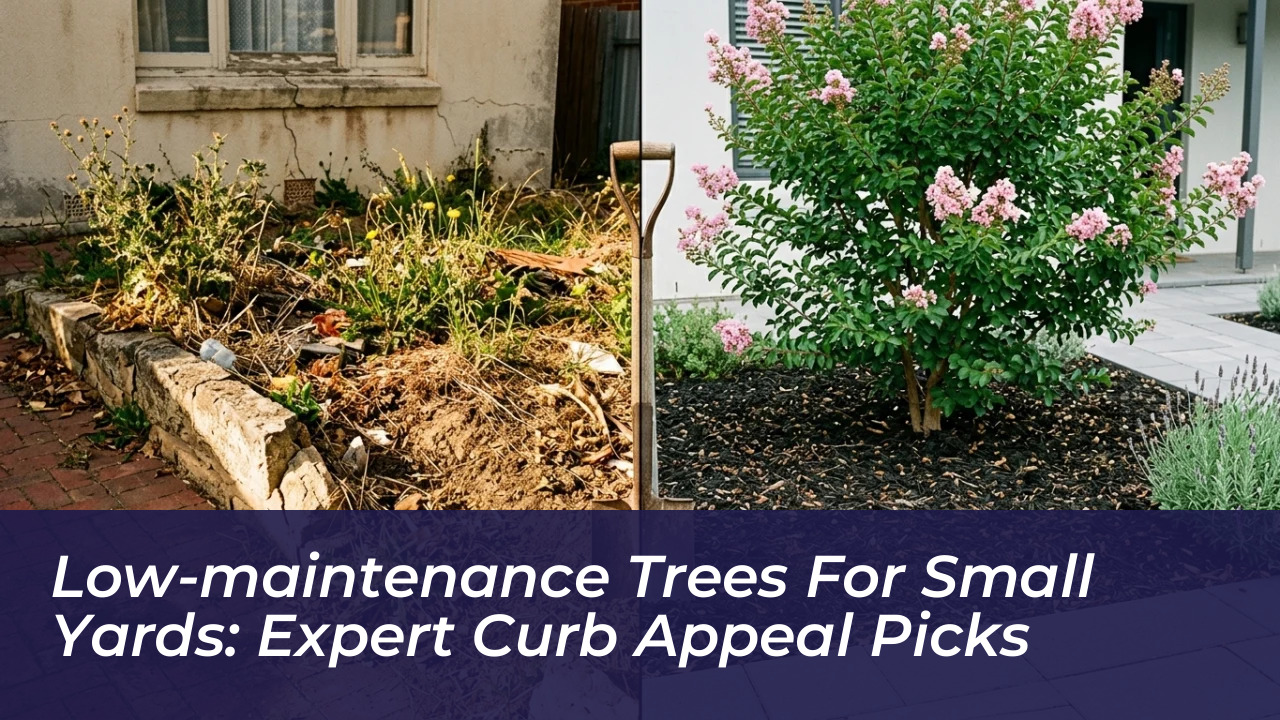
Prized for long summer bloom cycles, crepe myrtles produce vibrant pink, red, and white flower clusters alongside attractive foliage. They require only standard annual pruning, handling high heat, humidity, and dry spells without halting flower production.
Compact Trees Ideal for Smaller Yards
Urban landscapes and compact suburban lots require trees that offer architectural interest without overtaking fences, power lines, or building foundations. Many homeowners assume all ornamental deciduous trees generate heavy litter or outgrow tight borders within a decade. In reality, multiple compact selections remain under 15 feet tall and produce negligible seed drops while handling restricted soil profiles.
Japanese Maple
The Japanese maple provides structural appeal through delicate branching patterns and changing seasonal foliage. It adapts to varied light exposures and soils across most climate zones, excluding regions with extreme heat or freezing conditions.
Redbud
Celebrated for vibrant spring floral displays, redbuds are medium-sized trees characterized by umbrella-shaped canopies that supply functional shade. Cultivars showcase deep red, golden yellow, or tricolored leaves alongside high resistance to pests, heat, and seasonal dry spells.
Purple Leaf Plum
Reaching a mature height of roughly 12 to 15 feet, the purple leaf plum fits smaller yards easily. It features delicate pinkish-white spring blooms followed by deep purple foliage that persists through autumn, producing only tiny, insignificant seeds rather than problematic fruit.
Landscape Tree Comparison Guide
- Jacaranda: Lavender-blue blooms, pest resistant, drought tolerant; best for wide lawns.
- Sea Grape: Florida native, tolerates salt, wind, and dry soil; prune or leave natural.
- Frangipani: Fast-growing, drought resistant, requires sharp drainage and full sun.
- Japanese Maple: Year-round foliage interest, flexible lighting needs, low maintenance.
- Crepe Myrtle: Summer blooms in pink, red, or white; thrives in intense humidity.
- Redbud: Spring flowers, umbrella canopy, drought resistant; fits smaller yards.
- Purple Leaf Plum: 12-15 ft height, dark purple leaves, early spring blooms, virtually fruitless.
Essential Planting and Site Planning Steps
Proper site preparation ensures long-term success for any low-maintenance selection:
- Assess drainage: Ensure your planting location drains excess water efficiently to avoid root suffocation.
- Track sun exposure: Map where daylight hits across morning and afternoon hours before choosing full-sun or shade-tolerant varieties.
- Measure clearance: Confirm mature tree heights and canopy spreads will stay clear of overhead lines and foundations.
- Establish irrigation routines: Water newly planted saplings consistently until root systems gain native drought resistance.
Choosing the right tree comes down to understanding your yard’s sunlight, soil quality, and available square footage before planting. Focusing on specimens that naturally withstand drought and local temperature swings eliminates unnecessary yard work down the road.