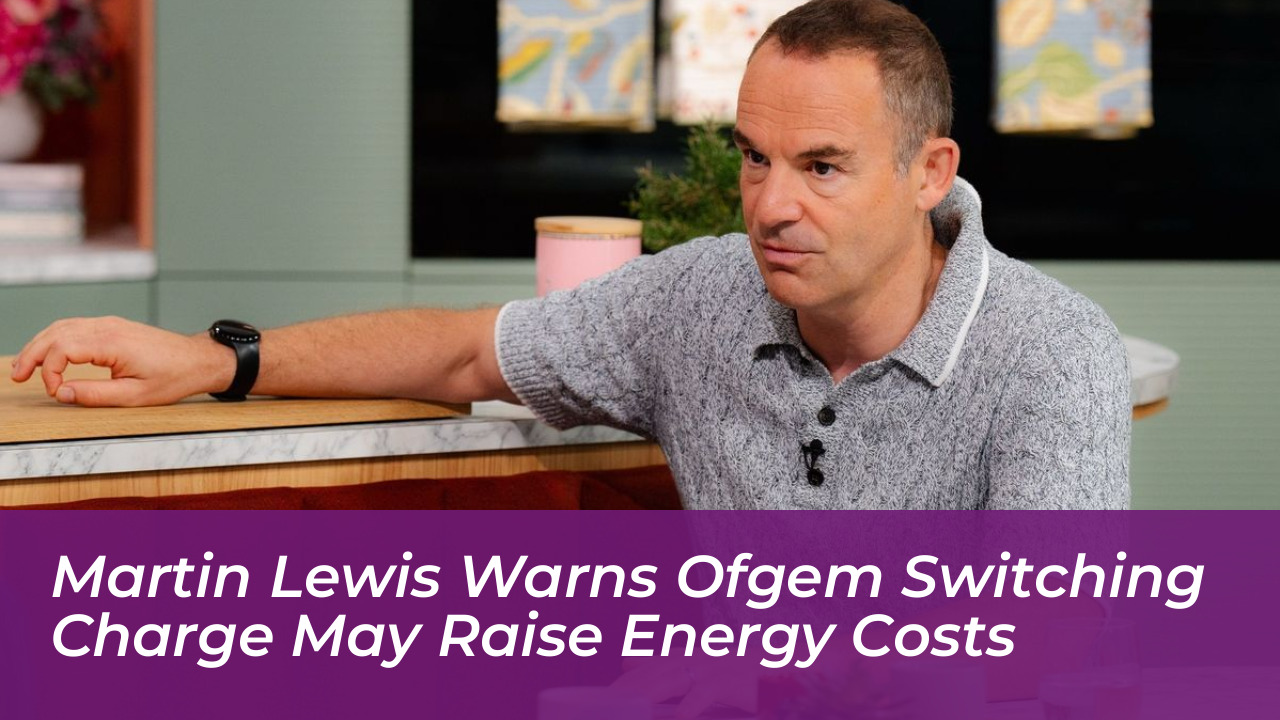

UK consumer champion Martin Lewis has warned that proposals by Ofgem to reintroduce a market stabilisation charge could severely limit cheaper switching deals. He cautions this would ultimately lead to higher energy costs for households. The warning comes as the energy regulator for Great Britain considers reviving the mechanism to shield suppliers from volatile wholesale prices driven by ongoing conflicts in the Middle East.
Under the proposed consultation, the market stabilisation charge (MSC) would require a supplier that successfully wins a customer with a cheaper deal to partially compensate the customer’s previous supplier. Ofgem argues the policy is necessary to prevent a repeat of the 2022 energy crisis, when soaring wholesale costs-sparked by Russia’s invasion of Ukraine-caused more than 30 energy companies to go bust.
How the Proposed Market Stabilisation Charge Works
The regulatory mechanism triggers automatically if wholesale gas and electricity prices fall sharply by more than 10%. At that threshold, suppliers offering competitive, lower-priced fixes to entice new customers must hand over 85% of the drop in wholesale rates to the customer’s former provider.
Ofgem states that the charge protects suppliers who have purchased energy in advance at higher prices on behalf of default tariff customers. Without the measure, a sudden exodus of consumers jumping to cheaper fixed tariffs could leave legacy suppliers facing severe financial losses.
Neil Kenward, interim director general of markets at Ofgem, emphasized the need for proactive measures. “While the energy market is stronger than it was during the energy crisis, volatility remains and the market stabilisation charge helps to protect consumers from that volatility,” Kenward said.
Martin Lewis Slams the Mechanism as a ‘Switching Penalty’
Consumer expert Martin Lewis has strongly criticized the potential revival of the policy. He argues that it dampens healthy market competition and acts as a hidden penalty for households looking to lower their bills.
“The new supplier can’t pass a chunk of the saving from lower wholesale rates on to you, because it has to hand much of it to your old supplier,” Lewis explained. “The cheap fixes and switcher deals offered will be a lot more expensive, in order to protect energy firms’ profits. It ain’t good for consumers.”
Lewis also questioned the urgency of reintroducing the charge. He pointed out that many energy companies have maintained strong profitability since the mechanism was last deactivated in March 2024. He added that current market stability does not warrant protective measures that penalize active switchers.
Current Energy Market Pressures and Winter Forecasts
The debate over market stability unfolds against a backdrop of mounting financial pressure on British households. Millions of families are grappling with some of the highest energy costs in three years, driven by seasonal price cap adjustments.
Key financial figures highlight the ongoing pressure on consumers:
- Approximately 22 million homes are currently paying an average of £1,723 annually under the October-to-December price cap.
- Energy consultants at Cornwall Insight forecast that the quarterly price cap will climb by another £149 in January, lifting annual bills to an estimated £1,872.
- Wholesale market volatility continues to be exacerbated by geopolitical tensions in the Middle East, leaving prices vulnerable to sudden spikes.
While Ofgem maintains that reactivating the MSC will not automatically trigger immediate charges or instantly raise customer bills, the consultation aims to gather feedback on trigger levels, notice periods, and deactivation rules before finalizing any regulatory framework.
Frequently Asked Questions
What is the market stabilisation charge?
It is an Ofgem regulatory rule that requires an energy supplier winning a new customer through a cheaper deal to compensate the customer’s previous supplier when wholesale prices drop sharply.
Why is Ofgem considering bringing it back?
The regulator wants to protect suppliers from massive financial losses if a sudden wave of customers switches away from them during periods of high wholesale market volatility.
What did Martin Lewis say about the charge?
Martin Lewis argued that the charge acts as a “switching penalty” which prevents energy firms from passing on savings to consumers, thereby reducing competition and keeping bills higher.
When was the market stabilisation charge last active?
The mechanism was previously active from April 2022 through March 2024 following disruptions caused by Russia’s invasion of Ukraine.
How does this affect current energy bills?
While Ofgem says the consultation does not automatically increase bills, consumer advocates warn it will limit access to genuinely cheap fixed-rate tariffs, leaving households paying more overall.