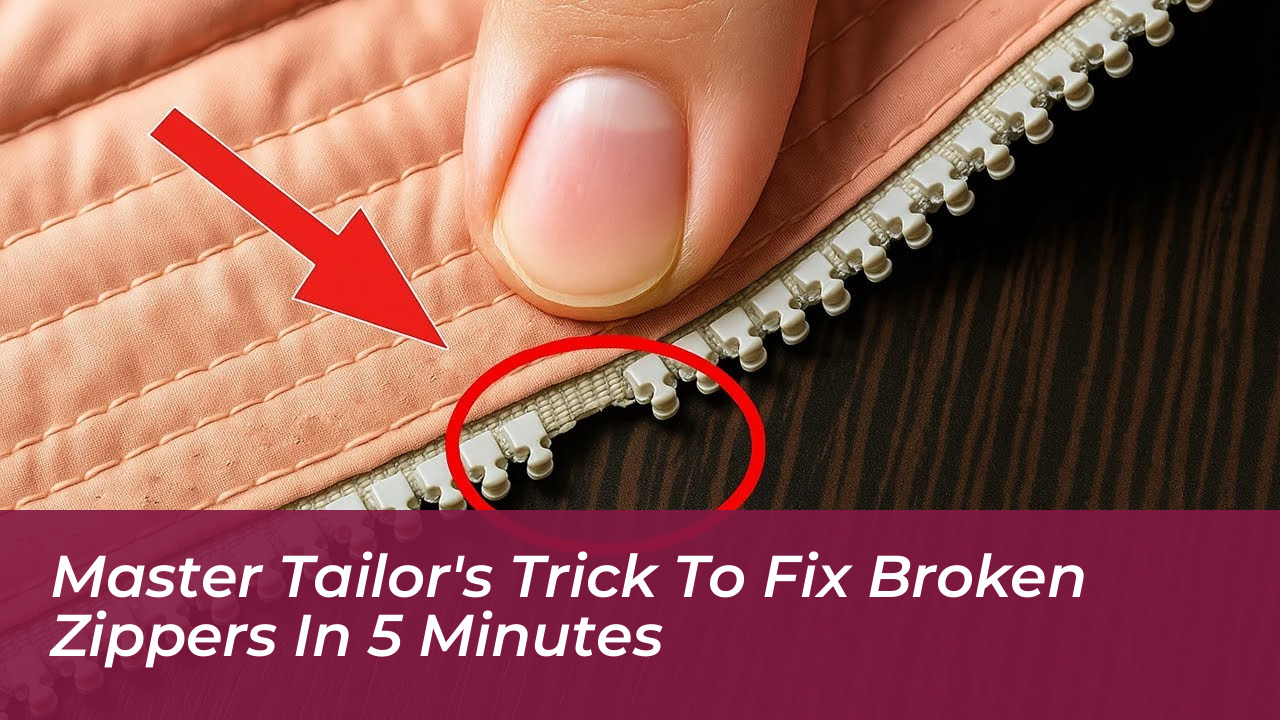

A broken zipper with missing teeth does not require unpicking factory seams or paying for an expensive garment overhaul. Professional alterations specialists routinely restore full functionality to coats, bags, and trousers in minutes. They simply relocate the metal bottom stop or construct a dense thread bar-tack across the gap. This swift mechanical intervention bypasses the missing prongs entirely, preventing the slider from derailing and keeping the remaining teeth locked securely under tension.
When teeth snap off a favorite winter parka or a pair of structured trousers, most people assume the entire fastening mechanism is ruined. Throwing away a premium garment or paying steep tailoring fees often feels like the only viable route forward. Yet the physical mechanics of a zipper track allow for targeted workarounds that re-establish tension without replacing the woven tape.
The Anatomy of a Failed Zipper Track
A standard zipper relies on symmetrical interlock alignment. Every individual tooth features a tiny protrusion and a corresponding hollow that meshes under the precise compression of the moving slider. When one or two teeth break off, the slider loses structural guidance. As it glides over the vacant patch of woven fabric tape, the internal diamond wedge twists, leading to uneven alignment, jamming, or sudden separation behind the pull tab.
Master tailors do not waste hours unpicking topstitching if the missing prongs sit near the lower end of the track. Instead, they isolate the damage and reset the mechanical boundary of the closure.
How to Fix Broken Zipper Teeth Without a Sewing Machine
To successfully fix broken zipper tracks suffering from missing teeth, you only need three basic household items: needle-nose pliers, heavy-duty polyester or nylon thread, and a standard sewing needle. The primary goal is to prevent the slider jaws from ever engaging with the empty gap.
- Repositioning the metal bottom stop: On metal or molded plastic zippers, use fine pliers to gently pry open the small metal clamping bracket located at the base of the track. Slide this stop upwards until it rests directly above the missing prongs, then firmly crimp the prongs shut into the fabric weave.
- The thread bar-tack bridge: If the original metal stop cannot be detached, thread a needle with thick, waxed polyester thread. Wrap fifteen to twenty tight loops directly across both rows of fabric tape immediately above the missing teeth, pulling firmly to form a raised, impenetrable bumper.
- Securing the new boundary: Finish the back of the thread bridge with three locking whip stitches. This newly constructed stop blocks the slider before it can derail over the missing teeth while preserving over ninety percent of the garment’s functional opening.
Calibrating the Slider Jaws for Instant Smooth Travel
A missing tooth often coincides with a loose, warped slider that exacerbates mechanical jamming. Over repeated cycles of forceful tugging, the cast-metal casing of the slider flares outward, failing to press the opposing teeth together at the required tolerance.
Before testing your repaired track, inspect the clearance of the slider channel. Place the flat jaws of a pair of pliers on the side plates of the slider and apply gentle, incremental pressure until both sides sit completely parallel. Take care not to crush the metal alloy entirely, as cast zinc can fracture under sudden impact. A subtle pinch is all that is required to restore the original factory clamping pressure.
Maintenance Protocols to Prevent Track Buckling
Once you stabilize the track, routine friction management protects the remaining teeth from excessive horizontal shear stress. Applying a small amount of solid paraffin wax, clean beeswax, or the graphite tip of a soft pencil along the teeth significantly reduces slider friction.
Always fasten zippers completely before placing heavy coats or denim into washing machines. Loose, open zipper tracks endure substantial lateral pulling forces during high-speed spin cycles, which remains the leading cause of broken teeth and warped pull tabs. Taking five minutes to evaluate whether a fastener needs a quick structural bridge rather than a total replacement preserves quality textiles and keeps them in regular rotation.