McDonald’s is officially stepping into the rapidly expanding world of commerce media. The fast-food pioneer launched an internal advertising network pilot across 450 company-owned U.S. restaurants. This strategic initiative displays third-party advertisements on digital drive-thru order boards, self-service kiosks, mobile applications, and physical restaurant displays after customers complete their purchases. By tapping into its massive physical footprint, the corporation aims to build a $1 billion high-margin revenue stream over the coming years. This move mirrors successful retail media networks run by retail giants like Amazon and Walmart, transforming everyday consumer touchpoints into valuable digital advertising real estate.
- Introduction to McDonald’s Commerce Media Strategy
- The Financial Rationale Behind the Ad Network
- Margin Pressures and Commodity Inflation
- Funding Multi-Billion-Dollar Infrastructure Upgrades
- Unmatched Scale and Consumer Reach
- Leveraging the Domestic Footprint
- The Growth of Commerce Media
- Mirrors of Success: Amazon and Walmart
- Learning from Retail Media Pioneers
- Translating Retail Playbooks to Quick-Service Restaurants
- Operational Simplicity and the Franchisee Landscape
- Managing Execution Complexity
- Securing Franchisee Buy-In
- The Convergence of AI and Programmatic Ad Delivery
- Integrating ArchIQ and Automated Ordering
- Balancing Personalization with Consumer Privacy
- Market Implications and the Future of Fast-Food Advertising
- Shifting Quick-Service Restaurant Economics
- Long-Term Outlook Through 2026 and Beyond
- Frequently Asked Questions
- What is the McDonald’s digital drive-thru ad network?
- How many locations are currently testing the advertising network?
- Why is McDonald’s launching an advertising business?
- Will the ads interfere with the drive-thru ordering process?
- How much revenue does McDonald’s expect from this initiative?
Introduction to McDonald’s Commerce Media Strategy
The decision to test an internal media network marks a fundamental shift in how the fast-food giant views its physical restaurants. For decades, company earnings relied exclusively on the sale of burgers, fries, and beverages. Today, leadership views every physical touchpoint as digital advertising real estate waiting to be monetized.
The initial pilot program encompasses 450 company-owned stores across the United States. By keeping the initial test within corporate-owned locations, executives can carefully monitor technical performance, ad fill rates, and customer feedback without immediately disrupting the vast franchise network.
Corporate leadership harbors ambitious financial goals for this venture. The long-term vision involves scaling the digital advertising ecosystem into a $1 billion high-margin revenue stream. This new income model promises to change how quick-service restaurant chains operate in an increasingly digital economy.
The Financial Rationale Behind the Ad Network
Margin Pressures and Commodity Inflation
Quick-service restaurant operators face significant margin pressures due to climbing input costs, particularly for beef, and fluctuating consumer traffic. In recent reported quarters, U.S. comparable sales climbed a modest 0.8 percent, a stark deceleration from previous periods. Leadership responded by recalibrating promotional strategies, pulling back on specific digital deal structures, and introducing value menus to protect customer volume.
Balancing value menus with profitability requires creative solutions. When companies lower menu prices to attract budget-conscious shoppers, restaurant profit margins take a direct hit. Introducing a high-margin digital advertising network offsets these pricing pressures, allowing restaurants to protect their bottom line without passing soaring ingredient costs directly to patrons.
External economic factors continue to test the fast-food industry. Labor shortages, rising minimum wages, and volatile supply chains make traditional revenue models unpredictable. Establishing a digital media network creates a financial shock absorber that protects corporate earnings during economic downturns.
Funding Multi-Billion-Dollar Infrastructure Upgrades
Despite near-term margin headwinds, capital expenditure remains a top priority for corporate growth. McDonald’s announced an $8.5 billion investment plan dedicated to modernizing its global restaurant fleet over the next decade. These upgrades include kitchen overhauls, redesigning dining rooms, and installing advanced digital hardware.
Traditional funding sources, such as franchisee fees and corporate cash reserves, face limitations during inflationary cycles. The new advertising network serves as a high-margin financial engine designed to offset ingredient inflation and fund these multi-billion-dollar infrastructure upgrades without raising menu prices for everyday consumers.
Investors closely monitor how traditional restaurant chains fund long-term technological evolution. By generating revenue from third-party brands eager to reach hungry consumers, the corporation secures a self-sustaining funding mechanism for future innovations.
Unmatched Scale and Consumer Reach
Leveraging the Domestic Footprint
Building a successful commerce media network requires vast reach, high-frequency engagement, and robust first-party data infrastructure. McDonald’s possesses a scale that few consumer brands can match. The company operates roughly 14,000 locations across the United States, positioning its restaurants within nearly every local community.
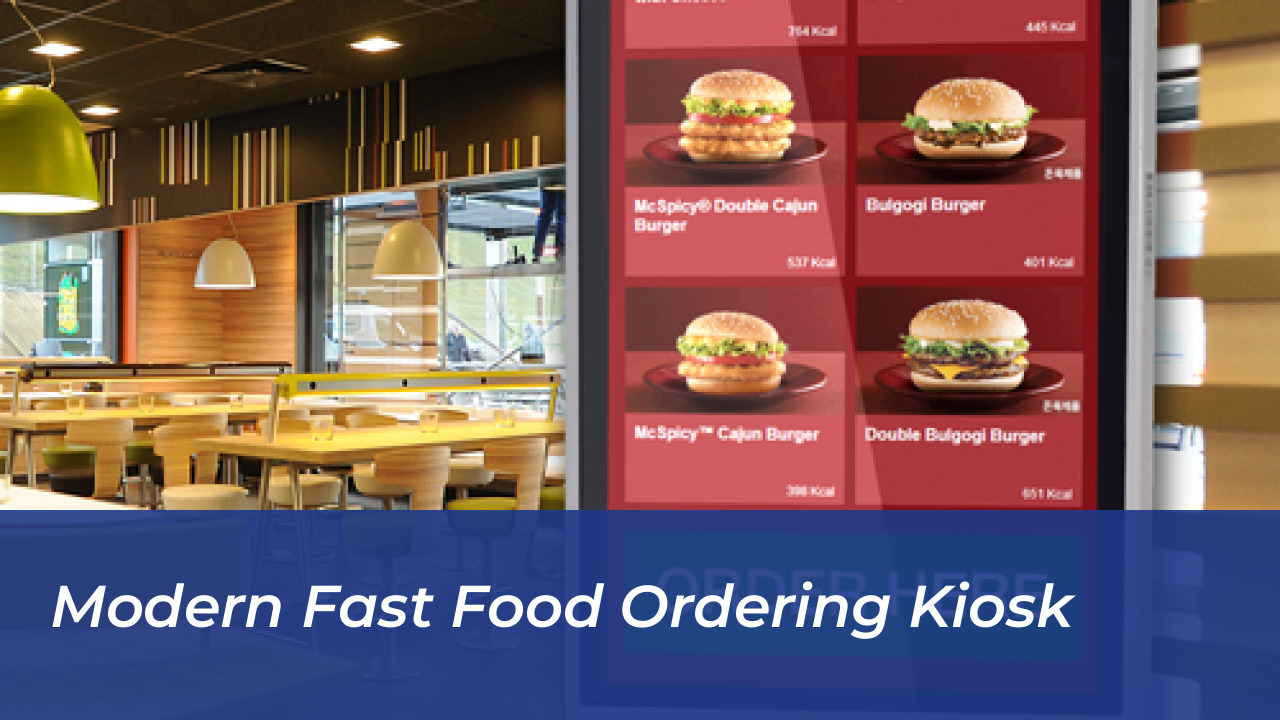
According to corporate executives, the chain serves approximately 85 percent of the U.S. population at least once a year, equating to tens of millions of transactions daily. This unmatched footprint grants the fast-food leader a captive audience during natural micro-moments in the customer journey. When a driver places an order at the drive-thru and waits for food preparation to finish, digital menu boards display post-purchase content.
This physical reach rivals major digital platforms in terms of daily active engagement. Advertisers covet access to millions of verified consumers in local markets, making the restaurant drive-thru an attractive alternative to traditional social media advertising.
The Growth of Commerce Media
Morgan Flatley, global chief marketing officer and executive vice president of new business ventures, highlighted during an investor presentation that commerce media represents one of the fastest-growing sectors in advertising. Industry projections show the U.S. commerce media sector exceeding $100 billion by 2028.
Capitalizing on physical-to-digital consumer engagement requires seamless technology and attractive inventory for brands. As digital advertising budgets shift away from saturated channels, physical retail and restaurant media networks offer unique opportunities to reach consumers close to the point of purchase.
The convergence of physical storefronts and programmatic advertising represents the next frontier in marketing. Fast-food operators are uniquely positioned to capture attention because customers willingly spend minutes staring directly at digital screens while waiting for their meals.
Mirrors of Success: Amazon and Walmart
Learning from Retail Media Pioneers
The decision to build an in-house ad network draws direct inspiration from traditional retail giants. Amazon pioneered commerce media success, reporting tens of billions of dollars in advertising service sales, which accounts for a substantial percentage of its total corporate revenue. Amazon’s advertisements stretch across shopping pages, Prime Video, streaming platforms, and physical lockers.
Similarly, Walmart operates a fast-growing digital advertising unit called Walmart Connect. Walmart reported stellar growth metrics, including a double-digit sales increase in its advertising arm during recent fiscal periods. These enterprises demonstrate how traditional brick-and-mortar operations can monetize their first-party inventory and audience attention.
Retail media networks succeed because they offer brands closed-loop attribution. Advertisers can track whether an ad impression directly leads to a purchase, a metric that digital-only platforms struggle to replicate accurately in physical retail environments.
Translating Retail Playbooks to Quick-Service Restaurants
Bridging brick-and-mortar operations with programmatic advertising opportunities requires a tailored approach for quick-service restaurants. While retail shoppers browse aisles for hours, drive-thru customers operate on strict time limits. Ads must capture attention instantly without causing operational friction.
By following the retail media blueprint, McDonald’s positions itself as a pioneer within the quick-service restaurant industry. Other food chains are watching closely to see if retail media strategies can successfully translate into fast-food dining rooms and drive-thrus.
Establishing an early lead in quick-service commerce media allows the brand to set industry standards for ad formats, data privacy practices, and programmatic buying integrations with major advertising agencies.
Operational Simplicity and the Franchisee Landscape
Managing Execution Complexity
Integrating third-party advertisements into daily operations comes with unique execution challenges. Restaurant executives emphasize that the current pilot is restricted to company-owned U.S. restaurants, keeping operational complexity to an absolute minimum during the testing phase.
The advertising content appears exclusively on digital screens after an order is finalized, ensuring the core ordering experience remains clear, fast, and uninterrupted. Maintaining speed-of-service metrics remains a top priority for restaurant managers who understand that long wait times drive customers away.
Technical glitches or slow screen refresh rates can severely impact kitchen workflows. Restricting early tests to corporate stores allows engineers to iron out software bugs before rolling the system out to a broader audience.
Securing Franchisee Buy-In
Scaling the network beyond the initial 450 corporate locations requires buy-in from independent franchisees. Independent operators manage the vast majority of the roughly 14,000 U.S. restaurants, meaning their cooperation is non-negotiable for nationwide deployment.
Convincing independent business owners to adopt digital advertising systems depends heavily on proving that ad revenues will directly benefit store-level profitability. Franchisees want assurances that ad revenue will be shared fairly and that local customers will not feel alienated by third-party promotions.
Transparent reporting on revenue distribution and customer satisfaction metrics will determine how quickly independent operators embrace the new digital media network across their local restaurants.
The Convergence of AI and Programmatic Ad Delivery
Integrating ArchIQ and Automated Ordering
The rollout of the advertising network coincides with broader technological integrations across the restaurant ecosystem. The company is actively testing advanced artificial intelligence tools, including Google-powered AI ordering assistants and the ArchIQ customer recognition system.
ArchIQ is designed to recognize repeat customers, streamline order processing, and recall past preferences. When combined with programmatic advertising, these AI systems enable hyper-targeted ad delivery based on past purchasing behavior, time of day, and local weather conditions.
Streamlining order processing while personalizing the consumer experience ensures that technology serves a dual purpose of improving operational efficiency and driving advertising value.
Balancing Personalization with Consumer Privacy
Intelligent drive-thru environments raise important consumer privacy and data-handling questions. As drive-thru lanes transition into media units capable of identifying recurring visitors, balancing targeted advertising with strict data privacy protections becomes paramount.
Advertisers are eager to bid on verified drive-thru audiences, but maintaining consumer trust remains central to preserving long-term brand equity. Clear opt-out policies and secure data handling procedures protect consumers from intrusive tracking.
Navigating these regulatory and ethical considerations ensures the advertising network scales sustainably without inviting consumer backlash or government scrutiny over data privacy violations.
Market Implications and the Future of Fast-Food Advertising
Shifting Quick-Service Restaurant Economics
The transformation of drive-thru boards into programmatic ad units signals a permanent shift in how quick-service restaurants generate revenue. Traditional restaurant economics relied solely on food and beverage sales margins, leaving operators vulnerable to unexpected commodity price spikes.
By introducing high-margin digital media sales, restaurant chains insulate themselves against commodity price shocks and economic downturns. Diversifying income streams transforms traditional food service companies into hybrid media and dining powerhouses.
This economic evolution encourages other restaurant brands to evaluate their own digital assets, potentially turning the entire fast-food sector into a major player in the digital advertising landscape.
Long-Term Outlook Through 2026 and Beyond
As the pilot program expands through 2026 and beyond, market watchers will track ad fill rates, advertiser demand, and consumer sentiment. Tracking these key performance indicators reveals whether the network can achieve its lofty financial projections.
Establishing a new industry benchmark for physical-digital advertising integration requires continuous software updates, strong brand partnerships, and careful management of the customer experience.
If successful, this initiative will prove that physical restaurant chains can compete directly with digital retail giants for annual advertising budgets, forever changing the commercial landscape of the fast-food industry.
Frequently Asked Questions
What is the McDonald’s digital drive-thru ad network?
It is an internal media network that displays third-party advertisements on digital drive-thru menu boards, self-service kiosks, and mobile applications after customers complete their food orders.
How many locations are currently testing the advertising network?
The pilot program is active across 450 company-owned U.S. restaurants, representing a small fraction of the roughly 14,000 total domestic locations.
Why is McDonald’s launching an advertising business?
The company aims to diversify its revenue streams, generate high-margin recurring income to offset rising ingredient costs like beef, and fund a multi-billion-dollar restaurant modernization initiative.
Will the ads interfere with the drive-thru ordering process?
Corporate leadership states that advertisements only appear after orders are placed, specifically targeting the short wait time while food is being prepared to ensure the customer experience remains uninterrupted.
How much revenue does McDonald’s expect from this initiative?
Corporate leadership has set long-term internal goals to scale the burgeoning media network into a $1 billion business operation over the coming years.


