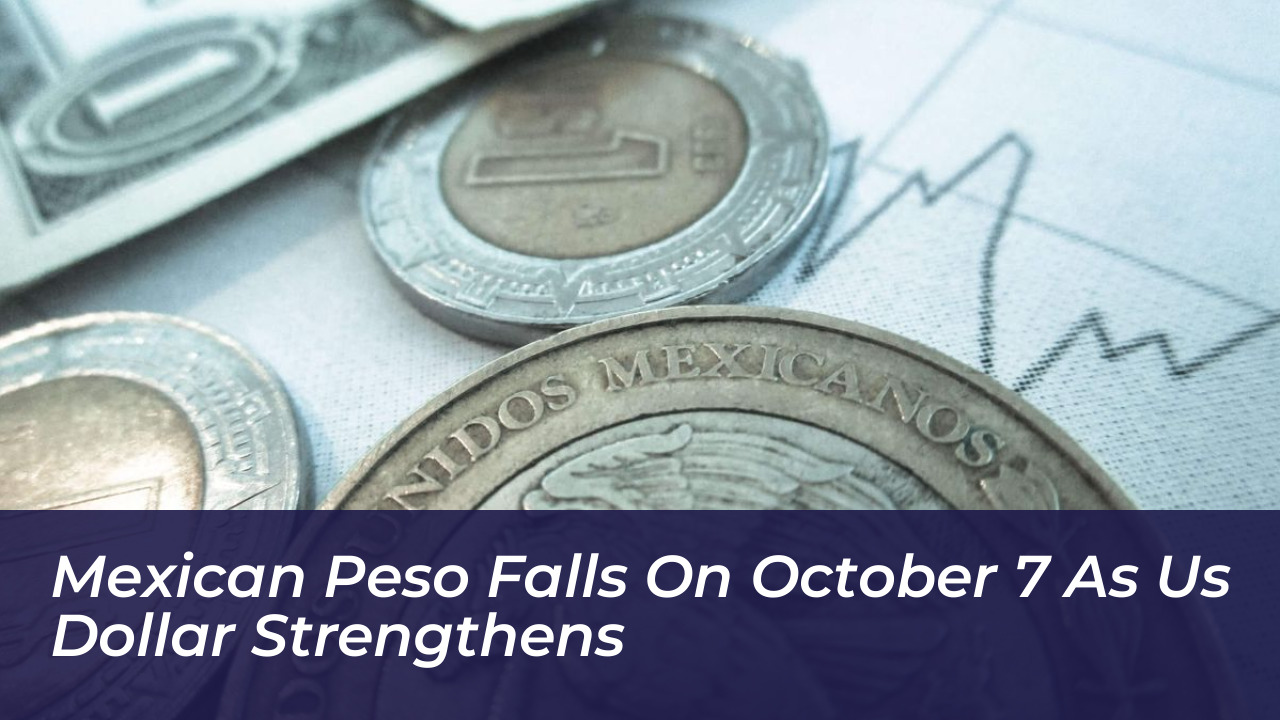


The Mexican peso fell 0.46% to 18.0580 per dollar on October 7, ending a brief two-session winning streak as the U.S. currency strengthened globally. This currency movement reflected renewed risk aversion across emerging markets and lingering inflation concerns as investors awaited key monetary policy insights from Washington.
Pressure on Emerging Market Currencies
According to market reports, the peso traded above the 18-per-dollar threshold after previously touching 18.4330 weeks prior, marking some of its weakest levels since late 2025. Financial group Monex noted that the peso’s downward adjustment occurred alongside a broader retreat among emerging-market currencies. A firmer dollar, rising global risk aversion, and inflation anxieties placed immediate downward pressure on Mexico’s legal tender.
Recent volatility follows heavy scrutiny regarding interest rate differentials between Mexico and the United States. Analysts point out that narrower spreads reduce the historical attractiveness of the carry trade, where investors borrow in lower-yielding currencies to invest in higher-yielding assets like the Mexican peso.
Market Outlook and Central Bank Focus
Market participants are closely monitoring upcoming economic data releases from the United States and impending minutes from the Federal Reserve’s latest policy meeting. While the U.S. central bank weighs future adjustments, the Bank of Mexico maintains a cautious stance, emphasizing that local macroeconomic conditions differ significantly from those north of the border.
Financial institutions expect the exchange rate to remain under upward pressure in the near term. Currency performance will likely continue to be driven by external factors, including U.S. macroeconomic performance, global inflation metrics, and shifting risk sentiment among international investors.
Key Factors Impacting the Peso
- Global strengthening of the U.S. dollar across major currency pairs.
- Narrower interest-rate differentials reducing carry-trade incentives.
- Renewed global risk aversion and persistent inflation concerns.
- Upcoming release of Federal Reserve policy meeting minutes.
Implications for Businesses and Remittances
For individuals and businesses, currency fluctuations carry distinct practical effects. A weaker peso increases purchasing costs for local importers and entities servicing U.S. dollar-denominated debts. Conversely, dollar earners and families relying on international remittances receive a higher nominal conversion value when funds enter Mexico.
As market volatility persists, analysts advise traders, travelers, and businesses to verify real-time exchange quotes immediately prior to completing transactions or executing cross-border payments.