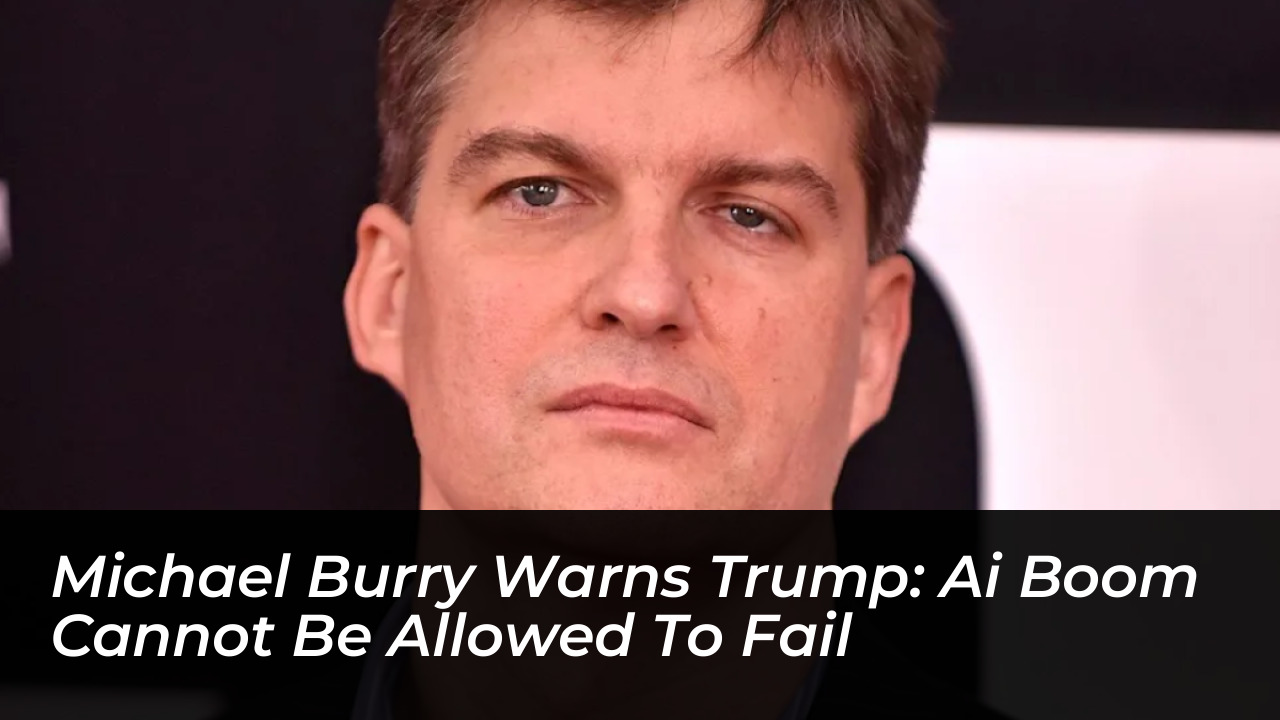
In a striking message to both Wall Street and Washington, legendary investor Michael Burry-best known for predicting the 2008 subprime mortgage collapse-has delivered a dual warning about the future of artificial intelligence. Burry asserts that the artificial intelligence infrastructure boom has become the single most vital support beam holding up the United States economy, meaning the Trump administration simply cannot afford to let it fail.
Yet, in classic contrarian fashion, Burry maintains active short positions on several major market darlings driving the trend. This paradox captures the defining economic question of our time: Can the United States sustain an unprecedented infrastructure spending wave without triggering a severe financial correction?
The Engine of Growth: Why AI Capital Spending Drives GDP
To understand Burry’s thesis, one must look at the sheer magnitude of current capital deployment. Net capital investment by S&P 500 companies recently reached 2.07% of U.S. Gross Domestic Product (GDP)-a benchmark not seen in nearly four decades, outside the immediate aftermath of the dot-com bubble in 2000.
Unlike software applications that can be created overnight, the modern AI revolution demands physical, massive-scale infrastructure. Building the computational engine of the future requires heavy real-world investment across multiple sectors:
- Hyperscale Data Centers: Massive real estate projects requiring advanced cooling systems and thousands of high-performance server racks.
- Energy and Grid Upgrades: Unprecedented electricity demands requiring utility upgrades, nuclear power agreements, and localized power generation.
- Semiconductor Supply Chains: Record capital expenditures on advanced chips, custom silicon, and high-bandwidth memory products.
This massive physical buildout acts as an economic stimulus package funded primarily by private enterprise. It creates high-paying construction, engineering, and technology jobs, propping up broader economic growth statistics even as consumer spending and other legacy sectors face macroeconomic headwinds.
Trump’s Strategic Mandate: High Stakes for Washington
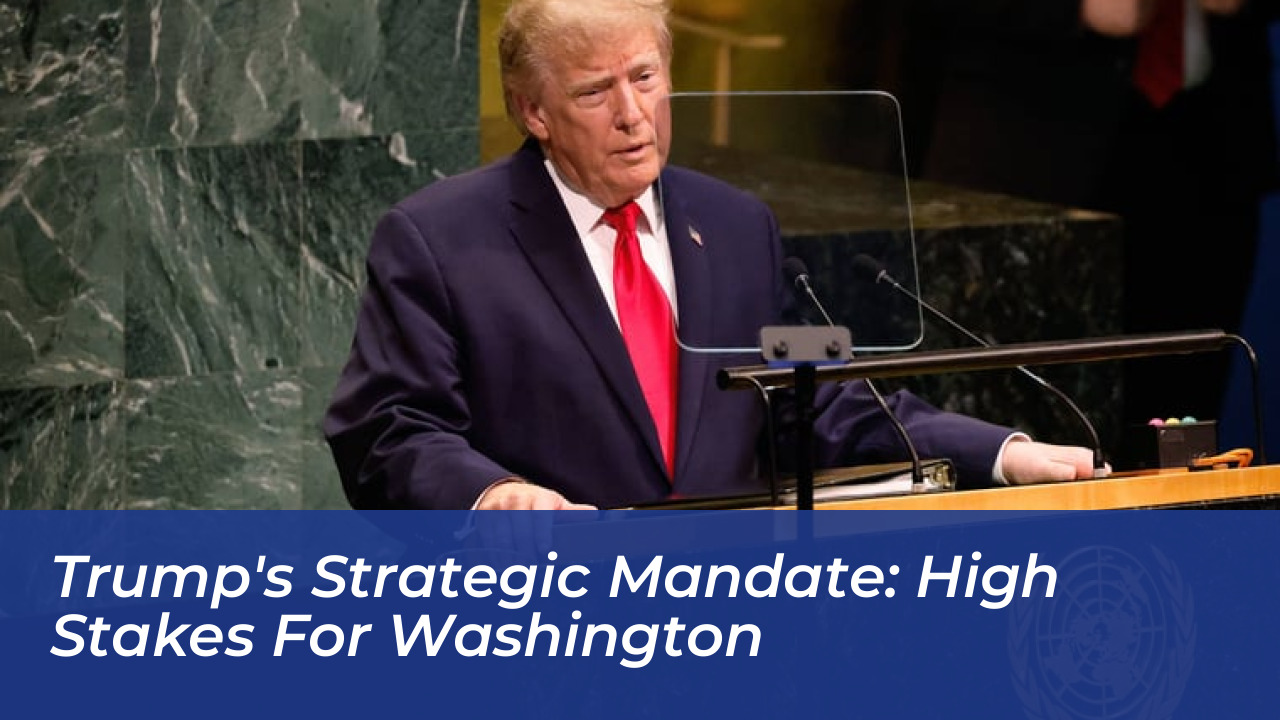
For President Donald Trump and his economic team, artificial intelligence leadership is not merely an investment opportunity; it is a vital pillar of national security and economic dominance. The administration has prioritized domestic computing infrastructure, streamlined energy permitting, and fast-tracked AI adoption within defense and intelligence agencies to maintain a competitive lead over global rivals like China.
“Trump and his team know that the AI narrative and the buildout is the only thing keeping this economy going, and the most positive thing happening this year. They cannot afford to let it fall.”
– Michael Burry
However, Burry highlights a troubling reality for policy makers: Washington has limited financial maneuverability if private investment cools down. With record public debt levels and high fiscal deficits, federal government intervention tools are significantly restricted. If private enterprise spending slows down unexpectedly, policy makers may lack the fiscal capacity to step in and bridge the gap.
The $3 Trillion Dilemma: Burry’s Short Thesis
Despite acknowledging that AI infrastructure is propping up current economic metrics, Burry remains deeply skeptical of valuations and long-term capital efficiency. Regulatory disclosures reveal that Burry’s fund has taken short positions on key publicly traded AI supply chain players, including Nvidia, Oracle, Palantir, Nebius, Micron, and semiconductor ETFs, alongside privately held firms such as CoreWeave.
Burry’s skepticism relies on the classic economics of the capital cycle:
- Aggressive Outlays: Tech titans-including Microsoft, Amazon, Alphabet, Meta, and Oracle-have accumulated an estimated $3 trillion in future obligations, including lease commitments, hardware purchase guarantees, and active construction projects.
- Capacity Overhang: When capital floods a sector faster than revenue streams can keep pace, excess capacity develops.
- Margin Compression: Heightened competition and overcapacity lead to lower pricing power and reduced returns on invested capital.
- Impairments and Write-Offs: If utilization rates fall short of optimistic forecasts, companies must eventually write down the value of their physical assets.
Burry points to the telecom and technology boom of the late 1990s as a historical reference point. Following that period of intense buildout, aggregate S&P 500 net investment fell below zero for 12 consecutive quarters between 2003 and 2006 as balance sheets recovered from asset impairments. Burry cautions that similar write-offs could occur between 2027 and 2029 if monetization fails to match infrastructure commitments.
Evaluating the Horizon: Market Dynamics and Enterprise Integration
While macro warnings provide important context, technology transitions often generate massive long-term value despite short-term financial cycles. The buildouts of the late 1990s created the fiber-optic network foundation that powered the modern internet economy. Similarly, current investments in data infrastructure will power global computing for decades to come.
Market observers note that distinguishing between resilient businesses and over-leveraged infrastructure plays generally involves examining core metrics like organic operational cash flows, how quickly new data centers and GPU clusters achieve active revenue generation, profit margins on new product launches, and balance sheet resilience during downturns.
The Road Ahead for the AI Economy
Michael Burry’s warning highlights the delicate balance defining today’s financial ecosystem. The artificial intelligence buildout represents a transformational technological shift, but like all historic shifts, it remains bound by the laws of economic math.
As Washington pushes to maintain global technological supremacy and Big Tech continues spending at record levels, the coming years will test whether enterprise demand can scale fast enough to meet capital outlays. Investors who balance enthusiasm for innovation with rigorous financial analysis will be best positioned to navigate the market cycles ahead.