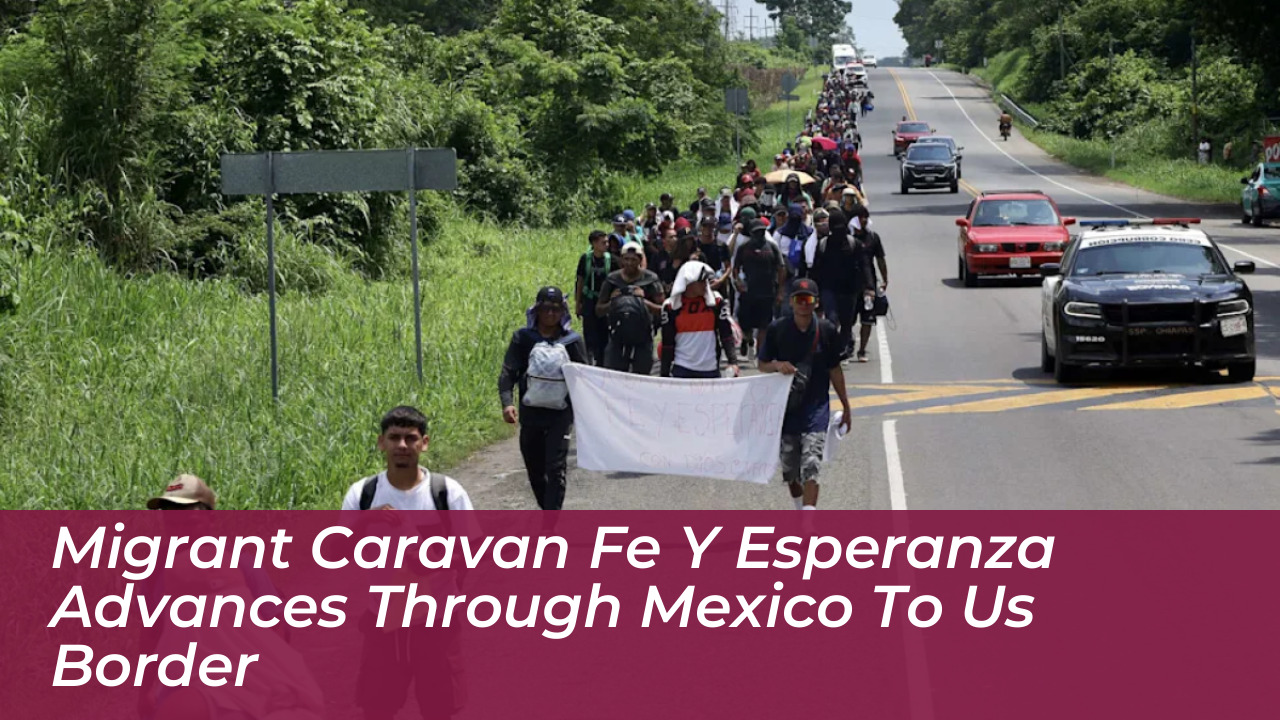
A growing migrant caravan dubbed Fe y Esperanza, or Faith and Hope, reached southern Mexico as over 600 individuals marched northward toward the United States southern border despite strict enforcement and deterrent policies. The group originated in San Pedro Sula, Honduras, on September 20. Small clusters of 200 to 400 migrants crossed Guatemala before entering Chiapas, Mexico, via the Rodolfo Robles International Bridge on September 24.
Upon reaching Tapachula after a grueling 40-kilometer trek through municipalities including Suchiate and Tuxtla Chico-navigating heavy rains brought by Tropical Storm Rachel-the caravan expanded past 600 individuals. Stranded migrants from El Salvador, Guatemala, Ecuador, and Haiti integrated into the march along the way.
Origins and Composition of the Faith and Hope Caravan
The journey began when initial groups of Honduran nationals departed San Pedro Sula seeking better economic opportunities and relief from domestic hardship. According to migrants interviewed by the Spanish news agency EFE, financial distress and a lack of local employment drove their decision to migrate.
“I want to reach the United States,” said Honduran migrant José Zelaya, who left with seven family members. Zelaya noted that the caravan operated without organized leadership, asserting that “hunger and need” served as the primary forces driving the group forward.
As the march progressed through southern Mexico, its demographics shifted. While the initial departure consisted predominantly of Hondurans, the group swelled in Tapachula as individuals from El Salvador, Guatemala, Ecuador, and Haiti joined. Not all participants shared the exact same end goal. While many aimed to reach the United States, others like Ecuadorian migrant Vinicio Obonaga expressed intentions to settle in Mexican cities like Monterrey due to administrative delays and employment challenges in Tapachula.
U.S. Government and Border Enforcement Response
The movement of the caravan has drawn sharp warnings from United States authorities. The Department of Homeland Security (DHS) and U.S. Border Patrol confirmed they are closely monitoring the group’s trajectory through international partnerships.
“The message to the caravan is you will not be allowed into our country,” White House spokeswoman Lauren Bis stated. “Our border is closed to lawbreakers. President Trump delivered the most secure border in history and has had 16 months of zero releases at the border. The days of catch and release are over.”
DHS officials reiterated that any migrants attempting illegal entry will face immediate apprehension, prosecution, and deportation. These enforcement measures reflect broader policies implemented since January 2025. These include a national emergency declaration at the southern border, the deployment of military and National Guard personnel, and severe restrictions on asylum access. According to DHS data, Southwest border apprehensions stood at 8,870 in August, marking a 94 percent decline compared to previous administration averages, alongside 16 consecutive months of zero migrant releases into the U.S. interior.
Political Repercussions and Context
The emergence of the caravan has reignited political debates in Washington as the nation approaches the November midterm elections. Conservative lawmakers and commentators have closely scrutinized the timing of the march. Republican figures, including former Representative Marjorie Taylor Greene and Representative Nancy Mace, voiced skepticism on social media regarding the sudden emergence of a large-scale caravan after years of relative dormancy. They questioned whether external factors or political motivations were influencing the movement.
Independent analysts and migration experts emphasize that while migration intentions among Central Americans remain high and closely tied to regional economic conditions, organized caravans frequently struggle to reach the northern border intact. Mexican immigration authorities routinely intercept, disperse, or offer alternative legal pathways to participants long before they approach the U.S. boundary.
As Fe y Esperanza continues its arduous trek northward, federal officials maintain that border infrastructure and enforcement protocols remain completely sealed against unlawful entries.