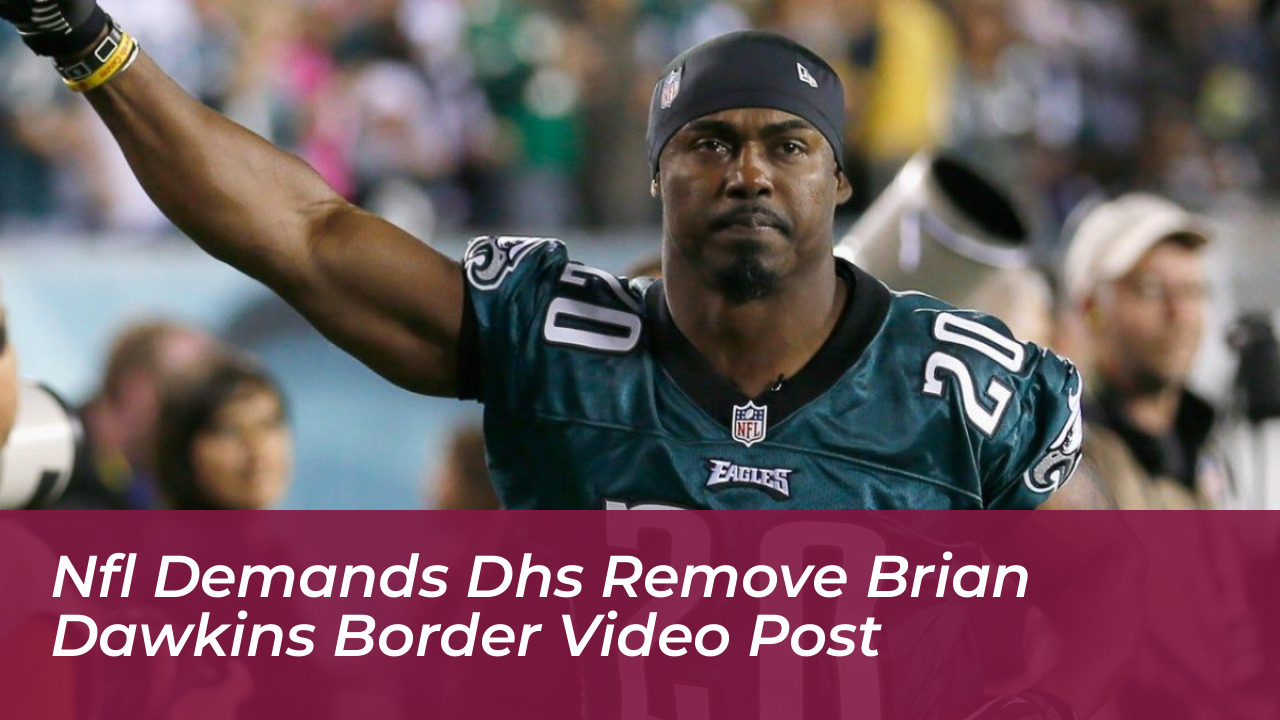
The National Football League and Pro Football Hall of Fame safety Brian Dawkins requested that the Department of Homeland Security remove a social media video. The video used Dawkins’ highlight clips to promote border security efforts, representatives confirmed Monday. The Department of Homeland Security (DHS) posted the video on Sunday. It linked highlights of Dawkins making tackles and pregame walkouts to reports of an approaching migrant caravan.
League officials and team sources confirmed that neither the NFL nor the Philadelphia Eagles granted permission for the archival football footage. NFL spokesperson Brian McCarthy confirmed the league’s formal intervention shortly after the video’s release online. “The league has requested the DHS take down the video,” said Brian McCarthy, NFL spokesman.
Unauthorized Use of Name, Image, and Likeness
Addressing the matter publicly on social media, Dawkins stated that he had not approved the use of his name, image, or likeness for the promotional content. The legendary safety, widely known by his “Weapon X” alter ego, took to X to clarify his stance to followers and fans.
“Let’s be clear: I didn’t give permission for my name, image, and likeness to be used by anybody. Take a deep breath. Let’s all be blessed,” Dawkins wrote on social media.
“Our time has come,” wrote the Department of Homeland Security in the original social media post caption. The video started with a clip of Dawkins saying, “The time has come,” before showing a series of his patented hits and walkouts. The montage was soundtracked to the song “Blind” by nu-metal band Korn.
DHS Response and Broader Context
In a statement addressing the ongoing controversy, a DHS spokesperson defended the agency’s messaging without directly addressing whether permission was secured. “DHS is playing lockdown defense at the border. We will use every weapon at our disposal, from A to X, to keep Americans safe,” the department stated.
The video was posted in direct response to reports regarding a migrant caravan that left the city of San Pedro Sula in Honduras. Professional sports leagues in the United States routinely maintain strict policies. These policies state that express written consent is required before any third party, including government agencies, can use game footage or intellectual property for promotional or political campaigns.
This incident is part of a broader pattern of government accounts utilizing pop culture and sports media. Earlier in the year, the official White House account shared edits combining military actions with NFL and MLB highlights. Meanwhile, various music artists and corporate franchises have frequently objected to the unauthorized use of their intellectual property in federal posts.