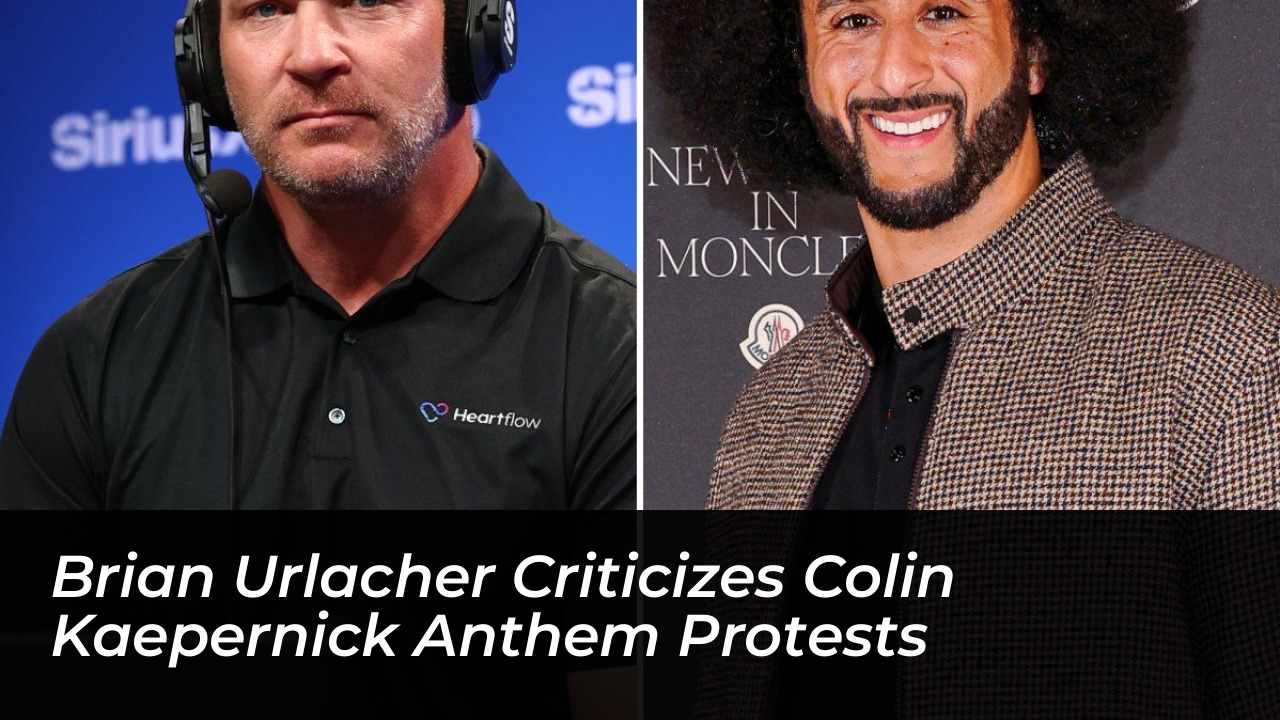
Hall of Fame linebacker Brian Urlacher recently delivered sharp criticism regarding Colin Kaepernick and his 2016 NFL national anthem protests during an appearance on OutKick Sport’s “The Craig Carton Show.” This recent commentary exposes the ongoing clash between traditional NFL locker room culture and modern athlete-led social activism. Urlacher’s perspective highlights deeper generational divides over sports, politics, and team unity, proving that the events of 2016 still resonate deeply within professional football circles.
- Urlacher Outlines Locker Room Friction Caused by National Anthem Protests
- The Line in the Sand for Team Unity
- Political Neutrality in Traditional NFL Cultures
- Personal Boycott of Professional Football Broadcasts
- The Origins and Legacy of Colin Kaepernick’s Demonstration
- Transition From Sitting to Kneeling
- The Role of Nate Boyer in Shaping the Gesture
- NFL Free Agency and the End of an On-Field Career
- Generational Clash Over Athlete Activism and Media Platforms
- Defensive Culture of the 2000s Era Chicago Bears
- Modern Athlete Platforms and External Brand Building
- Kaepernick’s Recent Media Comments and Olympic Ambitions
- Key Metrics and Strategic Comparison Between Player Eras
- Career Accomplishments Comparison Table
- Quantifying Fan Engagement Shifts During the Protests
- Frequently Asked Questions
- Why did Brian Urlacher criticize Colin Kaepernick?
- How did Colin Kaepernick’s protest evolve?
- Did the protests impact NFL television ratings?
- Conclusion
Urlacher Outlines Locker Room Friction Caused by National Anthem Protests
The Line in the Sand for Team Unity
Urlacher asserts that public political statements jeopardize competitive focus by introducing internal friction among teammates. Speaking directly on “The Craig Carton Show,” the former linebacker stated that public political stances create unnecessary racial and political divisions inside team facilities. Winning football requires absolute singular focus on the gridiron, and outside social debates threaten that fragile operational balance.
The veteran defender explained that taking a knee would have created severe tension within his own locker room during his tenure as a team captain. He noted that such actions would have represented a firm boundary for him as a leader. Persistent political divisions inevitably ruin team chemistry and degrade on-field execution when trust among teammates fractures over ideological differences.
Political Neutrality in Traditional NFL Cultures
Reflecting on Urlacher’s playing career from 2000 through 2012, political discussions remained strictly private within professional sports environments. Players kept their personal political affiliations away from the workplace and remained focused exclusively on football operations. This approach defined the broader culture of the early 2000s NFL, where head coaches and general managers systematically discouraged outside distractions.
Locker room leadership prioritized a unified team identity over individual social statements to prevent regional or political factions from forming among teammates. Back then, the team came first, and individual agendas took a backseat to the collective pursuit of a championship. This strict adherence to neutrality helped maintain order and stability across grueling sixteen-game seasons.
Personal Boycott of Professional Football Broadcasts
The anthem protests influenced Urlacher’s personal habits as a football viewer following his retirement from the gridiron. He revealed that he and his wife stopped watching professional football broadcasts entirely for two to three years during the height of the protests. He noted that as long as those demonstrations took place, he refused to tune in, finding full support from his spouse in the decision.
This personal boycott mirrors broader trends among traditional fans who tuned out between 2016 and 2018. The measurable impact of social activism on league viewership metrics during peak controversy years proved that a significant portion of the audience shared Urlacher’s frustration. Televised sports had traditionally served as an escape from political discourse, and the injection of activism alienated a core demographic of viewers.
The Origins and Legacy of Colin Kaepernick’s Demonstration
Transition From Sitting to Kneeling
Colin Kaepernick initiated his protest during the 2016 preseason by remaining seated on the bench while the national anthem played. He stated his primary goal was to bring public attention to systemic racism and police misconduct involving minority communities across the United States. The gesture went largely unnoticed until the third preseason game against the Green Bay Packers captured national media attention.
Once media outlets highlighted the action, it immediately became the central off-field news story across the sports media landscape. The choice to sit on the bench drew intense criticism from commentators, fans, and military veterans who viewed the posture as disrespectful to the American flag and the armed forces.
The Role of Nate Boyer in Shaping the Gesture
The evolution of Kaepernick’s protest involved direct input from Nate Boyer, a former Army Green Beret and NFL long snapper. Boyer published an open letter expressing disappointment regarding Kaepernick’s decision to sit on the bench, which led to an in-person meeting between the two men in August 2016. Boyer suggested kneeling instead of sitting, drawing parallels to military personnel honoring fallen comrades at a gravesite.
This subtle shift transformed the protest into a gesture that maintained a stance against injustice while showing respect for military service members. Kaepernick adopted the suggestion, kneeling for the first time on September 1, 2016, during a game against the San Diego Chargers in a move that altered the trajectory of sports activism.
NFL Free Agency and the End of an On-Field Career
At the conclusion of the 2016 season, Kaepernick opted out of his contract with the San Francisco 49ers, becoming an unrestricted free agent in March 2017. Despite posting respectable statistics, including 16 touchdown passes against four interceptions in twelve games during his final season, no NFL franchise offered him a contract.
Kaepernick later filed a grievance against the NFL alleging collusion among team owners to keep him out of the league. The legal dispute was resolved through a confidential settlement in February 2019, officially ending his active tenure on professional football rosters.
Generational Clash Over Athlete Activism and Media Platforms
Defensive Culture of the 2000s Era Chicago Bears
Urlacher served as the anchor of the Chicago Bears defense under head coach Lovie Smith, featuring a strict, single-minded team ethos. Winning the NFL Defensive Player of the Year award in 2005 and reaching Super Bowl XLI required total dedication to the defensive scheme. Defensive units built cohesion through shared athletic objectives, treating external social controversies as operational threats to team success.
During those seasons, locker room leaders managed internal disagreements privately without the glare of 24-hour sports news networks. The overarching philosophy demanded that personal beliefs remain outside the facility gates to preserve squad solidarity.
Modern Athlete Platforms and External Brand Building
By the time Kaepernick launched his demonstration in 2016, the environment surrounding professional sports had transformed. Social media channels enabled athletes to speak directly to fans, bypassing traditional public relations filters set by franchises. This shift allowed players to build personal brands rooted in social causes and direct messaging.
While this direct access empowered athletes to champion charitable and civic causes, it simultaneously created friction with fans and former players who preferred traditional, sports-only presentations. The modern athlete functions as a media entity, whereas previous generations focused solely on athletic performance within their respective franchises.
Kaepernick’s Recent Media Comments and Olympic Ambitions
Kaepernick has continued to promote his message through publishing and media initiatives. While publicizing his book, The Perilous Fight, he asserted his statistical readiness to return to the NFL, claiming he remains capable of playing at a high level. Additionally, Kaepernick expressed interest in representing the United States in flag football when the sport makes its official debut at the 2028 Summer Olympics in Los Angeles.
His statements confirm that despite years away from the professional gridiron, he remains focused on returning to organized athletic competition on a global stage.
Key Metrics and Strategic Comparison Between Player Eras
Career Accomplishments Comparison Table
| Metric | Brian Urlacher | Colin Kaepernick |
|---|---|---|
| Draft Position | 1st Round, 9th Overall (2000) | 2nd Round, 36th Overall (2011) |
| Primary Team | Chicago Bears | San Francisco 49ers |
| Pro Bowl Selections | 8 | 0 |
| All-Pro Honors | 4 (First-Team) | 0 |
| Super Bowl Appearances | Super Bowl XLI | Super Bowl XLVII |
| Hall of Fame Status | Class of 2018 Inductee | Not Applicable |
Quantifying Fan Engagement Shifts During the Protests
The anthem protests coincided with noticeable shifts in professional football viewing habits. Regular-season NFL television viewership dropped by 8 percent in 2016 and another 9 percent in 2017, sparking intense corporate anxiety across league headquarters. Executives recognized that socio-political friction on the field directly impacted broadcast ratings and merchandise sales.
In response to these metrics, the league eventually pivoted from mandatory standing policies to social justice partnerships and field-stencil messaging campaigns starting in 2020. This strategic shift attempted to bridge the gap between activist players and traditional fans, though cultural debates surrounding the league persist to this day.
Frequently Asked Questions
Why did Brian Urlacher criticize Colin Kaepernick?
Urlacher believes public political demonstrations create unnecessary division and locker room friction that distracts from team success.
How did Colin Kaepernick’s protest evolve?
He initially sat on the bench during the national anthem before switching to kneeling after consulting with former Green Beret Nate Boyer.
Did the protests impact NFL television ratings?
League viewership declined notably during the 2016 and 2017 seasons amid the peak of the national anthem controversy.
Conclusion
Brian Urlacher’s criticism reflects the enduring tension between athletic traditionalism and modern player activism. While former players from the 2000s era advocate for political neutrality to preserve team chemistry, contemporary athletes utilize their platforms to champion social causes. These contrasting philosophies continue to shape the cultural, operational, and financial landscape of professional sports in the modern era.