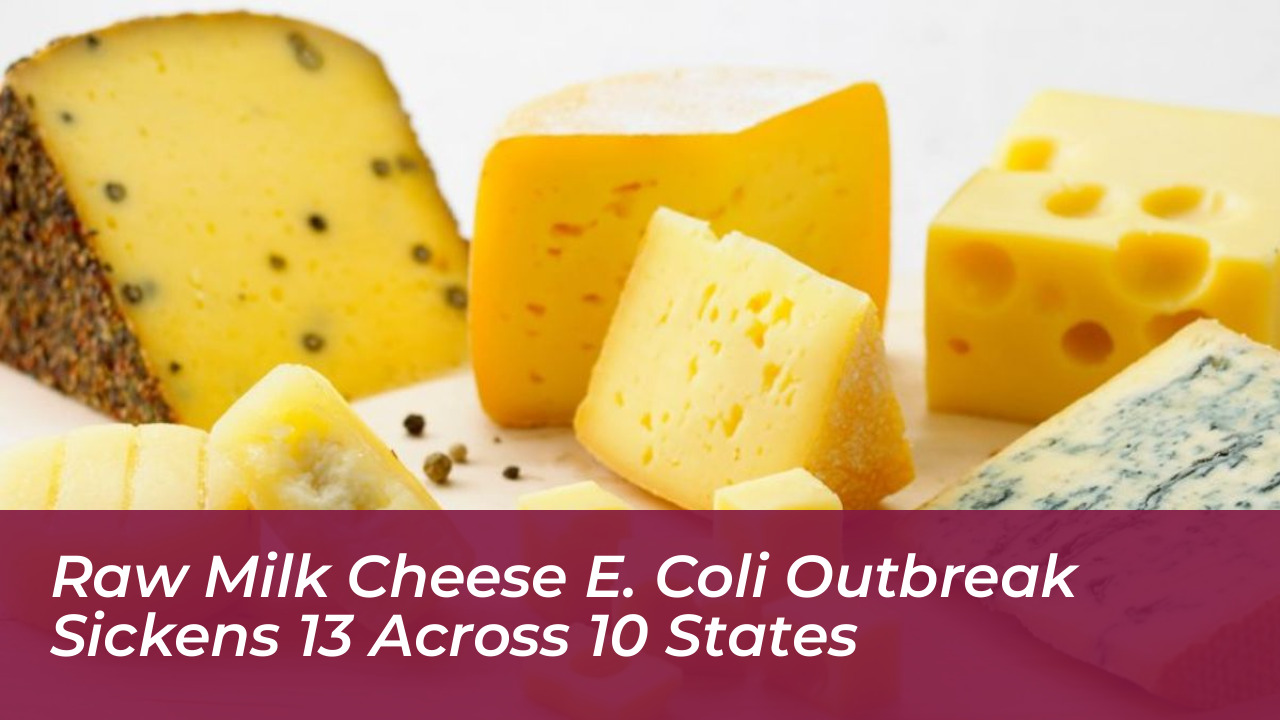
Federal health agencies are closely tracking a severe bacterial outbreak connected to raw dairy products that has impacted consumers across multiple states. A recent raw milk cheese E coli outbreak has sickened 13 individuals, leading to multiple hospitalizations and serious pediatric health complications. The Centers for Disease Control and Prevention and the Food and Drug Administration are leading the investigation to contain the spread.
- Overview of the Multistate E. Coli Outbreak
- Infection Statistics and Clinical Severity
- Demographics of Affected Individuals
- Geographic Distribution Across Impacted States
- The Source: Sierra Nevada Graziers Cheese
- Details of the Voluntary Recall
- Affected Product Varieties
- Packaging Sizes and Distribution Channels
- Symptoms and Medical Complications
- Understanding Hemolytic Uremic Syndrome
- FDA Guidance and Consumer Action
- Sanitation and Kitchen Cleaning Protocols
- The Safety Debate Surrounding Raw Milk Products
Overview of the Multistate E. Coli Outbreak
Federal investigations led by the Centers for Disease Control and Prevention and the Food and Drug Administration continue to uncover the origins of this contamination event. Laboratory testing identified Shiga toxin-producing E. coli O26:H11 as the specific bacterial pathogen responsible for the illnesses. This strain produces potent toxins that can cause severe damage to the human digestive tract and internal organs.
The timeline of the outbreak tracks active infections through late August 2026. Public health officials are analyzing supply chain records, distribution manifests, and patient interviews to determine exactly how the bacteria entered the food supply. State and federal laboratories continue whole genome sequencing on patient samples to track genetic links between the cases.

Infection Statistics and Clinical Severity
A total count of 13 confirmed individuals have contracted the infection across 10 states. This outbreak exhibits an unusually high severity rate, resulting in eight total hospitalizations. The aggressive nature of the bacterial strain means that more than half of all identified patients required inpatient medical care.
Three patients developed hemolytic uremic syndrome, a life-threatening kidney complication that requires intensive medical intervention. Despite the severity of these hospitalizations, current status reports confirm zero reported fatalities linked to the outbreak. Public health authorities remain vigilant as monitoring continues across all impacted regions.
Demographics of Affected Individuals
Young children represent the primary vulnerable group in the outbreak, highlighting the severe risks unpasteurized products pose to youth. The median age of infected patients stands at just five years old. Pediatric populations face higher risks from foodborne pathogens because their immune systems are still developing.
Children are also more susceptible to developing severe complications like hemolytic uremic syndrome following a Shiga toxin-producing bacterial infection. Parents and caregivers must exercise extreme caution when serving specialty dairy items to young children and toddlers.
Geographic Distribution Across Impacted States
The multistate spread covers various regions nationwide, showing that contaminated products reached consumers far from their manufacturing origin. The list of reporting states currently includes California, Colorado, Georgia, Kentucky, Michigan, Nevada, Oregon, Tennessee, and Utah. Supply chain analysis indicates that distribution networks spanned coast to coast.
There is a strong potential for additional states to report cases as the epidemiological investigation continues. Healthcare providers nationwide remain on high alert for patients presenting with symptoms matching this specific E. coli strain.
The Source: Sierra Nevada Graziers Cheese
Epidemiological data points directly to dairy products from a single manufacturer. Public health interviews revealing common dietary exposures among nine sickened individuals helped narrow down the source quickly. Investigators cross-referenced food purchase histories and grocery loyalty card data to confirm the common denominator.
Every single interviewed patient consumed Sierra Nevada Graziers grass-fed raw milk cheese within a week of falling ill. Traceback investigations confirmed that the implicated items originated from the same production facility and distribution network.
Details of the Voluntary Recall
The Sierra Nevada Cheese Company acted swiftly following federal warnings and epidemiological findings. The company initiated a voluntary recall covering all batches of grass-fed raw milk cheeses distributed through its commercial channels. This action serves as a precautionary measure while federal investigators isolate the exact contamination vector within the facility.
Retailers removed the affected cheeses from store shelves immediately upon notification. Consumers who purchased artisanal dairy items are urged to check their refrigerators and dispose of any matching products.
Affected Product Varieties
The recall impacts several distinct product formulations produced by the manufacturer. Consumers should check their refrigerators for specific cheese variants bearing the brand label. The recall includes Medium Cheddar raw milk cheese variants and Sharp Cheddar raw milk cheese variants.
Additional impacted items include Jalapeno Jack raw milk cheese variants and Monterey Jack raw milk cheese variants. All batch codes and expiration dates of these four styles fall under the current federal advisory.
Packaging Sizes and Distribution Channels
The recalled cheese reached both retail consumers and commercial food service operations. Retail formats include standard 8-ounce and 16-ounce packages sold in grocery store specialty cheese aisles. Wholesale food-service formats include 5-pound blocks designed for commercial kitchens and restaurants.
Both retail and commercial distribution channels are affected by the recall. Restaurants and institutional kitchens must check their inventory to ensure no recalled cheese was used in prepared dishes.
Symptoms and Medical Complications
Infections with this specific bacterial strain cause acute gastrointestinal distress that can incapacitate an individual within days of exposure. Primary symptoms include severe stomach cramps, persistent vomiting, and bloody diarrhea. Fever frequently accompanies these initial signs of bacterial infection as the body mounts an immune response.
Anyone experiencing these symptoms after consuming raw milk cheese must seek medical evaluation immediately. Standard over-the-counter anti-diarrheal medications are generally discouraged for Shiga toxin-producing E. coli infections, as they can worsen medical outcomes.
Understanding Hemolytic Uremic Syndrome
Hemolytic uremic syndrome represents a severe medical emergency triggered by the toxins circulating in the bloodstream. The condition damages small blood vessels in the kidneys, causing red blood cells to destroy prematurely and leading to acute kidney failure. This complication requires specialized hospital care, often including blood transfusions and dialysis.
Warning signs requiring immediate medical intervention include pale skin, unusual fatigue, and drastically decreased urination. Early detection and aggressive fluid management significantly improve recovery odds for patients experiencing this condition.
FDA Guidance and Consumer Action
Federal authorities recommend immediate steps for households possessing recalled items. Consumers must securely discard the cheese in a sealed garbage bag or return it to the place of purchase for a full refund. Handling the packaging requires care to prevent environmental contamination in the home.
Health risks associated with consuming any portion of the recalled dairy items remain extremely high. Even a small bite can introduce enough bacteria to cause severe illness, especially in children and older adults.
Sanitation and Kitchen Cleaning Protocols
Cross-contamination plays a major role in spreading bacterial infections within home kitchens. Individuals who handled the recalled cheese must wash their hands thoroughly with warm water and soap for at least 20 seconds. Kitchen counters and utensils can easily transfer bacteria to other foods if left unwashed.
Step-by-step cleaning protocols require washing refrigerator drawers, cutting boards, and kitchen counters with hot soapy water followed by a chemical sanitizer. Submerge reusable knives and cheese slicers in a bleach solution or run them through a high-temperature dishwasher cycle.
The Safety Debate Surrounding Raw Milk Products
Public health agencies maintain strict warnings against consuming unpasteurized dairy goods due to inherent microbiological risks. Pasteurized milk undergoes a controlled heating process that destroys harmful pathogens like E. coli, Listeria, and Salmonella. Raw milk products bypass this pasteurization step, preserving natural enzymes but retaining dangerous bacterial risks.
Balancing natural enzyme preservation with microbiological safety remains a central debate in artisanal food manufacturing. While proponents value the traditional qualities of unpasteurized goods, regulatory bodies emphasize that pathogen reduction remains necessary to protect public health.