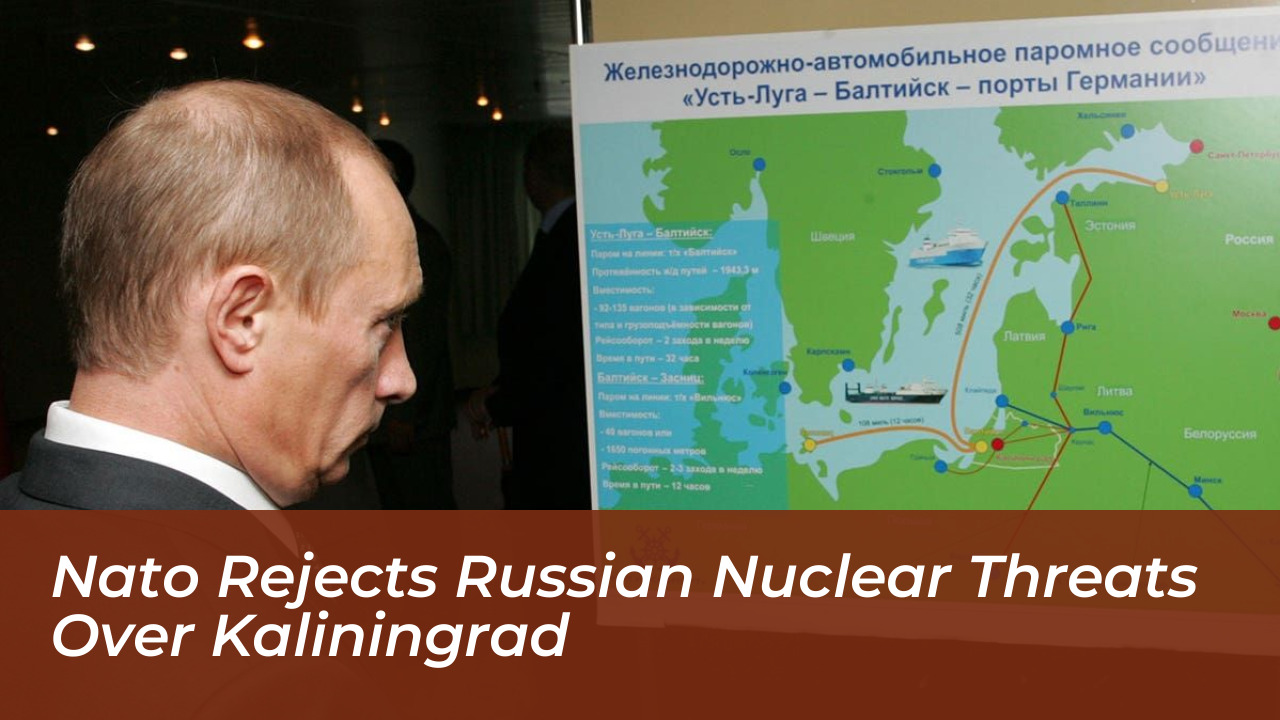
NATO has strongly condemned what it describes as irresponsible nuclear rhetoric from Moscow. This statement followed a Russian warning regarding the heavily militarized Kaliningrad exclave. The diplomatic exchange, which came to light on September 30, 2026, highlights rising tensions along the security boundary separating Russia and Western alliance members.
The diplomatic confrontation began when the Russian embassy in Belgium transmitted a formal non-paper to NATO headquarters. The document warned that Moscow would be fully prepared to deploy its nuclear arsenal if NATO or its member states attempted to isolate or threaten Kaliningrad, a strategic Russian territory situated on the Baltic Sea wedged between Poland and Lithuania.
NATO Secretary General Mark Rutte directly addressed the escalation during the Euronews Defence and Space Summit. Rutte dismissed the implicit threats while reassuring member nations of the bloc’s defensive posture.
“We will always be defensive, but if necessary, of course we will defend ourselves. We are a defensive alliance. Stop the nuclear threats. This is absolutely not called for and not helpful,” Rutte stated.
NATO Response and Regional Security Concerns
NATO spokesperson Allison Hart elaborated on the alliance’s official reply to Moscow’s communication, confirming that a formal response had been dispatched. Hart emphasized that none of the military exercises or routine activities conducted by alliance members pose any legitimate risk to Russian territory.
“We strongly denounce the threat of force, including any irresponsible nuclear rhetoric,” Hart said. She also reiterated the alliance’s call for Russia to end its ongoing military campaign in Ukraine, characterizing recent Russian hybrid tactics and escalation as signs of desperation.
Neighboring frontline states have also responded to the diplomatic note. Lithuanian officials characterized Moscow’s latest communications regarding Kaliningrad as a form of psychological pressure designed to disrupt regional stability and test Western resolve.
Wider European Defense Measures
The latest nuclear posturing over Kaliningrad coincides with broader European Union initiatives to revamp its security architecture. European Commission President Ursula von der Leyen and EU foreign policy chief Kaja Kallas are reportedly preparing a new emergency security protocol and comprehensive strategy.
This emerging European framework is intended to explicitly identify Russia as the primary security threat to the EU. It also complements Article 4 of the North Atlantic Treaty, which allows members to consult together whenever territorial integrity, political independence, or security is threatened.
Despite the diplomatic friction and ongoing hybrid operations across Europe, NATO leadership maintains that the alliance possesses the full capability and readiness to defend every inch of Allied territory against any form of external aggression.