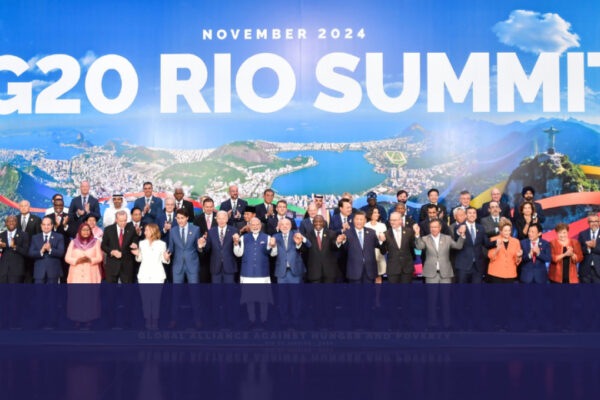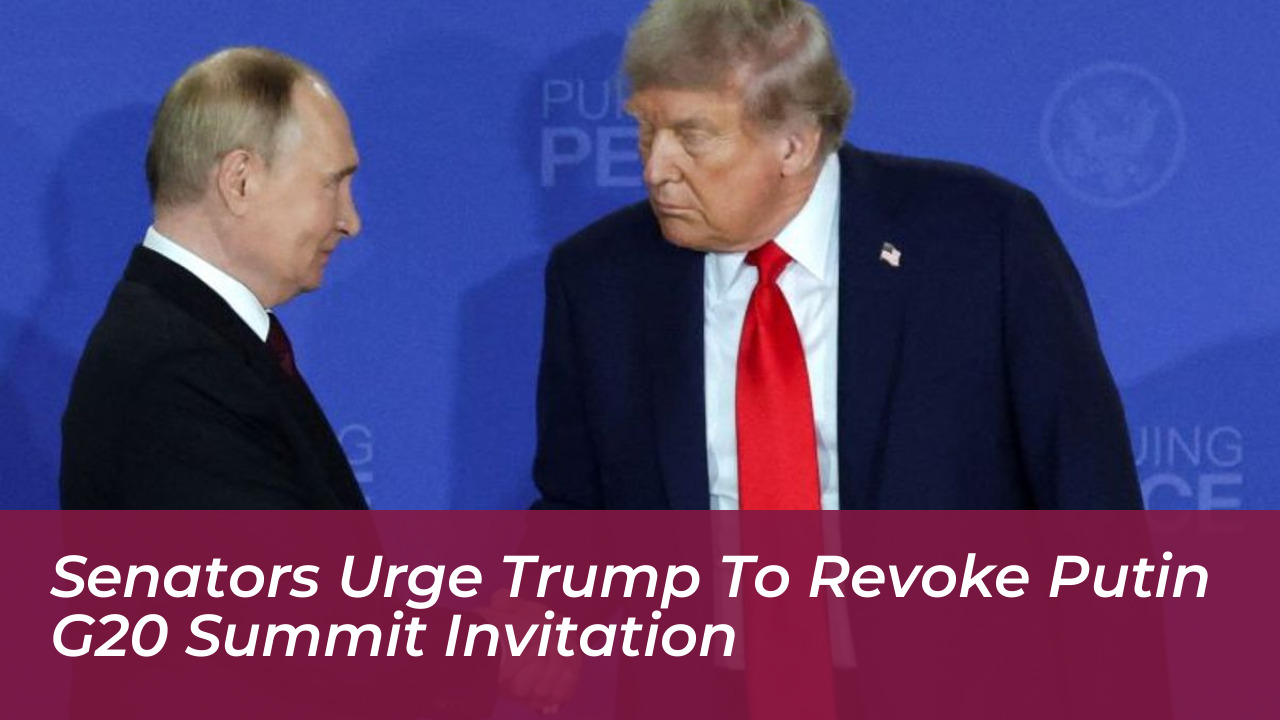
A bipartisan coalition of fourteen U.S. senators recently urged President Donald Trump to rescind the official invitation extended to Russian President Vladimir Putin for the upcoming G20 summit. This high-stakes gathering is scheduled to take place in Miami, Florida, in December 2026. Capitol Hill’s aggressive pushback highlights a deep division in American foreign policy. Lawmakers argue for strict diplomatic isolation, while the executive branch attempts to open direct negotiation channels with Moscow.
- Bipartisan Senate Coalition Demands Action
- Diplomatic Friction: State Department versus Capitol Hill
- Precedent and Fallout: Lessons from the Asheville Finance Meeting
- Historical Context of Putin’s G20 Participation
- Stakeholder Alignment Matrix and Strategic Scenarios
- Frequently Asked Questions
- Why did 14 senators issue this joint letter in late September?
- When did Vladimir Putin last attend a G20 summit in person?
- What occurred at the G20 finance meeting in Asheville earlier this year?
- What legal hurdles face the Russian president’s entry into the United States?
This article examines the core arguments raised by congressional leaders, the mounting diplomatic friction between the State Department and Capitol Hill, historical participation patterns, and the systemic fallout of hosting the Russian leader on American soil.
Bipartisan Senate Coalition Demands Action
The push to block Vladimir Putin from entering the United States reflects an even split across the political aisle. The joint letter includes seven Republican and seven Democrat signatories. This rare show of cross-party unity signals deep legislative resistance to any softening of the Western stance on the ongoing conflict in Eastern Europe.
Senate Armed Services Committee Chairman Roger Wicker leads the charge on the Republican side. Senator Wicker emphasizes that welcoming the Russian leader to Florida grants unearned prestige to a primary geopolitical adversary. He argues that such a move directly undermines vital U.S. defense commitments across Europe.
On the Democratic side, Senate Foreign Relations Committee Ranking Member Jeanne Shaheen anchors the opposition. Senator Shaheen insists that democratic nations must maintain unyielding boundaries against unauthorized military aggression toward sovereign states. Together, these key leaders frame the Miami summit as a critical test of Western resolve.
The Senate letter outlines explicit strategic and moral risks tied to hosting Russian delegates at a U.S. based summit. Lawmakers point out that international isolation acts as a primary economic and diplomatic lever against the Kremlin. Allowing Putin full participation in global economic forums directly reduces his motivation to negotiate a permanent ceasefire with Ukraine.
The joint congressional letter explicitly cites ongoing Russian military strikes against Ukrainian towns and energy infrastructure. Senators note that inviting Putin to Miami legitimizes a government currently carrying out daily civilian bombardments. Normalizing diplomatic relations before the cessation of hostilities sends a damaging signal to international allies and adversaries alike.
Diplomatic Friction: State Department versus Capitol Hill
Secretary of State Marco Rubio publicly announced the presidential invitation, describing the upcoming December summit as a direct venue for executive dialogue. Rubio stated that the Miami summit provides a necessary opportunity for direct engagement between the U.S. president, Russian leadership, and international partners to resolve global economic bottlenecks.
Congressional leaders immediately pushed back against this executive strategy. Lawmakers argue that high-level diplomatic access without prior policy concessions severely damages long-term American credibility. While the State Department prioritizes open communication channels, Capitol Hill demands accountability and adherence to international law before granting high-profile diplomatic access.
Strategic disagreements between the executive and legislative branches often complicate foreign policy execution during global crises. White House officials maintain that direct talks yield better intelligence and operational oversight than complete isolation. Senators counter that opening doors to sanctioned leaders erodes international sanctions regimes.
Precedent and Fallout: Lessons from the Asheville Finance Meeting
Preparatory G20 events earlier in the year demonstrated deep divisions among participating member nations regarding Russian attendance. During the G20 finance ministers meeting in Asheville, North Carolina, the arrival of Russian Finance Minister Anton Siluanov sparked immediate outrage among European delegates.
Representatives from European Union nations staged internal protests and successfully demanded Siluanov’s exclusion from the official ministerial group photograph. This incident previews the intense diplomatic friction awaiting the administration if the Russian president steps foot on American soil in December.
Both Vladimir Putin and Anton Siluanov remain under active executive branch financial sanctions. U.S. law targets both individuals for activities that actively threaten international stability and American national security interests. Hosting a foreign leader subject to international scrutiny presents unprecedented operational challenges for federal law enforcement and diplomatic protocol teams.
Standard diplomatic protocols typically grant broad immunity to visiting heads of state attending multilateral summits. However, active U.S. Treasury sanctions require special state waivers from the State Department to permit foreign delegation entry. This requirement creates complex legal points of contention for federal agencies tasked with enforcing national security mandates.
Historical Context of Putin’s G20 Participation
Vladimir Putin has not attended a G20 summit in person since the June 2019 Osaka summit in Japan. Following the full-scale invasion of Ukraine in 2022, Russia shifted its strategy. Moscow sent foreign ministers or financial representatives to subsequent summits held in Indonesia, India, and Brazil.
The proposed Miami event marks the first potential in-person appearance by Putin on Western soil in seven years. This historical gap underscores the gravity of the current executive decision. Allowing the Russian leader to break his multi-year Western isolation in Florida represents a massive shift in international diplomacy.
Global powers watch closely to see whether Western nations will enforce unified travel bans against high-ranking Kremlin officials. Past summits proved that hybrid attendance models prevent total gridlock while maintaining a symbolic diplomatic distance from Moscow.
Stakeholder Alignment Matrix and Strategic Scenarios
Analyzing the positions of various international actors clarifies the geopolitical stakes surrounding the Miami G20 summit. The table below outlines the primary groups and their core objectives.
| Stakeholder Group | Official Position | Primary Objective |
|---|---|---|
| Senate Bipartisan Coalition | Rescind Invitation Immediately | Maintain isolation on Moscow and protect allied unity. |
| U.S. Department of State | Extend Invitation | Establish direct presidential negotiation channels. |
| European Union Members | Oppose Normalization | Refuse joint diplomatic appearances with Russian officials. |
| Kremlin Spokespersons | Evaluate Participation | Re-establish presence in premier global economic forums. |
The diplomatic fallout from this decision points toward two distinct scenarios. If the administration maintains the invitation, several key European allies may alter their delegation levels or boycott selected plenary sessions in Miami. Alternatively, revoking the invitation aligns U.S. executive posture with congressional leadership and enforces a strict international boundary against state aggression.
Foreign policy analysts suggest that compromise solutions might involve secure virtual participation options for the Russian delegation. Such alternatives could defuse domestic political tension in Washington while keeping broader multilateral economic channels functional.
Frequently Asked Questions
Why did 14 senators issue this joint letter in late September?
Lawmakers acted immediately following State Department confirmations regarding Putin’s invitation to the December 2026 Miami summit, aiming to protect allied unity and challenge the normalization of Russian aggression.
When did Vladimir Putin last attend a G20 summit in person?
Putin last attended an in-person G20 leaders summit in June 2019 in Osaka, Japan, relying on virtual links or lower-level proxies for subsequent global summits.
What occurred at the G20 finance meeting in Asheville earlier this year?
European delegates protested the presence of Russian Finance Minister Anton Siluanov and successfully blocked him from joining the official ministerial group photograph.
What legal hurdles face the Russian president’s entry into the United States?
Active U.S. Treasury financial sanctions require specialized federal state waivers to permit visa issuance and diplomatic entry for the targeted delegation.