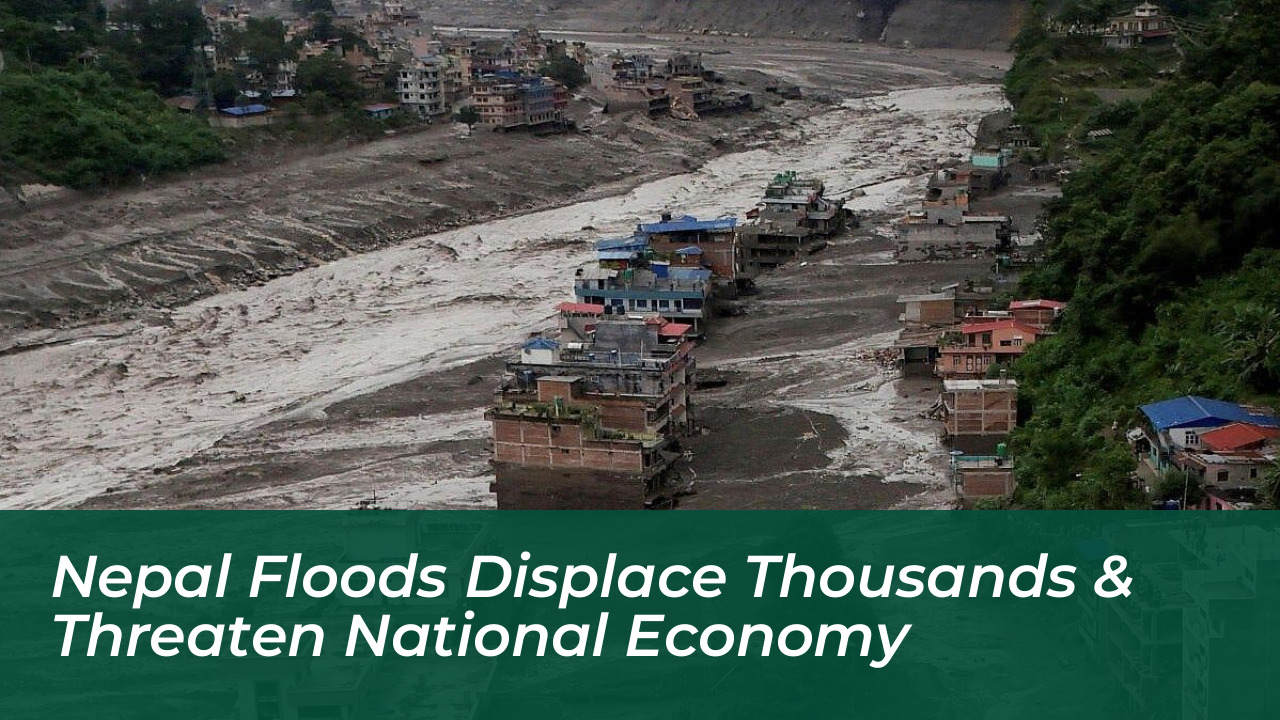



Devastating flash floods triggered by a massive glacier collapse along the Bhotekoshi-Trishuli river corridor have resulted in a profound humanitarian and economic crisis in northern Nepal. According to government authorities and United Nations assessments, the catastrophic deluge has claimed more than 1,400 lives, left over 5,700 people missing, and displaced tens of thousands of residents. With critical infrastructure destroyed, homes flattened, and vital trade and energy corridors crippled, the disaster poses an unprecedented threat to Nepal’s stability and its broader economic trajectory.
The physical destruction has hit vulnerable populations particularly hard. More than 80,000 people are currently in urgent need of humanitarian assistance, crowding into temporary holding centers across affected districts such as Nuwakot. Emergency shelters have struggled to accommodate displaced residents, many of whom are young mothers, pregnant women, and infants facing severe shortages of food, clean water, and sanitation facilities.
“Those three days were living hell for me, with no food, no working toilet and no one to help with the baby,” said Pooja Pariyal, a displaced mother who sheltered on a hospital roof in Trishuli with her newborn daughter, describing the emotional and physical toll of waiting for rescue.
Severe Toll on Nepal’s Hydropower and Energy Grid
Beyond the immediate human tragedy, the late August disaster has struck a severe blow to Nepal’s economy, particularly its core hydropower sector. Ministry of Energy officials report that the floods damaged nearly 360 megawatts (MW) of operational generation capacity-representing roughly 8% of the nation’s total capacity-across nine projects in two districts. An additional 25 MW solar plant and five under-construction projects totaling 390 MW were also heavily impacted.
The destruction of surface-built powerhouses, dams, and desanders near riverbeds contrasted sharply with newer projects featuring underground infrastructure, which largely survived the deluge. However, with transmission lines and substations along the Trishuli River washed away, another 150 MW of power has been cut off from the national grid.
This loss directly threatens Nepal’s hard-won net-exporter status. In the fiscal year ending mid-July, Nepal netted approximately 18.75 billion rupees ($142 million) from electricity exports to India and Bangladesh. With domestic generation compromised heading into the winter low-flow season, energy officials warn that Nepal may be forced to reverse course and import electricity from India to cover domestic shortfalls.
Disrupted Trade Corridors and Livelihoods
The economic fallout extends deep into commerce and employment. The hardest-hit Rasuwa and Tatopani regions serve as essential trade corridors connecting Nepal with China. Critical roads, bridges, and border facilities along these routes were swept away, severing a pathway that handled nearly half of Nepal’s exports to China and about 22% of its imports.

A preliminary rapid assessment by the International Labour Organization (ILO) estimates that approximately 21,400 employed individuals live within four kilometers of the primary flood footprint. Workers in tourism, agriculture, transport, and micro-enterprises face severe income shocks.
Because informal employment accounts for a vast share of Nepal’s labor market, daily-wage workers, porters, tourist guides, and small-scale business owners possess minimal financial buffers. The ILO has cautioned that prolonged disruptions to supply chains and trade routes will transmit economic pain far beyond the directly flooded districts, elevating risks of long-term income loss and negative coping strategies such as child labor.
Broader Economic Strains and the Cost of Recovery
The floods arrive at a precarious time for Nepal’s economy, which was already grappling with the aftermath of severe political unrest and protests in late 2025 that caused over $586 million in economic losses. With real GDP growth projected at a modest 2.3% for the fiscal year, the added burden of infrastructure reconstruction threatens to strain national finances further.
Energy experts and economists note that building back stronger will require significant structural adjustments. Upgrading future hydropower designs to withstand maximum credible floods and debris flows is expected to increase project costs by 10% to 12%. Proposals for loss-and-damage funds, increased reliance on diversified solar energy arrays, and strict basin-level zoning laws are now taking center stage in national policy discussions.
For now, however, government agencies, international organizations, and local volunteers remain focused on search-and-rescue operations, clearing debris, and delivering life-saving aid to thousands of displaced families enduring harsh conditions in temporary shelters.