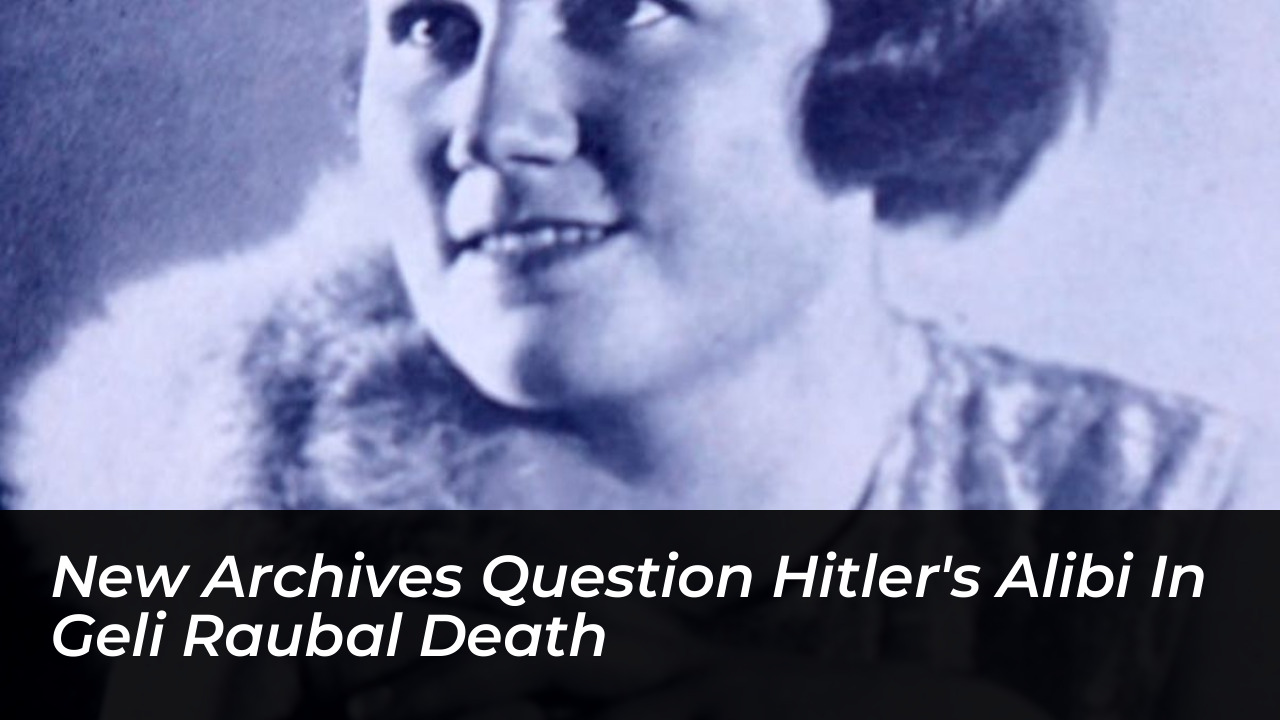
For nearly a century, the tragic death of Geli Raubal, Adolf Hitler’s 23-year-old niece, has remained one of the most controversial episodes in the private life of the Nazi dictator. Found dead from a gunshot wound in Hitler’s Munich apartment on Prinzregentenplatz, her passing was officially ruled a suicide. For decades, historians relied on a concrete police report that provided Hitler with an airtight alibi, placing him miles away in Nuremberg when the body was discovered. Recent archival discoveries in Munich threaten to dismantle that timeline entirely.
- The Established Official Timeline and Hitler’s Alibi
- The Munich Police Report of September 1931
- The Construction of an Airtight Alibi
- New Archival Discoveries: What the Munich Documents Reveal
- Unearthing Forgotten Munich State and City Archives
- Reconstructing Hitler’s September 18 Schedule
- Comparative Analysis of Archival Evidence
- The Complex Relationship Between Hitler and Geli Raubal
- Control, Dependency, and the Move to Vienna
- The Final Argument
- Allegations of a Cover-Up and Forensic Omissions
- Press Reactions and Investigative Shortcuts
- Archival Whispers and Political Interference
- Political Stakes in Weimar Germany: 1931 Versus 1933
- The Fragility of Hitler’s Public Persona
- How a Scandal Could Have Altered History
- Expert Divisions: Cover-Up Versus Transcription Error
- The Case for Manipulation
- The Case for Administrative Error
- Frequently Asked Questions
- Who was Geli Raubal?
- What do the new Munich archival documents reveal?
- Did Hitler have an alibi for Geli Raubal’s death?
- Was an autopsy performed on Geli Raubal?
Historian Harald Sandner uncovered forgotten administrative records, including two official death notices and a local death registry entry. These documents date the discovery of Raubal’s body to the morning of September 18, 1931, exactly 24 hours earlier than the established police record. On this revised date, Hitler had not yet left Munich. He was actively attending local political events before his eventual departure for Nuremberg later that afternoon. This discrepancy forces historians to reevaluate the events of September 1931 and question the integrity of the original police investigation.

The Established Official Timeline and Hitler’s Alibi
The Munich Police Report of September 1931
The traditional narrative surrounding Geli Raubal’s death rests heavily on a final report issued by the Munich police directorate on September 28, 1931, ten days after the incident. According to this document, Hitler’s personal servant and house manager, Georg Winter, discovered the young woman’s body on the morning of Saturday, September 19. Winter reportedly found Raubal’s room locked from the inside. Upon gaining entry, he discovered her lifeless body on the floor, killed by a gunshot wound to the chest fired from a Walther pistol owned by Hitler.
The police report noted that Winter immediately contacted local authorities at approximately 10:00 AM, leading to a forensic examination by police doctor Dr. Müller at 11:30 AM. Crucially, this official account placed Hitler away from the scene. The future dictator had traveled to Nuremberg on the afternoon of September 17 or 18, depending on varying early accounts, establishing an effective alibi that shielded him from direct police scrutiny.
The Construction of an Airtight Alibi
Because Hitler was rapidly expanding his political influence as the leader of the National Socialist German Workers’ Party, this clean alibi protected him from explosive public scandals during a delicate phase of his rise to power. Any hint of domestic violence, murder, or reckless endangerment could have crippled the NSDAP’s electoral momentum.
The Munich police directorate operated within a civil service heavily infiltrated by sympathetic nationalist elements and right wing sympathizers. Constructing an alibi that placed the party leader hours away by train served both administrative convenience and political preservation.
New Archival Discoveries: What the Munich Documents Reveal
Unearthing Forgotten Munich State and City Archives
Harald Sandner’s research in the Munich State Archive and the Munich City Archive challenges the foundational pillar of Hitler’s alibi. The newly identified records consist of two separate death notices and an entry in the death register of Standesamt München II. These primary sources record the discovery of Raubal’s body not on September 19, but on Friday, September 18, 1931, at 10:15 AM.
This timing creates a direct overlap with Hitler’s known movements in Munich. Reconstructions of his schedule show that he attended a party meeting between 10:30 AM and 12:30 PM on September 18 before departing for Nuremberg in the afternoon. If the civil registry and death notices are accurate, Hitler was in the city and potentially nearby when authorities or associates first documented the tragedy.
Reconstructing Hitler’s September 18 Schedule
The archival timeline correction changes the investigative calculus completely. Hitler was not in transit to Nuremberg during the critical morning window when the death was officially processed. Instead, he was operating out of Munich.
Eyewitness testimonies from party members and local drivers confirm that Hitler maintained an active local presence on the morning of September 18. This concrete overlap destroys the protective buffer of the original 1931 police report.
Comparative Analysis of Archival Evidence
| Source Document | Recorded Date | Hitler’s Location | Investigative Impact |
|---|---|---|---|
| Munich Police Final Report | September 19, 1931 | Nuremberg (Alibi Maintained) | Shielded political leader from direct scrutiny |
| Civil Death Registry (Standesamt München II) | September 18, 1931 (10:15 AM) | Munich (Present during discovery) | Dismantles established alibi and timeline |
The Complex Relationship Between Hitler and Geli Raubal
Control, Dependency, and the Move to Vienna
To understand why a shift in chronology matters, historians must examine the intense, controlling dynamic between Hitler and his half-niece. Geli Raubal moved to Munich from Vienna in 1927 to study medicine and later pursued vocal training, which Hitler funded. Contemporaries and subsequent biographers documented an unusually possessive relationship.
Hitler closely monitored her daily activities, social circle, and movements. Tensions allegedly peaked in September 1931 when Raubal expressed a strong desire to move permanently to Vienna to pursue a career as a singer and distance herself from her uncle’s suffocating oversight.
The Final Argument
Witnesses and contemporary reports indicated that the two engaged in a heated argument in the Munich apartment shortly before her death. Hitler reportedly stated he would only permit the move if her mother accompanied her, a condition Raubal rejected.
This volatile confrontation serves as the emotional backdrop for the tragedy. Whether the fatal wound was self inflicted out of despair or the result of a struggle remains the central question haunting historians.
Allegations of a Cover-Up and Forensic Omissions
Press Reactions and Investigative Shortcuts
The sudden nature of the investigation and the swift closure of the case generated intense suspicion among contemporary journalists and political opponents. The Social Democratic newspaper Münchner Post reported on September 21, 1931, that Hitler and Raubal had engaged in a violent altercation, that unexplained injuries were found on her body, and that senior NSDAP officials held emergency meetings to manage the public fallout.
, investigators ordered no full autopsy, a glaring omission in a suspicious firearm fatality involving a prominent political figure. On September 21, just days after the incident, the Munich public prosecutor’s office released Raubal’s body for transport and burial in Vienna.
Archival Whispers and Political Interference
Historian Harald Sandner points to these investigative shortcuts as circumstantial indicators of a potential police cover-up designed to shield a rising political asset. Decades later, archival whispers reinforced these suspicions.
Records show that former Bavarian minister-president Heinrich Held recalled a 1933 conversation with Social Democrat Wilhelm Hoegner, describing the Raubal case as a corrupt affair and accusing Justice Minister Franz Gürtner of suppressing the investigation. However, researchers have found no written directive ordering a falsification of the police record.
Political Stakes in Weimar Germany: 1931 Versus 1933
The Fragility of Hitler’s Public Persona
The timing of Geli Raubal’s death posed an existential threat to Hitler’s political ambitions. In 1931, the Weimar Republic was staggering under economic ruin, and the NSDAP was capitalizing on public discontent following major electoral gains in the Reichstag.
Hitler actively cultivated an image of rigorous self discipline, moral rectitude, and Spartan dedication to the German nation. An unresolved murder scandal or evidence of abusive domestic control would have shattered this carefully curated public persona.
How a Scandal Could Have Altered History
Had a rigorous criminal investigation exposed Hitler as a primary suspect or forced him into a protracted legal battle, his national political trajectory could have collapsed entirely. The proximity of the incident to President Paul von Hindenburg appointing Hitler Chancellor in January 1933 makes this historical anomaly critically important.
If the police files were deliberately altered to protect a violent fascist leader, it represents one of the earliest institutional failures of Weimar justice in the face of rising totalitarianism.
Expert Divisions: Cover-Up Versus Transcription Error
The Case for Manipulation
Historian Harald Sandner argues strongly for intentional manipulation. He views the twenty-four-hour discrepancy between the civil registry and the police files as a deliberate attempt by sympathetic officials to manufacture an alibi.
According to this interpretation, police administrators massaged the dates to ensure the future dictator remained shielded from any immediate association with a violent death.
The Case for Administrative Error
Other scholars urge caution before declaring a grand conspiracy. Biographer Heike Görtemaker points toward the chaotic initial responses of local authorities and simple bureaucratic transcription errors as common occurrences in early Weimar police files.
Thomas Weber similarly highlights the limits of surviving archival data. While the new documents prove Hitler was in Munich on the morning of September 18, they do not provide definitive proof of what transpired inside the Prinzregentenplatz apartment.
Frequently Asked Questions
Who was Geli Raubal?
Geli Raubal was Adolf Hitler’s half-niece. She lived in his Munich apartment starting in 1927 until her tragic death from a gunshot wound in September 1931.
What do the new Munich archival documents reveal?
Newly discovered civil death registry entries date the discovery of Geli Raubal’s body to September 18, 1931, exactly 24 hours earlier than the official police report stated. This timeline places Hitler in Munich during the morning hours of the discovery.
Did Hitler have an alibi for Geli Raubal’s death?
For decades, official police records claimed Hitler was miles away in Nuremberg during the incident. The new archival findings challenge this alibi by placing him in Munich attending local political meetings on the revised morning of the tragedy.
Was an autopsy performed on Geli Raubal?
No full forensic autopsy was conducted. Investigators quickly closed the case and released her body for burial in Vienna within days, prompting contemporary accusations of a cover-up.