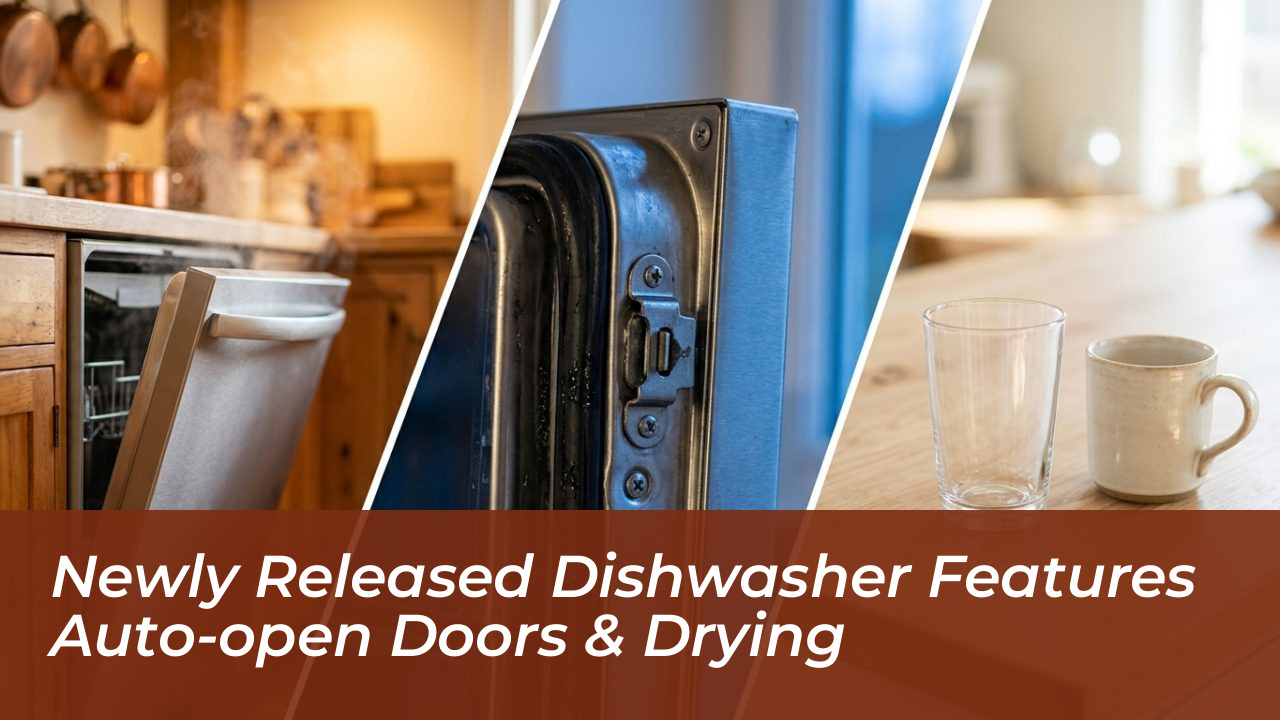

Modern kitchen appliance engineering has officially entered a new phase as debates surrounding post-wash air drying escalate. For years, homeowners relied on a popular kitchen hack: cracking open the dishwasher door just a few inches immediately after a cycle concludes to let trapped steam escape. Today, major manufacturers have transformed this simple habit into an automated engineering standard, integrating mechanized latches into their latest appliance lineups to pop doors open automatically.
The mechanics behind this trend address a long-standing frustration with traditional dishwashers. When a wash cycle finishes, the interior tub remains saturated with high-temperature steam. If left sealed shut, that trapped humidity cools down into stubborn water droplets that pool on mug bottoms and coat glassware in cloudy water spots. By introducing automated door-release mechanisms, leading brands are leveraging the physics of natural evaporation to deliver significantly drier dishes without relying on extended heating elements.
The Science Behind the Post-Cycle Condensation Trap
Understanding why automated and manual door venting outperforms a sealed appliance requires a close look at interior thermodynamics. When a dishwasher finishes its final hot rinse, heavy ceramic plates, stoneware, and thick glassware retain high thermal energy.
Leaving the appliance sealed turns the tub into a terrarium. Evaporating water has nowhere to escape, forcing moisture to condense back onto the load as the machine cools down. Unlatching the door a few inches right away allows hot, saturated air to vent out into the room. Because dishes retain residual heat, the thin film of moisture remaining on them evaporates rapidly into the surrounding air rather than settling back into standing pools.
- Venting trapped humidity: Disperses dense steam clouds before they transform back into liquid droplets.
- Protecting rubber seals: Limits persistent moisture buildup around the perimeter, reducing musty odors and mildew accumulation.
- Accelerating self-drying: Utilizes thermal mass from the final rinse to drive off remaining surface water naturally.
Major Brands Turn the Habit into Automated Engineering
Recognizing the effectiveness of natural air exchange, top appliance manufacturers have incorporated automated opening systems directly into their new product lines:
- Bosch: Features the patented AutoAir® system-prominent in their 800 Series and newly unveiled 500 Series lines-which automatically pops the door open at the end of the drying cycle to deliver up to 40% drier dishes.
- Whirlpool: Implements Door Open Dry technology (also marketed as Auto Open Dry, Natural Dry, or Air Dry) to release the door a short distance and vent out vapor.
- LG and Samsung: Integrate smart sensor-driven automatic door openings with mobile app connectivity, alerting users when cycles conclude and ventilation begins.
- Miele: Employs advanced precision-engineered drying systems and controlled door releases to optimize air circulation.
Busts and Realities: The Plastic Drying Dilemma
A central point in contemporary dishwasher debates involves plastic storage containers and silicone spatulas, which frequently emerge from cycles still damp. Many consumers assume that keeping a dishwasher closed longer will force synthetic materials to dry completely.
In reality, plastic does not store thermal energy the way heavy ceramic or glass does. Plastic cools down almost instantly once hot water stops spraying, lacking the residual heat needed to drive off surface moisture through evaporation alone. Adding a standard commercial rinse aid directly counters this limitation by breaking the surface tension of water, preventing large droplets from clinging to synthetic items.
Step-by-Step: Mastering Manual Dishwasher Venting
If an existing kitchen setup lacks an automated door-release mechanism, homeowners can replicate the process safely using a precise post-wash routine:
- Wait for completion: Let the machine finish its entire cycle, including active heated drying phases, before unlatching the door.
- Step back from steam: Open the door only two to three inches. Avoid placing your face directly above the opening, as the initial burst of vented steam is intensely hot.
- Protect cabinetry: If the unit sits directly under an unsealed solid wood countertop, ensure daily vented moisture does not continuously strike the exact same edge.
- Rest for 15 to 30 minutes: Allow dishes to rest undisturbed while thermal heat clears the remaining water layer.
- Unload bottom to top: Empty the bottom rack first so that any trapped rim water on upper mugs will not drip onto dry plates below.
Whether utilizing advanced factory hardware like Bosch’s AutoAir® or sticking to a reliable manual cracking habit, intentional adjustments to post-wash routines consistently yield spot-free results without driving up electricity bills.
Frequently Asked Questions About Auto-Open Dishwashers
What is the main benefit of an automatic opening dishwasher door?
The primary benefit is enhanced drying efficiency. By venting hot, humid air immediately after a cycle ends, the appliance prevents condensation from redepositing onto clean dishware, resulting in spot-free, completely dry loads.
Which dishwasher brands offer auto-open technology?
Major manufacturers including Bosch (with AutoAir®), Whirlpool, LG, Samsung, and Miele feature automated door-opening capabilities across various mid-range and high-end model series.
Does auto-open door technology consume more energy?
No, it actually saves energy. By relying on natural ambient room air and passive evaporation rather than continuous, power-hungry heating elements or extended fan runs, these systems lower overall utility usage.
Is it safe to let a dishwasher door pop open automatically with pets at home?
Automated mechanisms open the door only a few inches (typically 2 to 3 inches) via a controlled, gentle spring or latch, making it generally safe, though households with extremely curious pets or toddlers should monitor kitchen access.
Can manual door cracking achieve the same results as automated systems?
Yes. Manually cracking your dishwasher door 15 to 30 minutes after a cycle finishes achieves the exact same thermodynamic release of trapped humidity, though automated models provide this convenience completely hands-free.