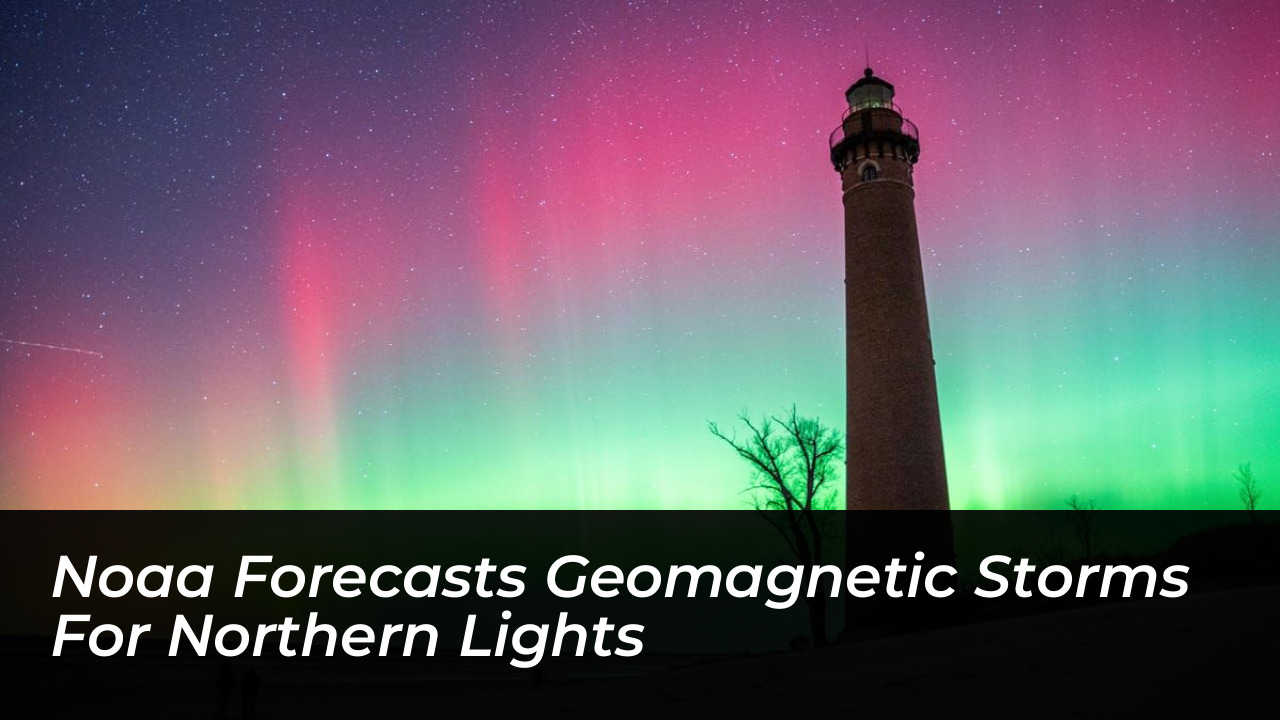


Skywatchers across parts of the United States and northern North America are preparing for potential displays of the northern lights. The National Oceanic and Atmospheric Administration (NOAA) forecasts active geomagnetic storm conditions. This incoming space weather activity is driven by a series of solar eruptions originating from active region AR4549.
Solar Eruptions Trigger Multiple Coronal Mass Ejections
According to updates from Space.com and NOAA’s Space Weather Prediction Center (SWPC), the solar active region AR4549 produced three distinct coronal mass ejections (CMEs). These occurred over consecutive days on October 6, October 7, and October 8. These powerful ejections hurl charged particles and magnetic fields through space toward Earth.
Forecasters anticipate that the most significant of these CMEs will reach our planet on October 9. Simultaneously, a secondary CME is expected to deliver a glancing blow around the same timeframe. A third subsequent CME could arrive later, impacting Earth on October 10 and October 11, potentially prolonging the geomagnetic disturbances.
NOAA Forecasts G2 Geomagnetic Storm Conditions
In response to the incoming solar material, NOAA has forecasted G2 (moderate) geomagnetic storm conditions for October 9. Under a G2 rating, auroral activity can expand further away from the magnetic poles and reach deeper into northern latitudes.
The primary visibility zone encompasses northern North America. Previous G2-rated storms have occasionally pushed auroras as far south as New York and Idaho. However, space weather forecasters note that the exact southern reach for the upcoming event remains uncertain. It depends heavily on the final magnetic orientation of the CMEs upon impact.
Space Weather and the OVATION Model
To track and predict these events, NOAA utilizes advanced forecasting tools such as the OVATION model. The acronym stands for Oval Variation, Assessment, Tracking, Intensity, and Online Nowcasting. Developed initially at the Johns Hopkins University Applied Physics Laboratory by Patrick Newell and colleagues, the real-time model relies on solar wind velocity and interplanetary magnetic field measurements taken at the L1 orbit position. This position is located roughly 1 million miles upstream from Earth.
The L1 monitoring point provides a crucial lead time of 30 to 90 minutes before solar wind particles reach Earth’s magnetosphere. This brief window allows scientists and operators to issue timely warnings regarding potential impacts on high-frequency (HF) radio communications, GPS and GNSS satellite navigation systems, and ground-induced currents affecting electric power transmission.
Tips for Viewing the Northern Lights
For those hoping to catch a glimpse of the aurora during active storm windows, experts recommend several viewing strategies:
- Check Local Forecasts: Monitor real-time updates from NOAA’s Space Weather Prediction Center to confirm active Kp index levels and storm statuses.
- Escape Light Pollution: Travel away from city lights and find a dark viewing location with an unobstructed view toward the northern horizon.
- Allow Eye Adaptation: Give your eyes at least 20 minutes to adjust completely to the dark night sky.
- Use a Camera: Modern digital cameras and smartphones often capture faint auroral colors and structures long before they become clearly visible to the human eye.
With multiple CMEs traveling toward Earth, aurora chasers are advised to stay alert over the coming nights. Activity may fluctuate and arrive in dynamic waves.