
Operations at Nuremberg Airport in Germany have returned to normal following a brief suspension triggered by a security alert on a Corendon Airlines flight. The incident occurred on Tuesday and involved a Boeing 737-800 flying from Corfu, Greece, to Nuremberg.
Details of the Aviation Emergency
The security alert began while the aircraft was flying through Croatian airspace. According to German police, the c**kpit squawked transponder code 7500, which is the international aviation distress signal for unlawful interference or a hijacking.
Shortly after the signal was transmitted, air traffic control lost radio contact with the pilots. This loss of communication prompted aviation officials to activate emergency response protocols at Nuremberg Airport, the scheduled arrival point.
Corendon Airlines later clarified that the false alarm stemmed from an equipment issue rather than an actual security threat. The carrier confirmed that a brief technical glitch in the radio communication system transmitted the erroneous code. Airline officials stated that passengers, crew members, and the aircraft were never in any danger.
Emergency Protocols and Airport Response
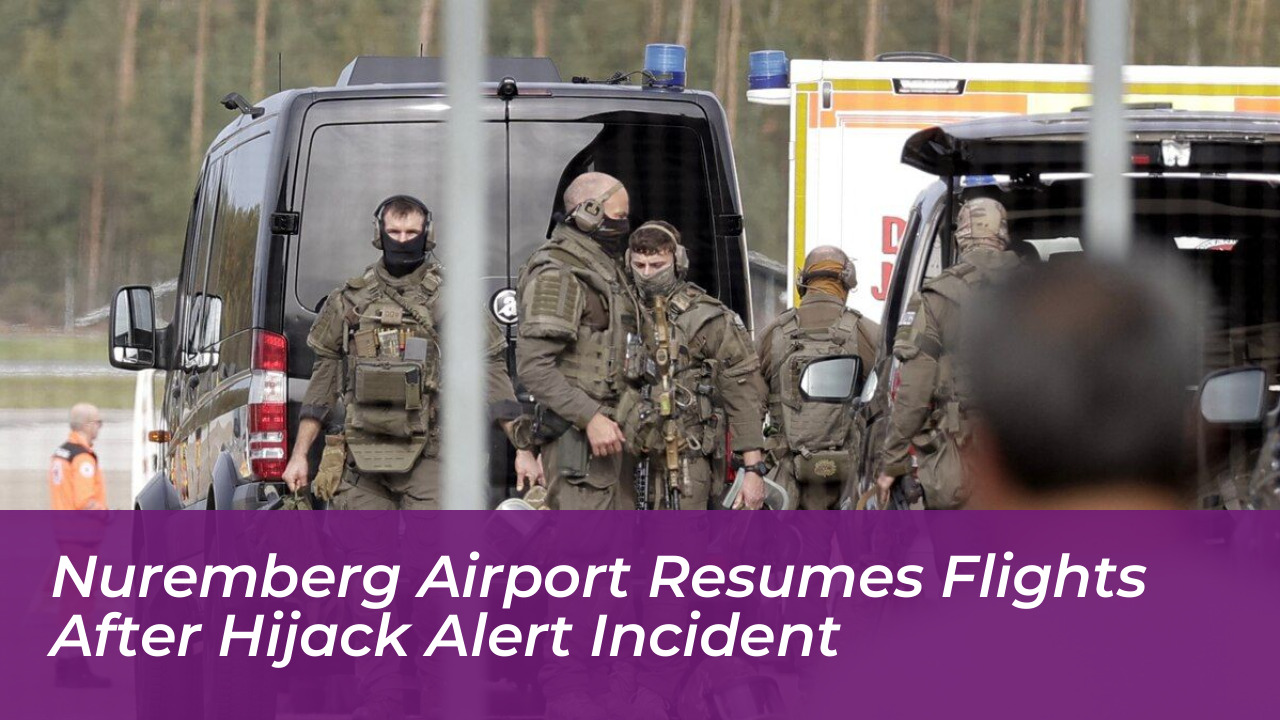
Upon receiving the hijack notification, ground crews and local law enforcement prepared for an emergency arrival. Airport authorities briefly paused routine departures and arrivals to clear runway access and position safety teams.
The Boeing 737-800 landed safely in Nuremberg without further incident. Once on the ground, emergency teams and investigators assessed the plane to determine the cause of the radio failure. After verifying that the incident was purely technical, authorities gave the all-clear, lifted the operational pause, and restored regular flight schedules.
Broader Context of German Aviation Security
The false alarm occurred during a period of heightened vigilance across German aviation infrastructure. Authorities have maintained increased readiness following several recent disruptions at national airports involving unauthorized drone activity and suspected hybrid threats.
Although the incident turned out to be a technical malfunction, the swift response demonstrated the strict safety procedures that air traffic controllers and emergency services follow whenever a hijacking code is detected.
Key Safety and Operational Facts
- Transponder Code 7500: An international emergency code reserved for unlawful interference or hijack situations.
- Cause of Incident: A temporary technical fault within the aircraft’s radio systems.
- Airport Status: Flight operations were suspended briefly and returned to normal shortly after the landing.
Frequently Asked Questions
Was there an actual hijacking attempt at Nuremberg Airport?
No. Both German authorities and Corendon Airlines confirmed that the alert was triggered by a technical fault in the aircraft’s communication equipment.
What does transponder code 7500 mean in aviation?
Code 7500 is a globally recognized squawk code used by flight crews to silently alert air traffic control to a hijacking or unlawful interference aboard the aircraft.
Were the passengers or crew in danger?
No. Corendon Airlines confirmed that safety was never compromised and all passengers and crew members remained safe throughout the flight.
How long was Nuremberg Airport suspended?
The suspension was brief. Flights resumed as soon as the Boeing 737-800 landed safely and security teams confirmed there was no threat.
Why are German airports on heightened alert?
German aviation authorities have increased security measures due to recent disruptions at several airports, including sightings of unauthorized drones and broader concerns over hybrid security risks.