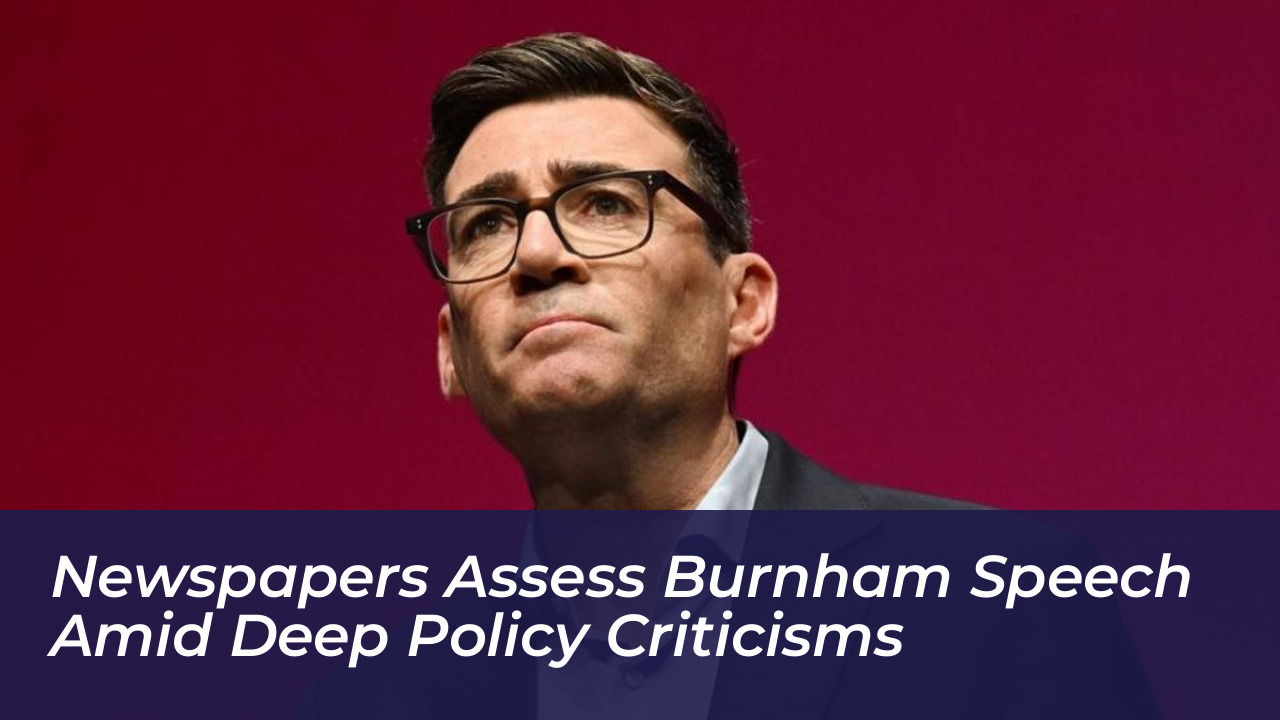
British national newspapers published extensive editorial verdicts examining Prime Minister Andy Burnham’s recent Labour Party conference address. They carefully weighed his political delivery against the broader substance of his government proposals. Financial analysts, political commentators, and major publications offered distinct perspectives on the policy direction. They highlighted both praise for his communicative skills and sharp scrutiny of implementation details.
- Rhetorical Shifts and Policy Ambitions
- Scrutiny Over Fiscal Reality and Implementation
- Key Elements of the Policy Debate
- Frequently Asked Questions
- What was the main focus of Andy Burnham’s conference speech?
- How did national newspapers react to the address?
- What changes were announced regarding the state pension?
- What structural reforms were proposed for utilities and infrastructure?
Described by the Financial Times as “among the most gifted communicators of the current political generation,” Burnham used his address to outline a sweeping vision for the country. Reviewers noted it felt “more a manifesto” than a standard conference speech. However, financial analysts and political observers quickly pointed out that the address frequently lacked immediate, concrete implementation details for its most ambitious proposals.
Rhetorical Shifts and Policy Ambitions
Commentators across the political spectrum focused heavily on Burnham’s explicit departure from past economic orthodoxy. The prime minister declared that Britain had been on the wrong path for decades. He pointed to five key factors: deindustrialisation, deregulation, privatisation, austerity, and Brexit. By taking direct aim at neoliberalism, Burnham drew praise from left-wing commentators who felt vindicated by the ideological shift.
The address included major structural commitments, such as the establishment of the Great British Grid-a new publicly owned network body-and harsh criticisms of privatised water systems as symbols of systemic failure. Burnham also outlined plans for large-scale council housing construction and a commitment to curb right-to-buy policies, alongside a much-debated proposal to reform social care in England.
Scrutiny Over Fiscal Reality and Implementation
Despite the rhetorical energy of the address, editorial boards and political analysts raised critical questions regarding the administration’s capacity to deliver. Observers noted that Burnham has thus far remained committed to strict fiscal rules that currently block vital infrastructure investment, while offering no immediate plans to increase taxes on wealthier demographics.
Substantial controversy also surrounded the proposed changes to the state pension system. Burnham announced plans to alter the pension triple lock from 2030 to help fund the newly proposed social care system. He proposed dropping the annual earnings link while aiming to keep payments above 30% of the full-time average wage. This announcement drew immediate pushback from trade unions and political rivals alike, demonstrating the formidable hurdles the government faces.
Key Elements of the Policy Debate
- State Intervention: Plans for public ownership and control models across the electricity grid and water industry.
- Pensions & Care: Proposals to adjust the pension triple lock by 2030 to finance a restructured social care system.
- Electoral Reform: Commitments to put forward proposals changing the Westminster voting system in future manifestos.
- Fiscal Constraints: Ongoing tensions between ambitious public spending goals and existing budgetary rules.
As the debate surrounding the conference address continues, commentators agree that Burnham has successfully established clear political dividing lines. Whether his administration can translate these ambitious long-term goals into coherent, affordable, and effective policy remains the central question for voters and financial analysts alike.
Frequently Asked Questions
What was the main focus of Andy Burnham’s conference speech?
The speech focused on breaking away from decades of neoliberal economic policy. It proposed increased state intervention, housing reform, public control of utilities, and a long-term overhaul of social care funded partly by adjustments to the state pension.
How did national newspapers react to the address?
Reactions were mixed. Commentators praised Burnham’s rhetorical delivery and communicative skills, while financial and political analysts scrutinized the lack of immediate implementation details and questioned how the policies would be funded under existing fiscal rules.
What changes were announced regarding the state pension?
Burnham announced that starting in April 2030, if Labour wins the next general election, the annual earnings link within the pension triple lock would be dropped. Adjustments would be made to ensure payments remain above 30% of the full-time average wage.
What structural reforms were proposed for utilities and infrastructure?
The prime minister committed to establishing the Great British Grid as a publicly owned network body and targeted privatised water companies, alongside large-scale council housing developments and restrictions on the right-to-buy scheme.