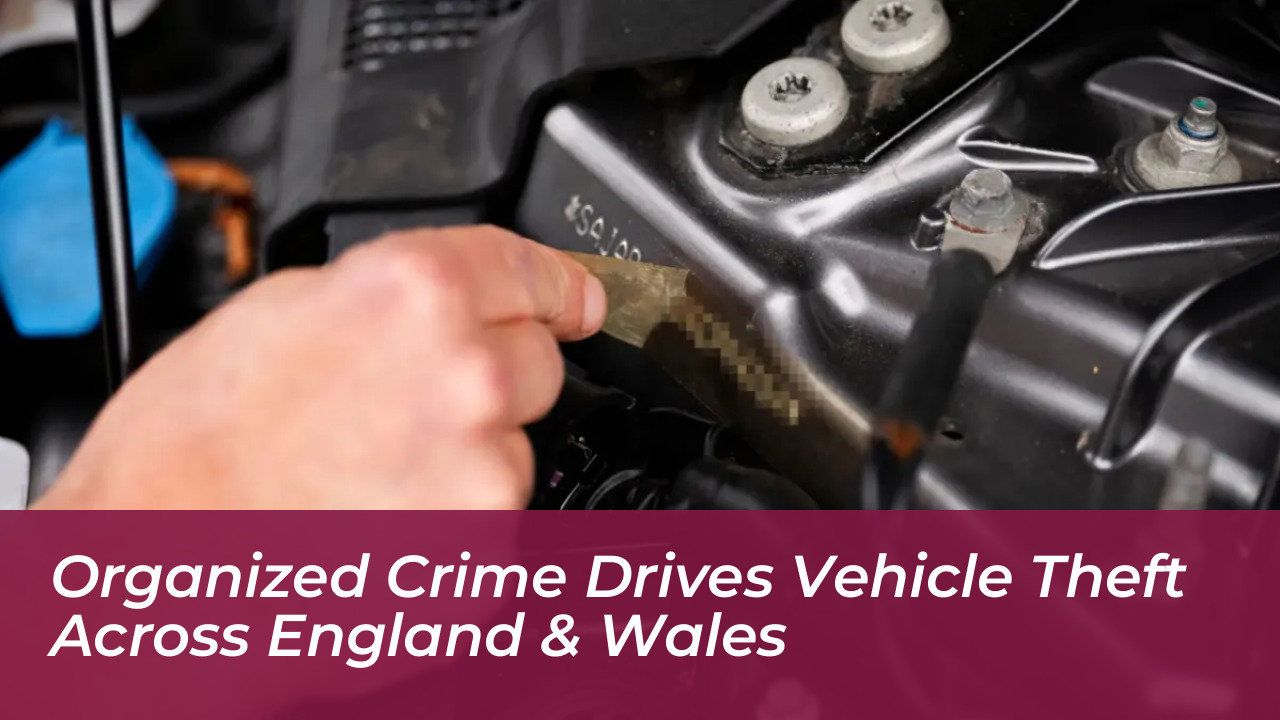

Organized criminal networks are driving a persistent wave of vehicle theft across England and Wales. They rely on sophisticated technology to steal cars for rapid resale, dismantling, and international export. While Home Office figures and BBC reporting show that overall vehicle thefts fell by 5% last year to 119,000 offences, the scale of criminality remains nearly 50% higher than levels recorded a decade ago. Compounding the challenge for law enforcement, just 3% of vehicle theft offences resulted in a formal charge or summons last year.
According to comprehensive crime data and analyses from organizations such as the Royal United Services Institute (RUSI), modern vehicle theft has evolved far beyond opportunistic street crime. Today’s operations are heavily commercialized. They are coordinated by organized crime groups (OCGs) equipped with advanced technical tools capable of bypassing factory-installed security systems within seconds.
High-Tech Methods and Evolving Criminal Tactics
The rise in vehicle theft over the past decade is heavily tied to the proliferation of keyless entry systems and electronic vulnerabilities. Criminal networks routinely deploy two primary methods to bypass modern security configurations:
- Relay Attacks: Thieves use signal amplifiers to capture and relay the radio frequency of key fobs from inside a victim’s home. This tricks the vehicle into unlocking and starting.
- CAN Bus Injection: Perpetrators physically access a vehicle’s Controller Area Network (CAN) bus through exposed wiring-often near the headlight housing. They use plug-in electronic devices disguised as everyday consumer electronics to override immobilizers.
Investigative reports note that bespoke theft devices once cost upwards of £20,000, limiting their use to well-funded syndicates. However, cheaper foreign-made replicas and readily available online tutorials have lowered the barrier to entry. This enables a broader range of criminal actors to exploit these vulnerabilities.
Regional Hotspots and Low Prosecution Rates
Vehicle theft rates vary significantly across different police force areas in England and Wales. The West Midlands recorded the country’s highest vehicle theft rate in the 2025-26 period, logging 4.4 offences per 1,000 people. Enforcement metrics remain critically low in these high-risk regions; only 2.2% of vehicle offences in the West Midlands police force area resulted in a charge or summons.
Urban centers generally experience higher concentrations of vehicle theft due to vehicle density and anonymity for offenders. Concurrently, recovery rates have declined over the long term. Data indicates that only about a quarter of stolen vehicles are successfully recovered and returned to their owners. Many others are quickly stripped for parts or loaded into shipping containers bound for international markets in the Middle East, Africa, and Eastern Europe.
Systemic Challenges and the Response from Authorities
Law enforcement agencies face substantial structural obstacles when investigating vehicle theft. Cross-jurisdictional constraints, limited analytical resources, and competing policing priorities hinder complex, multi-agency operations. For instance, national vehicle intelligence functions have historically operated with minimal dedicated staffing.
In response to mounting economic pressures-estimated by RUSI to cost the UK economy roughly £1.77 billion annually-policymakers and security experts have called for comprehensive cross-sector reforms. Proposed measures include enhancing outbound port security to intercept stolen vehicles before export, restricting the unregulated online sale of cloned vehicle parts, and enforcing stricter legislative bans on specialized theft-enabling hardware.
Until coordinated national strategies and robust port-monitoring frameworks are fully implemented, vehicle theft will likely remain a high-reward, low-risk venture for organized criminal syndicates operating across England and Wales.