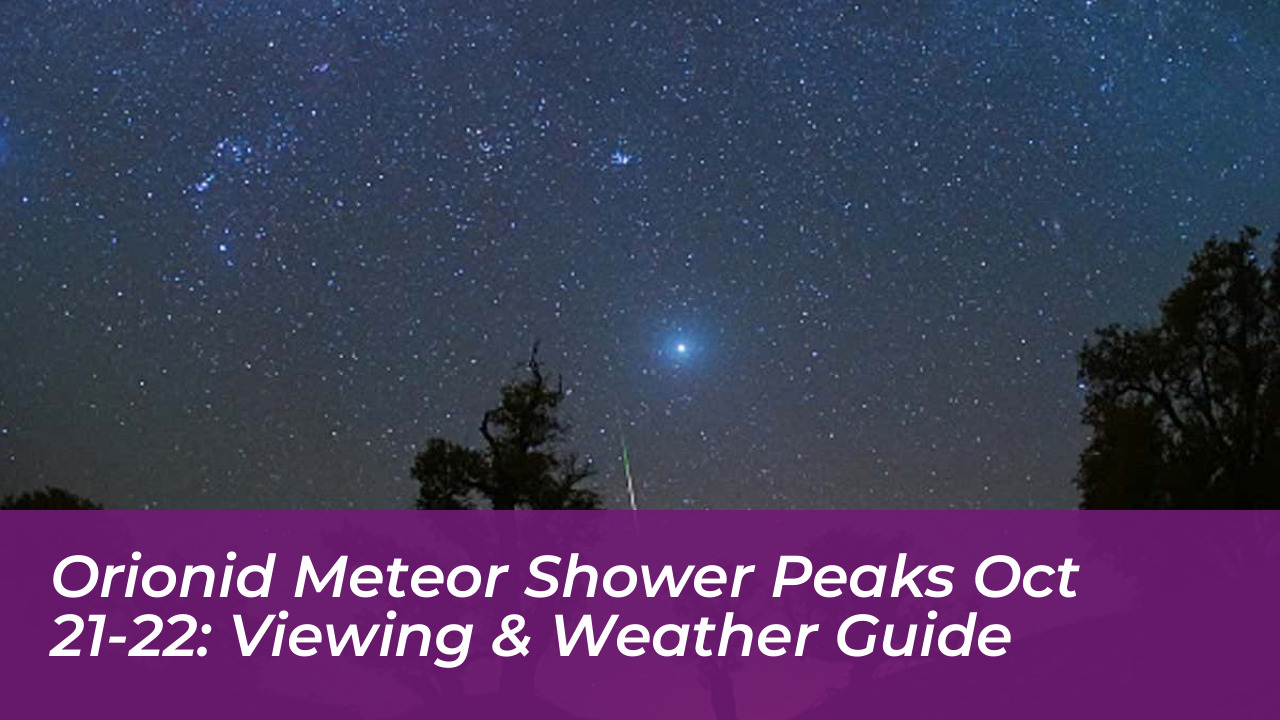

The annual Orionid meteor shower is set to reach its peak overnight from Wednesday, October 21, into the early hours of Thursday, October 22, 2026. Originating from the cosmic debris left behind by Halley’s Comet, this celestial display offers skywatchers across both hemispheres a chance to observe fast-moving meteors streaking across the night sky. However, while stargazers in many regions anticipate clear conditions, developing weather systems and heavy cloud cover threaten to obscure the view for millions across parts of the United States.
Peak Timing and Viewing Windows
According to astronomical data from NASA, the optimal viewing window for the Orionids falls between midnight and dawn. During these dark hours, the constellation Orion climbs higher into the sky, maximizing the number of visible meteors. Weather experts from Weather.com and Fox Weather advise planners to prepare for a late night or an early morning to catch the peak display.
Orionid meteors are famous for their exceptional speed and brightness, traveling at approximately 41 miles per second as they enter Earth’s atmosphere. Because of this high velocity, many meteors leave glowing trains that linger for several seconds or minutes. In some cases, exceptionally bright fireballs may also streak across the dark canvas.
Regional Weather and Cloud Cover Forecasts
While the astronomical conditions are locked in, Mother Nature will dictate who actually gets to witness the show. Conditions are expected to favor much of the central and eastern United States, where early morning forecasts on Thursday point toward clear skies.
Conversely, significant weather challenges loom in other regions:
- The West and Southwest: Thicker cloud cover is projected to impact the Four Corners region, dampening visibility in areas normally celebrated for their dark sky parks. Additionally, a steady stream of tropical moisture is funneling into the West, bringing a heightened risk of flooding and heavy storms to parts of California, Nevada, and surrounding areas.
- The West Coast: Portions of California, Oregon, and Washington face potential cloud interference, though scattered pockets of clear viewing may persist for persistent observers.
- The East Coast Caveat: Although much of the mid-Atlantic and Northeast looks promisingly clear, a developing nor’easter off the Atlantic coast is lingering mid-to-late week. Depending on the exact track of this storm system, heavy cloud cover could shift inland, threatening viewing conditions from New York City up into New England.
Practical Tips for Stargazing
For those fortunate enough to have clear skies, proper preparation ensures the best possible experience during the October peak:
- Find a Dark Location: Travel well away from city lights and intense urban light pollution.
- Dress for the Cold: October predawn temperatures drop rapidly. Bring warm layers, hats, gloves, and a reclining lawn chair, sleeping bag, or blanket to stay comfortable while looking upward.
- Optimize Your Posture: Lie flat with your feet facing southeast to naturally encompass a broad section of the sky.
- Allow Eye Adjustment: Give your eyes at least 30 minutes to fully adapt to the dark, and avoid looking at bright smartphone screens.
- Exercise Patience: Meteor activity arrives in waves. Commit to spending at least an hour outdoors to account for quiet intervals between active bursts.
Frequently Asked Questions
When is the peak of the 2026 Orionid meteor shower?
The official peak occurs during the night of Wednesday, October 21, into Thursday morning, October 22, 2026. Active dates span from October 2 to November 7.
What is the best time of night to watch?
The hours between midnight and local dawn offer the highest frequency of meteors, as the radiant point in Orion rises higher into the night sky.
Do I need a telescope or binoculars to see meteors?
No equipment is necessary. Telescopes and binoculars narrow your field of view too much; unaided human eyes provide the widest and most effective way to spot fast-moving meteors across the sky.
Where do Orionid meteors come from?
They are created when Earth passes through a stream of ice and rock debris left in space by 1P/Halley, commonly known as Halley’s Comet.
What should I do if the peak night is cloudy?
Because the Orionids feature a broad peak rather than a sharp, brief outburst, you can try viewing during the predawn hours on the nights immediately before or after October 21-22.