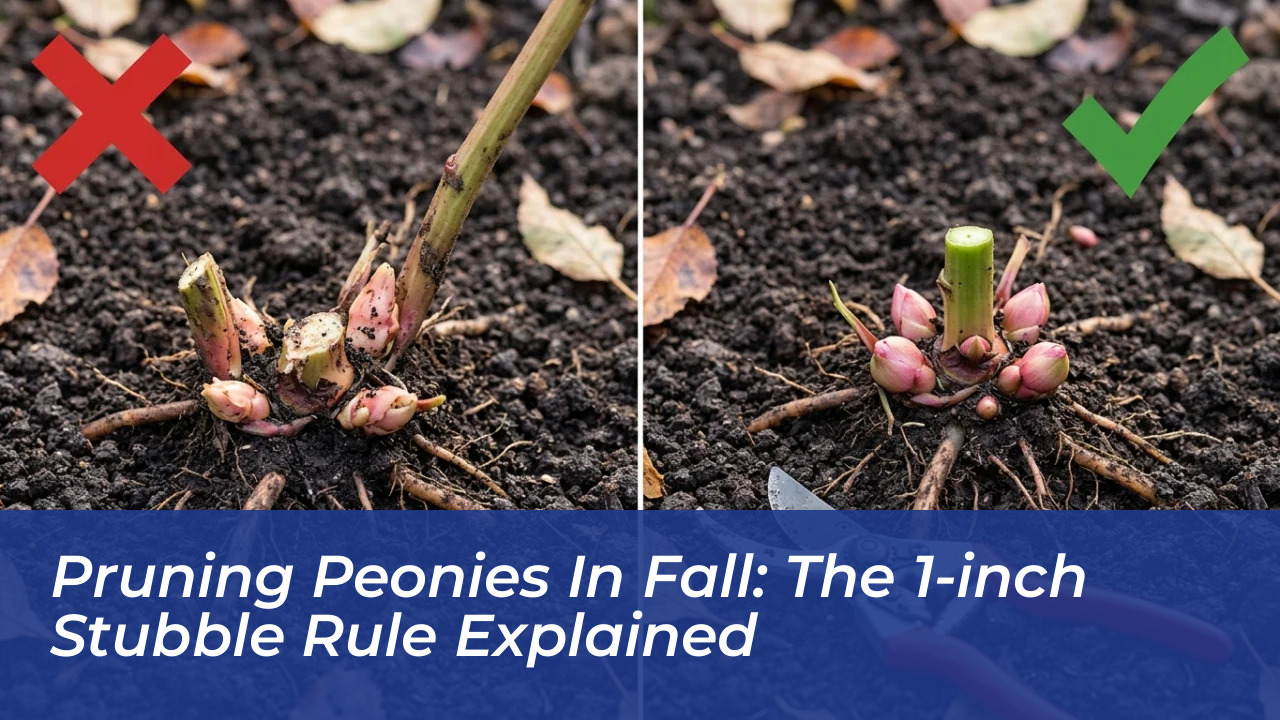

Cutting herbaceous peonies down to 1-inch stubs in late autumn guarantees vigorous, deep-red spring shoots, provided you never disturb the delicate renewal buds resting right along the root crown. Pruning too low, slicing beneath the soil surface, or digging around the root base during late-season cleanups destroys the emerging growth points responsible for the upcoming year’s massive blooms. By late October, mature peony beds often look entirely spent. Stems collapse, foliage shifts to a yellow-brown hue, and flowering remains a distant summer memory, signaling that the plant is ready for its critical end-of-season maintenance.
While aboveground growth appears completely lifeless during this transition, the plant is quietly executing its most vital physiological duty: routing carbohydrates and stored sugars straight into the rhizome to fuel the next growth cycle. Cutting away foliage prematurely robs the root system of these essential reserves. Pruning should only take place after frost arrives and the leaves collapse completely on their own, allowing the plant to absorb every last drop of natural nourishment.
Why Timing Dictates Spring Flower Power
Rushing out with pruning shears at the first sign of yellowing leaves is one of the most common missteps in perennial garden care. Even as leaves begin to fade and discolor, the green tissues continue photosynthesizing, channeling vital compounds down into the crown. Pruning herbaceous stems before the foliage naturally collapses depletes the root system of energy reserves required for strong spring emergence.
The definitive pruning window for herbaceous varieties arrives at the tail end of the growing season, typically across October and early November. Waiting for cold temperatures to flatten the canopy ensures that every drop of nourishment has transferred underground. Watching the leaves rather than relying strictly on a calendar date provides the most reliable indicator that your peonies have entered true dormancy.
The 1-Inch Cut: Protecting the Root Crown
When it is time to trim your herbaceous peonies, accuracy matters far more than speed. Using clean, sharp bypass pruners, slice each herbaceous stem approximately 1 inch (2 to 3 centimeters) above the soil level. Leaving this slight stub marks the precise location of the underground crown and acts as a physical buffer against mechanical injury.
Never slice stems flush with the earth or dig beneath the surface with pruners. Slicing blindly underground risks severing the plump pink and red renewal eyes situated near the root surface. Once severed, remove every fallen leaf and stem from the garden bed immediately. Fungal spores and pathogens overwinter on decaying foliage, making complete sanitation essential if your plants exhibited leaf spots during wet summer weather.
Protecting Renewal Buds and Winter Depth
The entire future of the peony bush hinges on the renewal buds forming along the underground crown. When planting or transplanting, these eyes must sit between 1.5 to 2 inches (3 to 5 cm) beneath the surface. This exact planting depth balances protection against severe winter freeze with the chilling hours required to trigger bud break in the spring.
Correct Fall Maintenance Techniques
- Cut Height: Leave 1 inch (2-3 cm) of stem above soil level.
- Debris Management: Remove completely from garden beds and dispose of in household trash.
- Planting Depth: Position eyes 1.5-2 inches (3-5 cm) deep.
- Winter Mulch: Established, mature plants need no thick winter cover.
Burying peonies under a heavy mound of extra topsoil or thick mulch in an attempt to protect them from winter cold is counterproductive. Placing renewal buds too deep beneath added earth causes the plant to produce dense green foliage with zero flower heads come spring. Excessive soil coverage over renewal eyes causes blind growth, resulting in plenty of foliage but missing flower buds. Established, mature peonies withstand deep winter frost without heavy intervention, while freshly planted root divisions in cold northern climates require only a light layer of clean mulch that must be raked back the moment winter breaks.
Handling Companion Plant Care Around the Bed
Fall maintenance across mixed borders often overlaps with late-season vegetable preparation and perennial pruning routines in adjacent beds. Preparing adjacent soil and crops in late autumn requires careful coordination to avoid collateral damage to dormant perennials.
Always maintain a strict clear zone around the base of established peonies so root networks remain completely undisturbed as surrounding plots are worked. Heavy foot traffic or digging near the drip line can fracture fragile storage roots and disrupt the delicate chemical signals guiding winter dormancy.
Distinguishing Care for Herbaceous, Itoh, and Tree Peonies
Not all peonies follow the same pruning rules. Applying herbaceous pruning methods to a tree peony destroys flowering wood that took years to develop in your garden bed.
- Herbaceous Peonies: Die back completely to the soil every year. Cut stems to 1 inch above the ground after a hard frost.
- Itoh Peonies: Cross between herbaceous and tree varieties. Cut dead herbaceous growth down to the woody base or roughly 4 to 6 inches above ground level.
- Tree Peonies: Never prune these woody shrubs to the ground in fall. They store next year’s flower buds on permanent stems; only remove dead or damaged wood in early spring.
Frequently Asked Questions
Do peonies need pruning every single year?
Yes, herbaceous peonies require annual cutting back to 1 to 2 inches above the soil line each fall. Leaving dead, hollow stalks standing over winter traps moisture and invites fungal diseases like botrytis blight directly into the crown.
Can I compost my peony leaves and stems?
No, you should never add peony trimmings to a standard home compost pile. Backyard compost bins rarely reach the sustained high temperatures needed to kill fungal spores and sclerotia, which will survive and reinfect your garden beds the following spring.
What happens if I cut my peonies down too early in the summer?
Cutting foliage while it is still green robs the plant of its final photosynthetic push. This interrupts carbohydrate storage in the rhizome, leading to weaker stems and significantly fewer blooms the next spring.
How do I know if my peony has winter bud damage?
Bud damage usually presents as stunted, blackened shoots in early spring. It is often caused by planting the crown too deeply, letting mulch sit directly on the stub, or severe frost heaving in poorly drained soils.
Should I fertilize my peonies when I prune them in the fall?
Avoid heavy nitrogen fertilizers in the fall, which stimulate soft, vulnerable new growth. Instead, you can work a small amount of balanced, slow-release fertilizer or finished compost into the soil around the perimeter of the plant drip line to support root health.