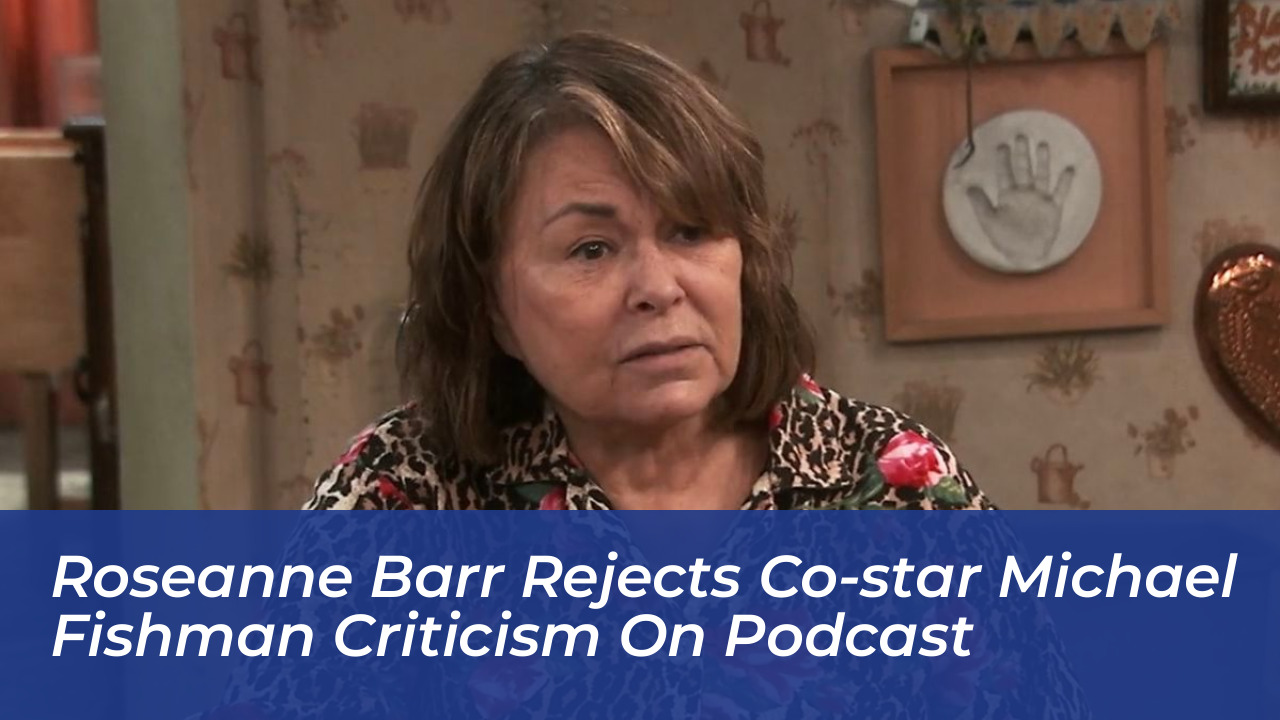
The long-simmering tensions between comedy icon Roseanne Barr and her former television son Michael Fishman erupted into public view once again during an explosive appearance on the podcast Can’t Be Censored. Barr unleashed an unvarnished tirade against Fishman after the actor publicly addressed her controversial 2018 dismissal from ABC, reigniting debates over free speech, television history, and the fallout from the cancellation of the blockbuster Roseanne revival. The background of the feud, the statements made during the podcast, the geopolitical defense offered by Barr regarding her original remarks, and the broader industry implications of the continuing clash between the former castmates reveal deep divisions. This review examines the core drivers behind their public disagreement.
- The Genesis of the Latest Clash: Michael Fishman Speaks Out
- Roseanne Barr Unleashes Expletive-Laden Podcast Tirade
- Revisiting the 2018 Controversy: Geopolitical Explanation vs. Racial Backlash
- Beyond the Headlines: The Economics of Sitcom Revivals and Residuals
- The Psychological Toll of Child Stardom in Toxic Environments
- Comparative Overview of the Feud’s Key Players
- Frequently Asked Questions
- Why did Roseanne Barr attack Michael Fishman on the podcast?
- What was the original reason for the 2018 cancellation of Roseanne?
- Did Roseanne Barr claim she helped Michael Fishman’s career?
- Conclusion
The cultural shockwaves of the 2018 cancellation continue to reverberate through Hollywood, transforming a classic television franchise into an ongoing ideological battleground. As streaming platforms preserve older content indefinitely, the personal and political rifts among the original cast members highlight the complex relationship between artistic legacy and modern public accountability.
The Genesis of the Latest Clash: Michael Fishman Speaks Out
The escalation began when Michael Fishman, who portrayed D.J. Conner across the original 1988 to 1997 run of Roseanne, the brief 2018 revival, and the subsequent spin-off series The Conners, published an Instagram video addressing long-standing fan commentary. In his statement, Fishman responded to internet users claiming the original revival was unjustly canceled due to a wave of political correctness. Fishman stated that after years of silence, he felt compelled to push back against what he termed a political smoke screen. He argued that Barr’s 2018 social media post targeting former Obama advisor Valerie Jarrett was indefensible and dehumanizing, asserting that the show was rightfully canceled.
At the same time, Fishman attempted to maintain a delicate balance between moral condemnation and personal affection. He expressed lingering personal fondness for his former television mother, noting that good people can make mistakes, but emphasizing that racial tropes carry real world consequences. Despite Fishman attempting to temper his criticism with expressions of compassion, the remarks hit a nerve with the veteran comedian, setting the stage for her fiery rebuttal.
Roseanne Barr Unleashes Expletive-Laden Podcast Tirade
Appearing on the Can’t Be Censored podcast, co-hosted by Travis Dhanraj, Barr did not wait for the question to finish before launching into a furious response. She directed severe profanity at Fishman, labeling him a brainwashed bigot and asserting that he entirely misunderstood the intent behind her original message. According to Barr, Fishman had previously approached her in private asking for an explanation of the tweet that ended her network television career. Her reported response was uncompromising, telling him to keep her name out of his mouth and accusing him of swallowing party-line rhetoric without understanding geopolitical realities.
Barr claimed credit for Fishman’s inclusion in the 2018 network revival, asserting that network executives initially intended to omit his character, but she personally intervened to secure his return. She concluded her remarks by celebrating his subsequent departure from The Conners ahead of its fifth season.

Revisiting the 2018 Controversy: Geopolitical Explanation vs. Racial Backlash
To understand the depth of the rift, observers must revisit the core catalyst: the May 2018 tweet that read, muslim brotherhood & planet of the apes had a baby equals vj. The post triggered immediate accusations of racism because it compared Valerie Jarrett, an African American political advisor, to the Planet of the Apes franchise. In her podcast appearance and subsequent statements, Barr maintained a very different interpretation of her words. She asserted that the reference was entirely geopolitical, claiming that Planet of the Apes was her personal nickname for the Islamic Revolutionary Guard Corps of Iran. She argued that the tweet was intended as a critique of the 2015 Iran nuclear deal and its impact on womens rights in the region, rather than a physical comparison of an individual’s race.
While Barr issued a public apology to Jarrett in 2018 acknowledging that the joke was in bad taste and admitting she should have known better, the backlash proved insurmountable for ABC executives. Then Entertainment President Channing Dungey swiftly canceled the revived series, despite its status as one of the highest-rated programs on television, and greenlit the spin-off The Conners, which killed off Barr’s character via an opioid overdose.
Beyond the Headlines: The Economics of Sitcom Revivals and Residuals
Most entertainment coverage focuses purely on the exchange of insults between Barr and Fishman. However, a deeper analysis reveals critical content gaps usually ignored by mainstream outlets. The financial mechanics of transitioning a blockbuster reboot into a spin-off without the primary creator fundamentally alters the long-term syndication and residual pool for supporting cast members like Fishman. The resentment runs deeper than political disagreements, touching upon legacy ownership and career trajectories in a shifting television landscape.
As classic sitcoms live indefinitely on streaming platforms, the friction between original creators and legacy cast members turns historical television catalogs into active ideological battlegrounds. Networks must manage archived content that carries active political liabilities, while actors navigate the changing value of their past work in digital distribution models.
The Psychological Toll of Child Stardom in Toxic Environments
Fishman transitioned from a child actor on a notoriously volatile set in the late 1980s and 1990s to an adult cast member navigating modern political polarization. The psychological burden of balancing historical gratitude toward a protective mentor with public moral accountability reflects a unique subculture within Hollywood child actors transitioning into adulthood.
This dynamic showcases how historical power imbalances, where a lead actor allegedly protects a supporting cast member’s job, complicate future moral reckonings. When a mentor protégé relationship shatters over political ideology, the debate shifts from artistic collaboration to a profound question of personal loyalty versus public accountability.
Comparative Overview of the Feud’s Key Players
A direct look highlights the contrasting positions, career paths, and public strategies of Roseanne Barr and Michael Fishman:
| Metric / Attribute | Roseanne Barr | Michael Fishman |
|---|---|---|
| Role in Franchise | Creator, Star, Matriarch (Roseanne Conner) | Supporting Cast Member (D.J. Conner) |
| 2018 Stance | Defends tweet as geopolitical critique; claims censorship | Condemns remarks as dehumanizing and indefensible |
| Post-Cancellation Career | Independent podcasting, alternative comedy circuits | Transitioned to directing, writing, and advocacy |
| Nature of Feud | Aggressive rejection of former cast loyalty | Measured moral critique mixed with personal nostalgia |
Frequently Asked Questions
Why did Roseanne Barr attack Michael Fishman on the podcast?
Roseanne Barr reacted angrily after Michael Fishman published an Instagram video supporting her 2018 termination from ABC, leading Barr to label him a brainwashed bigot.
What was the original reason for the 2018 cancellation of Roseanne?
ABC canceled the revival after Barr posted a controversial social media message targeting former Obama advisor Valerie Jarrett.
Did Roseanne Barr claim she helped Michael Fishman’s career?
Yes, Barr claimed during her podcast appearance that she personally intervened with network executives to ensure Fishman was included in the 2018 television revival.
Conclusion
The ongoing clash between Roseanne Barr and Michael Fishman demonstrates the enduring cultural shockwaves of the 2018 television cancellation. What began as a network programming decision has evolved into a deeply personal proxy war over legacy, loyalty, and political ideology in modern media.
Ultimately, this public feud highlights the volatile intersection of artistic freedom, historical revisionism, and public accountability. As digital platforms preserve television history forever, the conflicts of yesterday continue to shape the industry standards of today.