- Building the 3D Model of an Ancient Ancestor
- Two Distinct Facial Renderings
- Insights Into Early Human Evolution
- Frequently Asked Questions
- Where was the 315,000-year-old human fossil discovered?
- Why did scientists initially misidentify the Jebel Irhoud remains?
- What changed in 2017 regarding these fossils?
- How was the facial reconstruction created?
- Are the skin color and hair in the colored model accurate?
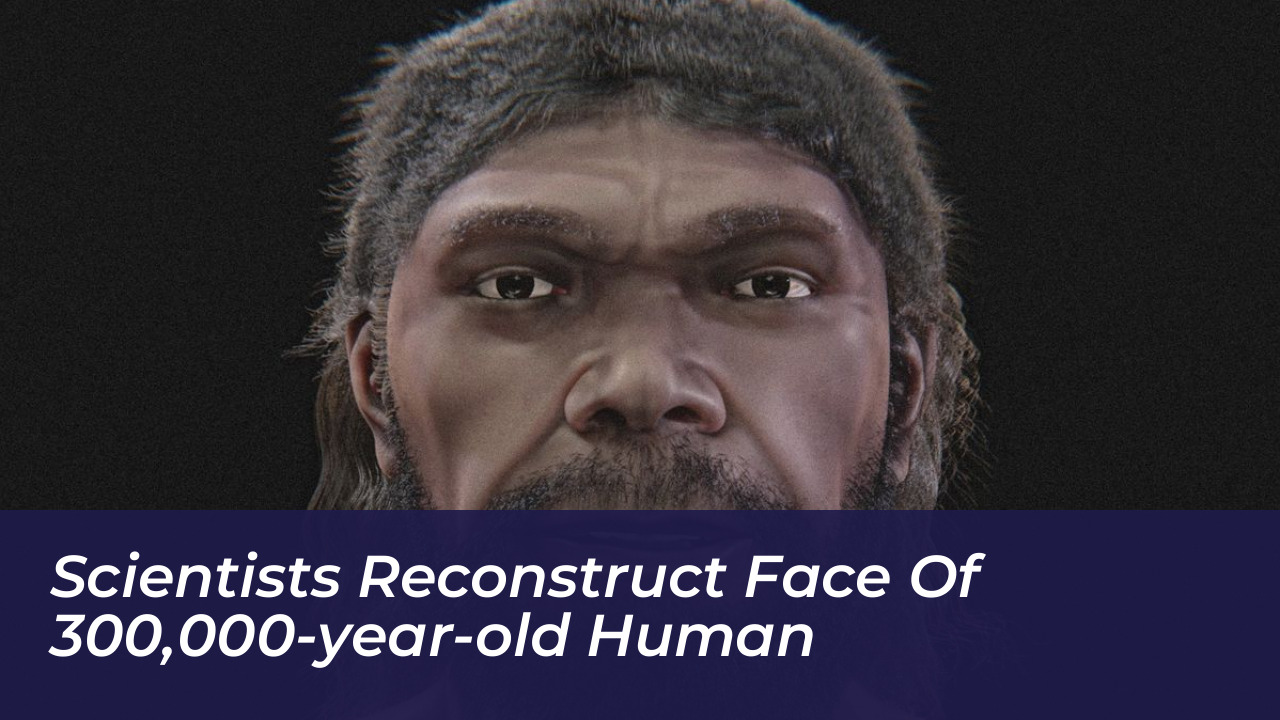
Researchers have successfully reconstructed the facial structure of the oldest Homo sapiens fossil ever discovered. This breakthrough offers a striking glimpse into what an early human looked like approximately 315,000 years ago. The digital model is based on fossilized remains originally unearthed during mineral mining operations at Jebel Irhoud in Morocco during the 1960s.
For decades after their discovery, the ancient remains were misidentified as a Neanderthal variant. However, a landmark 2017 re-examination led by scientists at the Max Planck Institute for Evolutionary Anthropology officially reclassified the fossils as the earliest recorded members of our species. This discovery pushed back the known timeline of Homo sapiens by roughly 100,000 years.
Building the 3D Model of an Ancient Ancestor
Because no single skull survived completely intact from the site and time period, an international team of researchers approached the reconstruction like a forensic jigsaw puzzle. The digital composite skull utilized primary fragments from the original 1961 find, known as Irhoud 1, which provided the braincase and upper face. Researchers then integrated a lower jaw from a second fossil, designated Irhoud 11, alongside upper teeth and jaw fragments from other specimens discovered within the exact same archaeological layer.
Led by Brazilian 3D graphics expert Cícero Moraes, the scientific team used open-source software such as Blender and applied a technique called anatomical deformation. By taking a CT scan of a modern human and gradually reshaping its geometry to match the ancient fossil measurements, the team established a reliable structural base. Soft tissue thickness, muscle placement, and facial structure projections were then calculated using reference datasets derived from modern African populations.
Two Distinct Facial Renderings
The painstaking digital process yielded two distinct versions of the ancient individual’s face for public and scientific evaluation:
- The Scientific Reconstruction: A grayscale, hairless rendering designed explicitly for researchers to examine underlying bone structure, anatomical features, and cranial proportions without aesthetic distraction.
- The Lifelike Portrait: A fully colored depiction complete with dark skin pigmentation, long black hair, and a bushy, full beard to help modern observers visualize the human ancestor.
The research team explicitly cautioned that while the underlying bone and facial proportions are grounded in hard data, elements such as skin color, hairstyle, and facial hair are speculative artistic choices. Because soft tissues do not fossilize over hundreds of thousands of years, these features represent a morphologically plausible approximation rather than a definitive portrait of any single individual.
Insights Into Early Human Evolution
Alongside the facial approximation, the digital model allowed researchers to calculate the internal braincase volume of the Jebel Irhoud hominin. The computed endocranial volume stood at approximately 1,364 milliliters, falling comfortably within the range of modern adult human brain sizes.
Despite having a brain size comparable to people today, the ancient skull presents a fascinating evolutionary mismatch. While the face, teeth, and jaw structure appear remarkably modern, the rear braincase remains elongated and archaic. This reveals that the rounded skull shape characteristic of modern humans evolved later in our lineage, long after the earliest appearance of Homo sapiens faces.
The detailed findings and methodology behind the digital reconstruction were published in the scientific journal Heritage.
Frequently Asked Questions
Where was the 315,000-year-old human fossil discovered?
The fossils were unearthed at the Jebel Irhoud archaeological site in Morocco, initially during commercial mineral mining in the 1960s and through subsequent excavations.
Why did scientists initially misidentify the Jebel Irhoud remains?
When first discovered, the heavy brow ridges and archaic cranial features led early anthropologists to classify the skull as an African Neanderthal variant estimated to be around 40,000 years old.
What changed in 2017 regarding these fossils?
Advanced dating techniques published in the journal Nature in 2017 revealed that the remains were actually 315,000 years old, reclassifying them as the oldest known Homo sapiens fossils on record.
How was the facial reconstruction created?
Researchers built a composite skull from multiple fossil fragments found in the same earth layer, then digitally deformed a modern human anatomical template to match the ancient bone geometry before adding estimated soft tissue layers.
Are the skin color and hair in the colored model accurate?
No. Researchers noted that traits like skin tone, hair length, and facial hair do not fossilize and represent educated, biologically plausible estimates rather than direct historical facts.