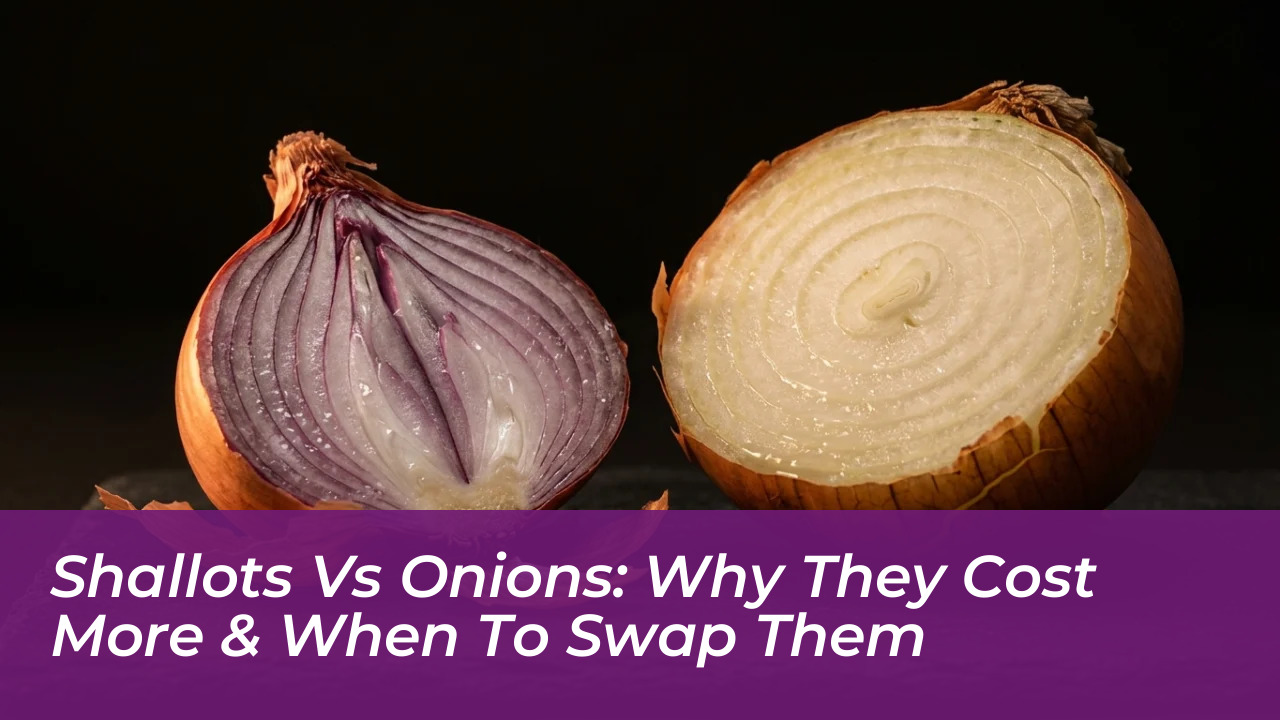

Shallots can cost at least three times as much as standard onions, yet many home cooks treat them as interchangeable bulbs in the kitchen. While both belong to the foundational allium family, shallots deliver a milder, sweeter flavour profile with a subtle whisper of garlic, whereas common storage onions pack a sharp, pungent sulfurous punch. Understanding the botanical structure and culinary limits of shallots versus onions prevents wasted money and flat sauces. From classic French emulsions to slow-cooked stews, picking the wrong allium can completely derail the intended texture and balance of a dish.
The Botanical Divide: Growth Habits and Anatomy
Members of the wider allium group-including garlic, leeks, chives, and scallions-form the structural base of savoury culinary foundations such as French mirepoix, Spanish sofrito, and Chinese aromatics. Within the species Allium cepa, standard culinary onions grow as single, large, round bulbs protected by dry, papery skins.
Shallots behave differently under the soil. Beneath their outer layer, a shallot cluster divides into multiple cloves attached to a shared root plate, resembling the segmented growth habit of garlic rather than a solitary onion bulb. These smaller, flattened cloves consist of ultra-fine, compact layers. This structural difference alters how each allium cooks down in the pan.
Texture, Flavour, and the Premium Price Tag
The thick, fibrous rings of yellow, red, and white onions retain considerable crunch when raw and maintain body across extended simmering times. Shallots possess delicate, paper-thin strata that melt rapidly into pan sauces and hot butter without leaving noticeable vegetable solids behind.
A widespread misconception is that shallots are simply baby red onions sold at a gourmet premium. The elevated retail price reflects strict agricultural limitations rather than artificial supermarket marketing. Standard onions are remarkably hardy, producing dependable yields across cold and warm climates throughout the year. Shallots require warm growing conditions, often necessitate manual harvesting by hand, and carry higher distribution expenses due to their delicate handling requirements.
Culinary Applications: When to Choose Each Allium
Because of their cost, deploying shallots in heavy stews or big pots of soup is an inefficient use of ingredients. Standard yellow onions remain the ultimate culinary workhorse when an allium must disappear into the aromatic background of a long stock, a rich broth, or a jammy pan of caramelised base. Shallots excel where their sweetness and quick cooking can take centre stage. Raw preparations benefit significantly from their gentle character, eliminating the harsh, lingering burn typical of unheated onions.
Best Cooking Uses for Shallots
- Emulsified Vinaigrettes: Finely minced shallots suspend smoothly in oil and vinegar dressings without overpowering delicate salad greens.
- Whole Roasted Sides: Slow roasting with a buttery, sweet glaze brings out their natural sugars until tender and melting.
- Southeast Asian Crispy Garnishes: Thinly sliced and fried shallots provide crunchy toppings for noodle dishes like mie goreng or salads such as Thai pork larb.
- Delicate Quick Pickles: Pickled shallot rings soften quickly, offering a bright pop for rich meats without abrasive raw heat.
When to Rely on Standard Onions
- Soup Bases and Braises: Yellow onions provide structural depth and bulk for long-cooking pots.
- Rich Soups: French onion soup relies on large volumes of sturdy onion rings cooked down over extended periods.
- Crisp Raw Accents: Crisp red or white onions provide essential crunch and heat for fresh salsas, tacos, and loaded sandwiches.
How to Substitute Between Shallots and Onions
When adapting a recipe on the fly, substituting between these two alliums is possible by following basic volumetric adjustments.
- Replacing Half an Onion: If a recipe demands only half an onion, substitute a single shallot directly to avoid leftover halved produce.
- Mimicking Shallots with Onions: When shallots are unavailable, use finely minced sweet onion varieties or red onion paired with a small sliver of crushed garlic to match the flavour nuance.
- Adjusting for Cooking Heat: When cooking shallots in place of diced onions, lower the pan temperature slightly and reduce cooking time, as the thin shallot layers scorch far faster than dense onion chunks.
“If a recipe calls for only half of an onion, which is always super annoying, just grab a shallot and it will be the equivalent. If they’re cooked, the dish will be pretty much the same. If they’re raw, it will taste a little bit different, but I wouldn’t hesitate to swap them out.”
Stocking both alliums ensures you never compromise between delicate pan sauces and robust, slow-simmered bases. Which allium variety anchors your favourite homemade recipes during the week? Share your experiences with us in the comments below.
Frequently Asked Questions About Shallots and Onions
Are shallots just small onions?
No. While they share the same overarching botanical species (Allium cepa), shallots grow in clustered cloves from a shared root plate much like garlic, whereas standard onions form a single, solid bulb. Shallots also possess a much milder, sweeter flavour profile with faint garlic notes.
Why do shallots cost three times more than onions?
Shallots have stricter agricultural demands than standard storage onions. They require warmer growing conditions, yield smaller global harvests, and frequently necessitate manual hand-harvesting, driving up labor and shipping costs.
How many shallots equal one medium onion?
Generally, about three medium shallots equal the volume and culinary impact of one medium yellow onion. When swapping in cooked dishes, a direct volumetric ratio or a one-to-one small substitute works well.
Can I use raw onions instead of shallots in a vinaigrette?
You can, but the raw bite will be noticeably sharper and may overpower delicate salad greens. If substituting onions for shallots in raw dressings, use a milder sweet or red onion variety and consider mincing them very finely or pairing with a touch of crushed garlic.
How should I store shallots to keep them fresh?
Store whole, unpeeled shallots in a cool, dark, well-ventilated space such as a pantry or cellar in a mesh bag. Properly stored, whole shallots will last anywhere from one to two months, or up to six months if kept in the refrigerator.