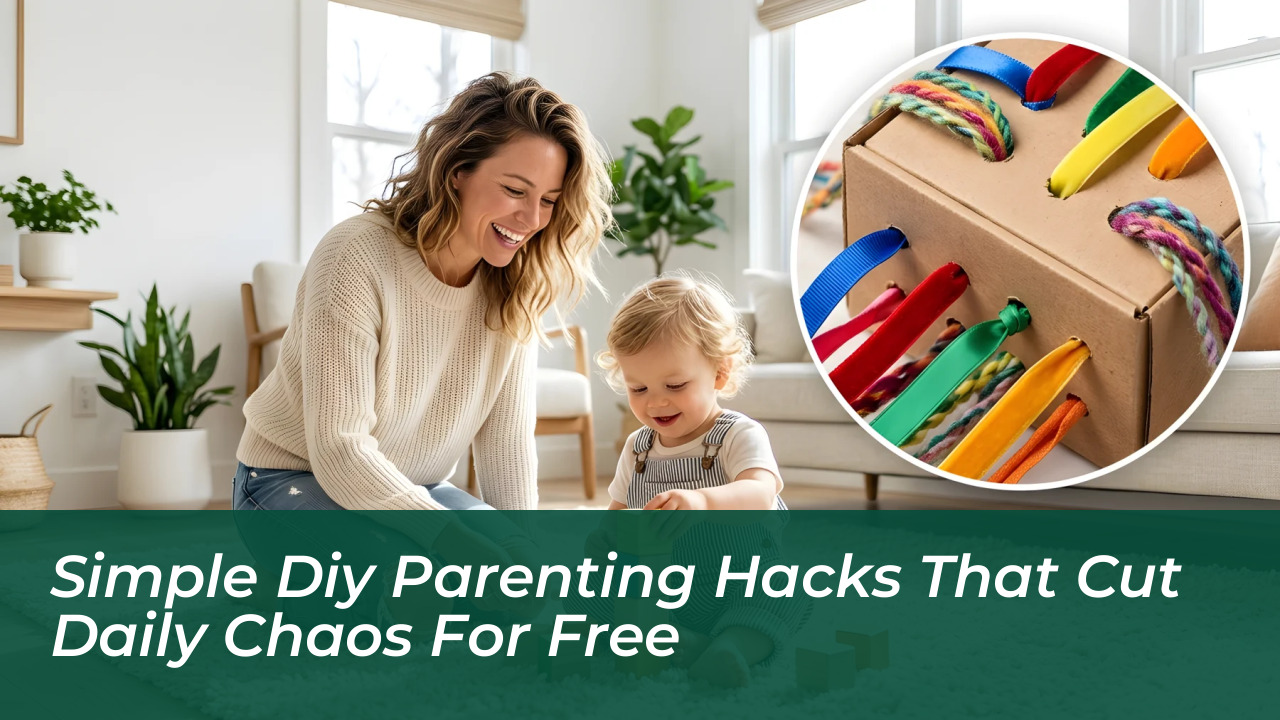
High-impact parenting hacks do not require commercial gadgets or expensive subscriptions. Instead, the most effective strategies rely on zero-budget upcycling, structured transition cues, and everyday household items to defuse tantrums and conquer daily chores. By converting ordinary items into engaging fine-motor activities, parents can foster independent toddler play while cutting friction around mealtime and bedtime routines. Managing an active home often creates sensory overload for young children and mental fatigue for caregivers. Transforming discarded materials like cardboard rolls, dry pasta, and muffin tins into intentional learning stations creates calm, focused environments that reduce clutter and keep costs at zero.
- The Science of Low-Cost Upcycled Sensory Play
- Building an Upcycled Ribbon Pull Box in Four Steps
- Streamlining Daily Household Transitions
- Costly Nursery Gadgets vs. Zero-Budget Solutions
- Frequently Asked Questions About DIY Parenting Hacks
- What are the best zero-budget materials for toddler play?
- How can I stop toddler tantrums during daily transitions?
- Are upcycled toys as effective as commercial educational toys?
- How do I reduce clutter while keeping kids entertained?
- What is a deep pressure hug and how does it help?
The Science of Low-Cost Upcycled Sensory Play
Commercial toy marketing frequently suggests that flashing lights and batteries accelerate early learning. However, child development specialists note that open-ended materials foster deeper creative problem-solving and motor planning than electronic toys with predetermined outputs. A common mistake in early play design is confusing sensory stimulation with visual noise. Children concentrate significantly longer when materials allow them to dictate the rules of engagement.
A simple cardboard box with carefully cut slots provides richer practice for hand-eye coordination than a pre-programmed plastic shape sorter. Repurposing standard kitchen supplies gives young children tactile freedom without generating excess waste.
Building an Upcycled Ribbon Pull Box in Four Steps
Fine motor mastery requires repetitive grasping, pinching, and pulling. This quick DIY activity uses items already present in the pantry and recycling bin to build grip strength and hand-eye coordination without spending a dime.
- Gather a clean cardboard container: Select an empty tissue box or small shipping carton with intact structural sides.
- Pierce matching holes: Use a pencil or hole punch to create small, evenly spaced perforations along opposite sides of the box.
- Thread varied textured ribbons: Slide different strips of fabric, yarn, or shoelaces through the holes, varying lengths and colors.
- Secure the terminal ends: Tie thick, durable knots at both ends of each ribbon so they slide back and forth through the carton without pulling out completely.
Streamlining Daily Household Transitions
Meltdowns frequently occur during shifts between activities, especially departures, cleanup, and bedtime prep. Young children struggle with abstract time concepts like “five more minutes,” which creates frustration when play stops abruptly. Replacing verbal warnings with concrete, visual indicators eliminates repetitive negotiation.
A simple color-coded paper clock or a two-minute sand timer translates the passage of time into an observable physical event. When toddlers can verify time passing on their own terms, power struggles diminish significantly. Pairing these visual cues with a deep pressure hug-placing one hand on the back of their head and the other across the midline of their back with firm pressure-activates the parasympathetic nervous system via vagal stimulation to calm a dysregulated child.
Costly Nursery Gadgets vs. Zero-Budget Solutions
Parenting retail markets prioritize single-use accessories that clutter living spaces and quickly outgrow their utility. Simple adaptations of standard household objects routinely deliver equal or superior functionality at zero cost.
- Specialized Bath Toy Organizers: Mesh laundry wash bags hung on adhesive hooks.
- Plastic Sorting and Posting Toys: Cut cardboard cartons paired with dry pasta or jar lids.
- Dedicated Travel Placemats: Reusable silicone baking mats wiped with damp cloths.
- Expensive Visual Routine Boards: Drawn chore checklists placed in standard picture frames using dry-erase markers.
Establishing straightforward routines alongside upcycled DIY tools turns overwhelming days into predictable, low-stress milestones. The best systems require neither costly purchases nor complicated setups to create a calm, cooperative home.
Frequently Asked Questions About DIY Parenting Hacks
What are the best zero-budget materials for toddler play?
Cardboard boxes, empty tissue containers, plastic bottle caps, dry pasta, and yarn make exceptional open-ended toys that encourage fine motor skills and creativity without any financial investment.
How can I stop toddler tantrums during daily transitions?
Use concrete visual indicators like sand timers or color-coded paper clocks instead of abstract verbal warnings. Giving children a physical way to see time passing reduces anxiety and prevents power struggles.
Are upcycled toys as effective as commercial educational toys?
Yes. Child development specialists note that open-ended upcycled materials often foster deeper creative problem-solving and focus than electronic toys with predetermined outputs because children dictate the rules of engagement.
How do I reduce clutter while keeping kids entertained?
Implement a toy rotation system by storing half of your toys away and swapping them out every few weeks. This keeps toys feeling brand new without purchasing new items.
What is a deep pressure hug and how does it help?
A deep pressure hug involves placing one hand on the back of your child’s head and the other firmly across their mid-back. This activates the vagus nerve and parasympathetic nervous system, calming the brain’s threat alarm during meltdowns.