- Bottle Polymers for Safe Repurposing
- Selecting the Right Plastic for Household Tasks
- Constructing an Automatic Self-Watering Planter
- Workshop Scoops and Modular Hardware Organization
- Frequently Asked Questions
- What types of plastic bottles are safe to use for DIY home projects?
- Can I use hot glue or a heat gun on plastic bottles?
- How do self-watering planters made from plastic bottles work?
- How do I clean old juice or milk containers before upcycling?
- What are the best uses for HDPE milk jugs?
Transforming standard beverage containers into durable organizers, self-watering planters, and utility holders requires little more than utility shears, clean water, and a basic understanding of container materials. Repurposing these everyday items prevents rigid polymers from heading directly to municipal waste streams while replacing the need to purchase cheap commercial organizers. Standard polyethylene terephthalate (PET or PETE, marked with resin identification code 1) and high-density polyethylene (HDPE, marked with code 2) offer exceptional tensile strength, water resistance, and structural flexibility. Rather than viewing an empty soda or milk container as disposable rubbish, home crafters can exploit these material properties to solve routine domestic organization problems. The key to successful secondary use lies in matching the physical profile of the container with its intended mechanical function.
Bottle Polymers for Safe Repurposing
Before cutting into any container, identifying the underlying resin ensures the finished project remains safe and durable for long-term use. Most transparent drink containers consist of PET, an extremely lightweight material that resists impact and provides a clear view of stored contents. Thicker, opaque containers-such as those used for milk jugs, detergents, and household cleaners-typically utilize HDPE. This polymer provides greater rigidity, chemical resistance, and structural stability, making it ideal for tool holders and heavy-duty storage bins.
Always thoroughly sanitize containers previously holding dairy or non-food chemicals with warm soapy water and allow complete air drying before cutting to prevent mold development or skin irritation. A common misconception is that all plastics can be safely heated or shaped with direct flame indoors. Applying open heat or hot glue guns to thin PET bottles frequently releases sharp fumes and warps the structural integrity of the plastic, rendering the container brittle and prone to cracking under load.
Selecting the Right Plastic for Household Tasks
Matching the resin type to the intended domestic environment prevents premature wear and avoids safety hazards around food or moisture. Understanding the strength profiles of these plastics allows you to move directly into constructing functional items that withstand everyday wear.
| Material Category | Resin Code | Recommended Practical Use |
|---|---|---|
| Clear PET Soda Bottles | #1 PETE | Self-watering planters, seed starters, dry craft storage |
| Opaque Jugs & Cleaners | #2 HDPE | Garage hardware scoops, heavy cord organizers, garden trowels |
| Rigid Bottle Caps | #5 PP | Drawer dividers, paint palettes, furniture floor gliders |
Constructing an Automatic Self-Watering Planter
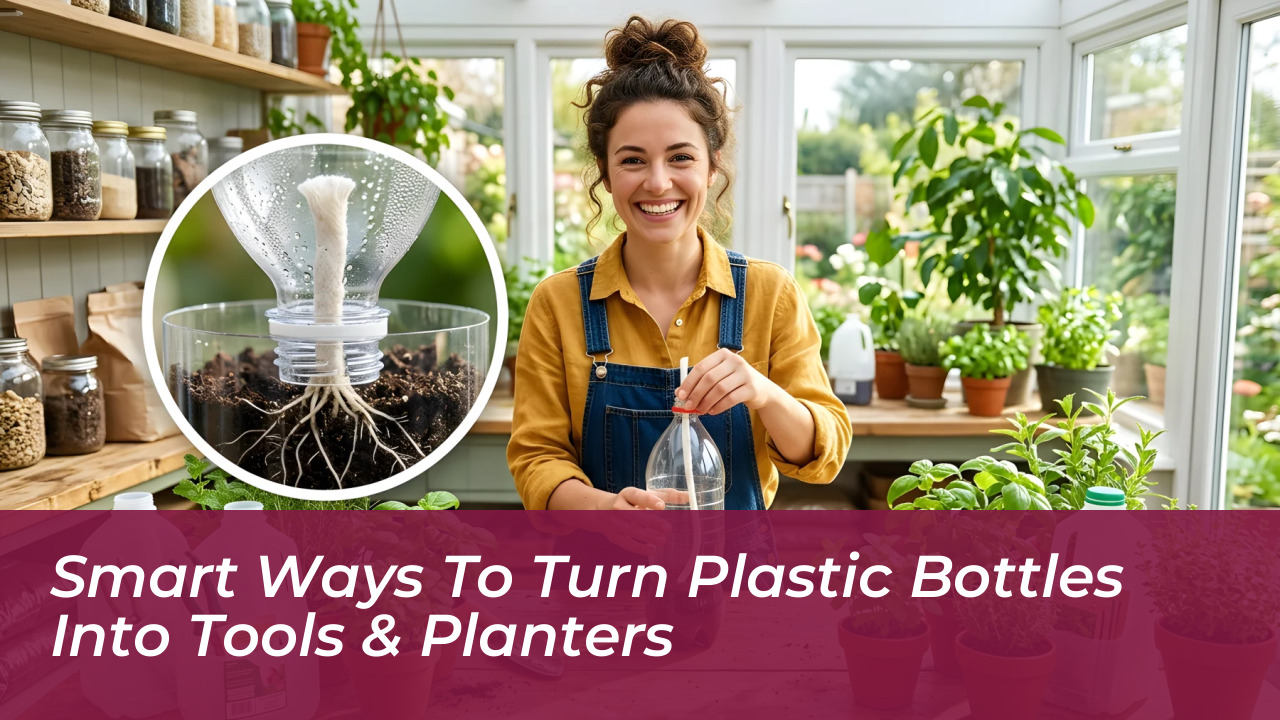
One of the most mechanically effective projects using transparent PET bottles is a two-tier passive irrigation planter. This design relies on capillary action to deliver consistent moisture to root systems without manual daily watering.
- Cut the vessel: Use heavy-duty scissors or a utility blade to bisect a clean 2-liter PET bottle approximately four inches below the spout line, separating the top cone from the cylindrical base.
- Prepare the aeration and wick: Drill or punch a 1/4-inch hole directly through the center of the plastic bottle cap. Thread a five-inch strand of untreated cotton cord or thick synthetic yarn through the hole, leaving roughly two inches suspended below the cap.
- Assemble the reservoir: Invert the top cone and rest it spout-down into the bottom half of the bottle cylinder. The inverted funnel serves as the soil basket, while the lower compartment functions as the water reservoir.
- Add soil and water: Fill the bottom basin with fresh water so the lower end of the wick remains submerged, then pack potting mix into the upper funnel around the remaining length of cord before inserting seeds or seedlings.
The cotton cord continuously draws liquid upward into the root zone, preventing both root dehydration and waterlogging through natural capillary transfer.
Workshop Scoops and Modular Hardware Organization
Thick milk jugs and commercial juice carafes with molded handles provide immediate structural templates for garage utility tools. By following the natural curvature of the molded plastic, you can produce ergonomic scoops for potting soil, pet kibble, rock salt, or dry fertilizers. To make an angled scoop, keep the bottle cap tightly secured to maintain structural rigidity at the base. Trace a diagonal cutting line beginning beneath the handle base and extending down toward the opposite bottom corner, then sever the plastic along the line with a sharp utility knife. The intact handle provides a secure grip, while the broad, scoop-shaped body effortlessly holds loose material.
Smaller 16-ounce bottles can be cut horizontally at varying heights to form clear cylindrical caddies. Fastening these cylinders to a wooden backing strip with small screws creates an accessible, wall-mounted sorting rack for loose screws, nails, washcloths, or paintbrushes. Upcycling plastic bottles delivers immediate practical value to your home and workshop while reducing residential landfill volume.
Frequently Asked Questions
What types of plastic bottles are safe to use for DIY home projects?
Plastics marked with Resin Identification Code 1 (PET or PETE) and Code 2 (HDPE) are the safest and most structurally reliable choices for creating home tools, organizers, and planters.
Can I use hot glue or a heat gun on plastic bottles?
It is best to avoid applying direct high heat or hot glue to thin PET bottles. Heat can warp the plastic, compromise its structural integrity, and release toxic fumes indoors.
How do self-watering planters made from plastic bottles work?
They utilize capillary action. A cotton cord or synthetic wick threaded through the bottle cap draws moisture upward from a lower water reservoir directly into the dry soil and plant roots above.
How do I clean old juice or milk containers before upcycling?
Wash the containers thoroughly with warm, soapy water, scrubbing the inside thoroughly, and let them air-dry completely before cutting to prevent mold or unwanted odors.
What are the best uses for HDPE milk jugs?
HDPE milk jugs are thick and durable, making them ideal for creating heavy-duty garden trowels, pet food scoops, garage hardware organizers, and storage bins.