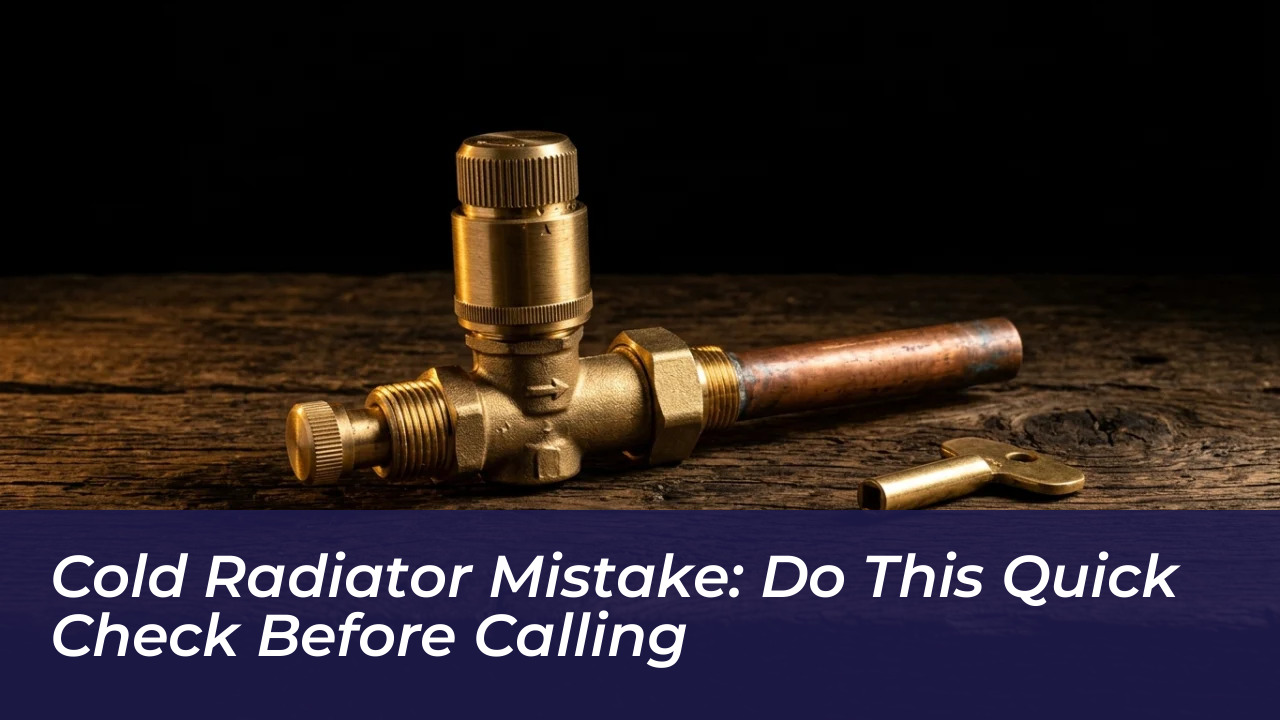

When the central heating kicks on for the season but a single bedroom radiator stays ice cold, most apartment residents make the exact same mistake: they call the utility supplier or assume the system will simply fix itself over time. If other rooms are warm, waiting for weeks or calling the city heat provider will not solve the issue. Utility companies are generally only responsible for delivering heat up to the building’s property line.
The real culprit usually lies within the interior distribution network of the building. Issues range from stuck thermostat pins and trapped air pockets to localized balancing failures in the vertical riser pipes. Before reaching for a wrench or paying an unnecessary service fee, running a simple 15-minute diagnostic can pinpoint whether the issue is isolated to your private unit or shared across the building’s infrastructure.
The 15-Minute Diagnostic: Why Calling the Utility Company Is the Wrong Move
The municipal heat provider only ensures hot water or steam reaches the building’s intake boundary. Everything inside-including the central substation, internal pumps, vertical risers, distribution pipes, and radiators-falls under property management and certified heating technicians. Reaching out to the city utility when your living room is warm but your bedroom is cold is a dead end. Before lodging a formal complaint or taking tools to the plumbing, walk through this systematic sequence:
- Max out the thermostat valve: Fully open the thermostatic control head to its highest setting. After a long summer shutoff, internal valve pins frequently stick in the closed position, blocking all incoming flow despite the dial reading open.
- Touch the intake pipe versus the radiator body: Feel the metal pipe immediately preceding the thermostatic valve. If the intake pipe is hot but the radiator remains cold, the blockage is strictly at the valve. If the pipe leading to the radiator is ice cold, hot water is not even reaching the unit.
- Perform the vertical neighbor test: Ask the neighbor directly above or below your apartment on the same architectural stack if their corresponding room is heating. If an entire vertical line of apartments shares cold units, the problem lies in the common riser pipe or general system balancing-not your private appliance.
- Check actual indoor air temperatures: In standard residential guidelines, living quarters during heating season should typically fall between 64°F and 72°F (18°C to 22°C). A room sitting at 62°F (17°C) when the building heating is fully active represents a documented deficiency, not an adjustment delay.
Cold Top vs. Cold Bottom: Decoding Physical Symptoms
A radiator rarely fails without providing distinct physical clues. Instead of viewing a radiator simply as on or off, reading the surface temperature gradient reveals precisely what is happening inside the metal casing.
- Cold top, warm bottom, bubbling sound: Trapped air pockets block upper heat transfer.
- Warm top, significantly cold bottom: Internal sludge, sediment buildup, or weak flow circulation occur.
- Entire unit and intake pipe completely cold: A stuck pin, closed shutoff valve, or empty riser line is present.
- Hot intake pipe, entirely cold unit: A mechanically seized thermostatic valve core is active.
While internet forums routinely urge tenants to bleed every non-heating radiator immediately, rushing to open air purge valves can introduce complications. If air is persistently trapped throughout an entire vertical riser, draining a localized unit without technician oversight will fail to resolve the underlying pressure defect. A common mistake in practice is rushing to disassemble valves or bleed units before verifying whether hot water is actually circulating through the building riser.
The Hidden Mechanical Trap: The Summer Valve Seizure
During warm months when heating is off, thermostatic radiator valves rest in one position for extended periods. When the heating season begins, turning the plastic dial does not always move the internal steel pin. The exterior handle rotates freely, but the internal spring remains mechanically frozen shut, choking off all hot water.
While removing the outer thermostatic head is straightforward on modern systems, disassembling valve cores or wrenching on piping in a multi-story building creates catastrophic leak risks. A pressurized central line failure can cause rapid water damage across multiple floors in minutes.
Who Pays for the Repair? The Shared Property Distinction
Many apartment owners mistakenly believe that because a radiator sits inside their private walls, every maintenance cost is exclusively theirs. However, property governance frameworks and high court legal precedents routinely classify heating systems as common infrastructure owned collectively by all unit owners.
If an internal building radiator is part of an unmetered, interconnected central loop, maintenance of that equipment is generally handled by the designated building maintenance technician and funded through collective maintenance reserves. However, crucial exceptions apply:
- Unauthorized alterations: If an owner replaces a unit without authorization or installs non-compliant fittings that alter hydraulic balance, liability shifts to that individual.
- Standard common repairs: Structural repairs to common pipes, system risers, and primary shutoff armatures are typically covered as collective shared expenses.
- Formal documentation: Submitting a formal written maintenance ticket that documents room temperatures, valve positions, and riser performance establishes a binding record if building management delays action.
When localized heating issues persist and on-site building administrators fail to respond, administrative escalations proceed to municipal housing oversight authorities and state energy regulatory commissions. Clear records of temperature measurements and written service logs ensure your claim is treated as a verified utility failure rather than a minor cosmetic complaint. Never assume a dead radiator will warm up on its own after the season starts. Check the intake pipe and consult your vertical neighbors before taking any tools to your plumbing.
Frequently Asked Questions
Why is my radiator cold even when the rest of the apartment is warm?
This is usually due to an isolated issue such as a stuck thermostatic valve pin, trapped air inside the single unit, or a localized blockage rather than a total building heating failure.
Should I call my utility company if my radiator won’t heat up?
No. Utility companies are only responsible for supplying heat up to the building’s main property line. Internal distribution, pipes, valves, and radiators fall under building management or private property responsibility.
What causes a radiator to be hot at the intake pipe but completely cold otherwise?
This symptom typically points to a mechanically seized thermostatic valve core where the exterior dial turns, but the internal pin remains stuck in the closed position.
How do I know if the problem affects just my apartment or the whole building?
Perform the vertical neighbor test by asking neighbors directly above and below you on the same architectural stack if their units are heating properly. If they share the cold room, it is a building riser or balancing issue.
Is it safe to bleed every cold radiator immediately?
Not always. If a radiator is cold at the bottom rather than the top, bleeding will not solve the issue and can drop system pressure unnecessarily. Always diagnose the cold pattern first.