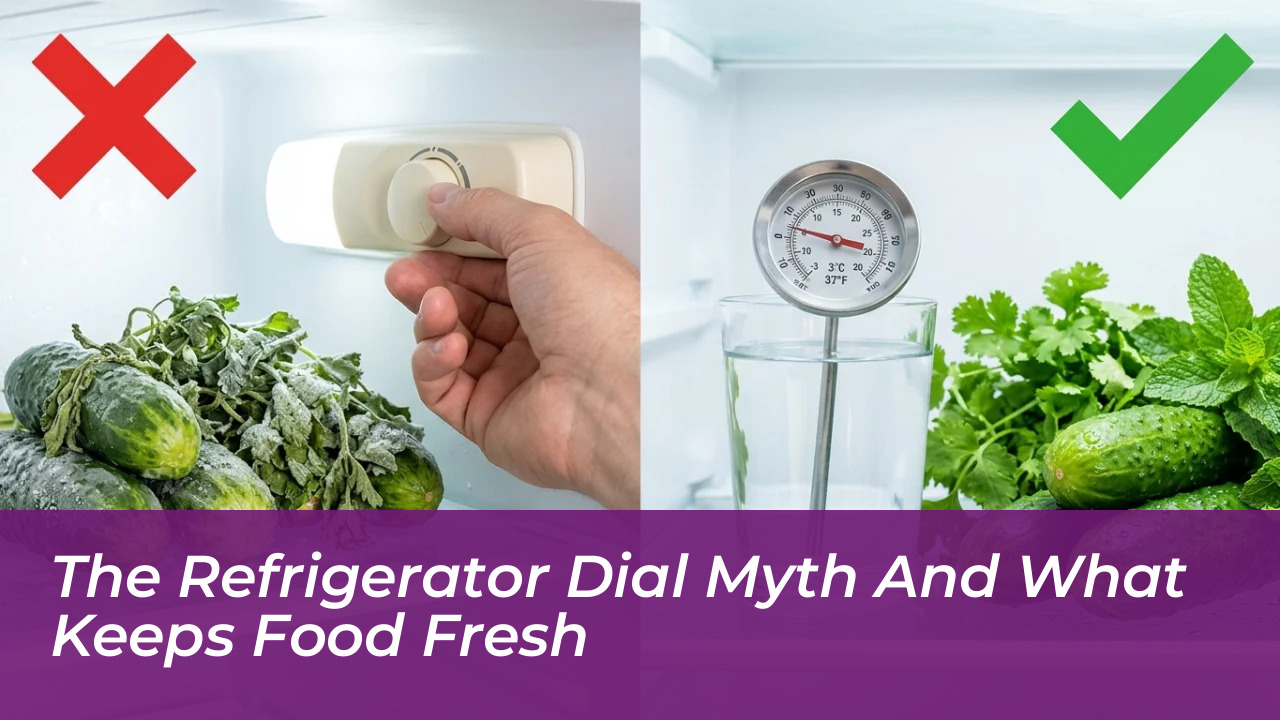

Twisting your refrigerator temperature dial to a lower number when the weather cools down does not mean you are setting the appliance to two or three degrees. Those printed numbers represent relative cooling power levels rather than actual temperature readings. As a result, blind seasonal adjustments often freeze sensitive produce instead of protecting it. When autumn arrives and kitchen ambient temperatures drop, many households notice their leafy herbs turning dark and limp, or find crisp cucumbers transformed into watery mush inside the crisper drawer.
The culprit is rarely spoiled groceries. Instead, it is almost always a misunderstanding of how mechanical thermostats distribute cold air across internal compartments. Before touching the dial or blaming the appliance, understanding the actual conditions inside your fridge saves money, prevents food waste, and keeps your groceries safe.
The Thermostat Myth: Numbers Are Not Degrees
The most pervasive misconception regarding household cooling appliances involves the mechanical dial numbered 1 through 5 (or sometimes 1 through 7 or 1 through 9). A widespread belief suggests that setting the dial to “3” locks the cabinet at exactly 3 degrees. In reality, these numbers are arbitrary intensity levels set by the manufacturer to indicate cooling power.
In most mechanical models, a higher number activates more aggressive cooling, while lower numbers reduce the workload of the compressor. Setting the dial lower in cooler months without measuring internal conditions can lead to wild swings in food preservation quality. A common mistake in practice is assuming mechanical dial numbers represent exact temperature targets rather than relative cooling intensity.
Modern electronic models make things easier by letting users select specific degree targets directly on a digital panel. Yet even on high-end appliances, airflow blockages and ambient kitchen warmth can cause the internal climate to deviate significantly from the control setting.
What Your Fridge Temperature Should Actually Be
To keep perishable food outside the bacterial danger zone without risking cellular damage to fresh produce, the target for the main compartment is roughly 37°F to 40°F (about +3°C to +4°C). This threshold keeps dairy, prepared meals, and meats safely chilled while preventing moisture-rich vegetables from developing ice crystals. For the freezer section, the standard target remains 0°F (-18°C). Maintaining these numbers requires verifying the actual cabinet climate rather than trusting an uncalibrated knob.
Recommended Storage Temperature Zones
- Main Fresh Food Shelves: Around 37°F to 40°F (+3°C to +4°C)
- Freezer Compartment: Around 0°F (-18°C)
- Door Shelves: Warmer zone, best for condiments and drinks
- Crisper Drawers: Humidity-controlled zones for produce
The Glass of Water Test
Air temperature inside a refrigerator fluctuates dramatically every time the door swings open. Taking an accurate reading requires measuring liquid temperature rather than bare air. Place a reliable food-safe appliance thermometer inside a glass of water. Set the glass in the center of the middle shelf, away from direct interior airflow vents.
Leave the glass undisturbed for several hours-ideally overnight-without opening the door unnecessarily. Check the reading immediately upon opening the door to determine your baseline temperature. If the reading falls consistently close to the freezing mark, ease the control dial down by a small increment. If the reading sits above safe storage limits, increase the cooling intensity slightly and retest the following day.
Why Vegetables Freeze on Normal Settings
A perfectly calibrated appliance can still freeze delicate vegetables if they are shoved against the coldest internal surfaces. The back wall of many refrigerators houses the primary cooling components, making it the most frigid zone in the entire cabinet. Water-dense vegetables like cucumbers, zucchini, and leafy greens suffer irreversible structural damage when exposed to this localized chill. Ice crystals rupture their cell walls, leaving behind soggy, unpalatable remnants once thawed.
Dedicated crisper drawers exist specifically to insulate sensitive produce from these localized freeze zones. Overpacking shelves creates a similar hazard. When bulky containers block interior air channels or press against the rear wall, convective circulation stalls completely. Cold pockets form in the rear while forward sections become dangerously warm.
External Factors That Disrupt Cooling Balance
Seasonal weather transitions often involve freezing bulk batches of autumn produce, berries, or meal prep. Using an appliance’s fast-freeze function draws significant compressor power. Leaving this setting active longer than necessary can inadvertently freeze items throughout the primary fresh food compartment.
External ventilation is just as critical. Refrigerators work by expelling heat from inside the cabinet into the surrounding kitchen air. If a unit is jammed too tightly against cabinetry or surrounding walls without the manufacturer-specified clearance, heat dissipation fails, forcing the cooling mechanism to run erratically. Faulty door gaskets further compound temperature stability issues. Dirt buildup, tears, or weakened seals let cool air escape constantly, triggering prolonged compressor cycles that over-chill specific shelves while leaving door bins lukewarm.
Finally, avoid overcrowding your fridge with foods that thrive better elsewhere. Whole winter squash and garlic require dry, well-ventilated pantry storage rather than refrigeration, while unripe tomatoes retain superior texture at room temperature.
Frequently Asked Questions
Do fridge dial numbers correlate to specific temperatures?
No. The numbers on mechanical dials indicate cooling power intensity levels, not actual temperature readings. Always use a dedicated appliance thermometer to confirm what is happening inside.
What is the safest refrigerator temperature range?
Aim for a main compartment temperature between 37°F and 40°F (3°C to 4°C). This keeps food out of the bacterial danger zone without freezing water-dense produce.
Why are my vegetables freezing even when the dial is normal?
Vegetables pushed against the back wall of the refrigerator are exposed to primary cooling vents where temperatures drop below freezing, causing ice crystals to rupture plant cell walls.
How long should I wait after adjusting my fridge dial?
Give your refrigerator at least 24 hours to stabilize its internal climate after making any adjustment to the control dial before checking the temperature again.
What is the best way to test my fridge temperature?
Place an appliance thermometer inside a glass of water on the center shelf and leave it overnight. This measures the actual temperature of the food and liquid rather than fluctuating air.