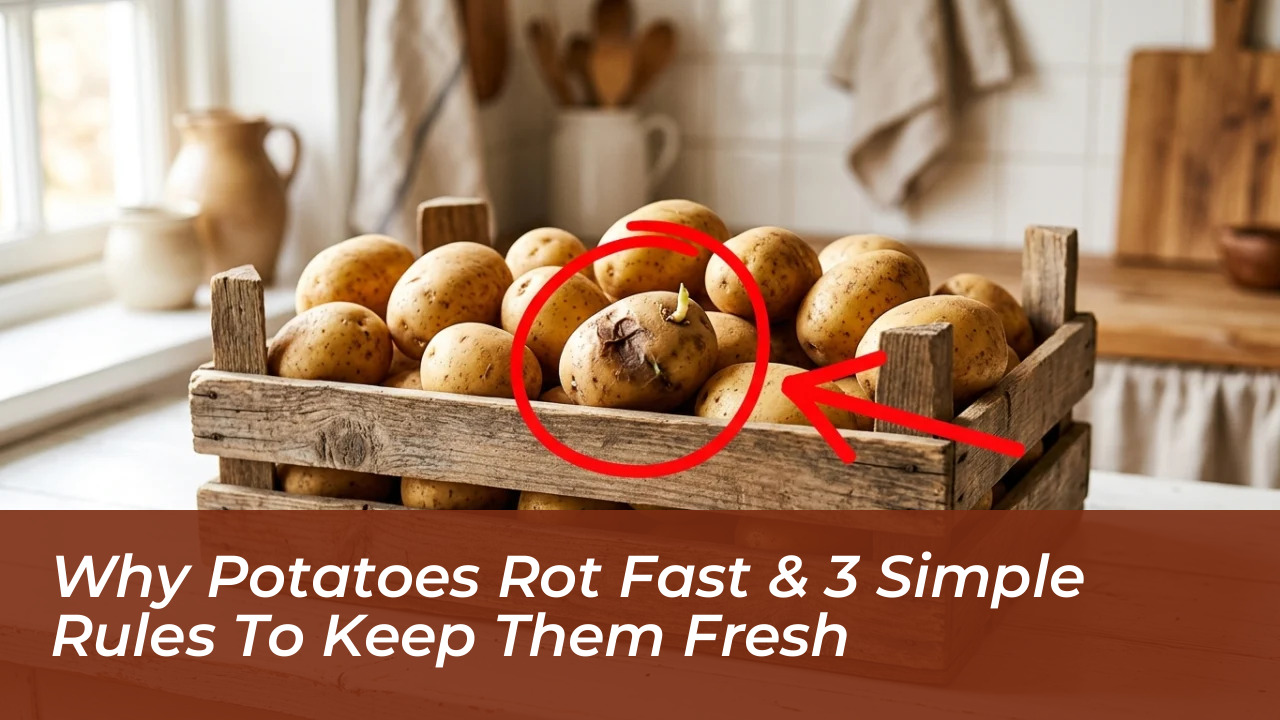

Every home cook has faced the frustrating mystery of a fresh sack of tubers turning soft, wrinkly, or covered in pale shoots just weeks after purchase, while other harvests stay firm through winter. The secret to long-term potato storage comes down to controlling three baseline physical factors: total darkness, steady cool air, and continuous ventilation. Getting these wrong triggers natural biochemical processes that spoil the batch. A single bruised or infected tuber can ruin an entire crate in days, making a quick sorting routine essential for preserving your kitchen supplies.
The Curing and Sorting Stage You Cannot Skip
Directly after harvesting or purchasing, tubers carry surface moisture and soil that trap fungal spores against the skin. Instead of loading wet produce straight into an enclosed basement, pantry, or cellar, spread the potatoes out in a dry, shaded, and well-ventilated space to dry completely.
Once the skin is dry to the touch, examine every single spud. Cut, dented, soft, or visibly rotting tubers must be separated immediately. Spuds with minor mechanical damage should go straight into the kitchen for immediate cooking, leaving only firm, blemish-free produce for long-term reserves. A common mistake in practice is loading damp, uninspected harvest into closed quarters, creating an ideal breeding ground for rot.
Thermal Balance: Why Freezing Is Just as Bad as Heat
Table potatoes require a cool microclimate, but chilling them excessively triggers a chemical defect known as cold-induced sweetening. The optimal zone sits between 39°F and 45°F (roughly +4°C to +7°C). Maintaining a steady reading matters far more than pushing the room down toward freezing.
When temperatures drop too close to the freezing mark, the starches inside the tuber convert into reducing sugars. This reaction leaves the potato with an unnatural sweet taste and causes it to scorch quickly when roasted or fried. Conversely, warmer pantry conditions trick the plant into thinking spring has arrived, accelerating sprouting and moisture loss.
Potato Storage Conditions and Physical Outcomes
- Above 45°F (Warm Environment): Rapid sprouting, shriveling, and accelerated dehydration.
- Below 39°F (Near-Freezing): Starches convert to sugars, altering flavor and frying quality.
- Steady 39°F-45°F (Cool & Dark): Stable dormancy with minimal moisture loss.
- Airtight Plastic Bags: Moisture condensation leading to fungal soft rot.
Darkness and Ventilation: The Armor Against Solanine and Mold
Never store table spuds in daylight or under bright indoor lights. Exposure to light stimulates chlorophyll synthesis, turning the outer flesh green, which coincides with a surge in glycoalkaloids such as solanine. Tubers with deep green patches or a bitter bite pose toxic risks and should never be consumed.
Air movement is equally non-negotiable. Stashing your produce inside sealed plastic grocery bags traps ambient respiration, creating condensation drops that rapidly trigger fungal decay. Instead, rely on proper storage containers:
- Slotted wooden crates: Allow a cross-breeze between layers while blocking direct light if covered.
- Ventilated wire or plastic bins: Keep heavy air pockets from forming around the base.
- Mesh produce sacks: Provide total air circulation for hanging or rack placement.
While low humidity causes tubers to shrink and develop leathery skins, high humidity without ventilation leads directly to dripping ceilings and waterlogged roots. Folk remedies like laying raw beets on top cannot substitute for basic room airflow.
Routine Maintenance and Companion Storage
Even a meticulously curated crate can harbor a hidden defect that reveals itself weeks later. Inspect accessible upper layers every few weeks to spot trouble early. If a tuber turns squishy, moist, or emits an off odor, pull it out instantly before it infects neighboring spuds.
Keep your root cellar organized by separating different produce varieties. Storing onions alongside potatoes degrades both crops faster because the moisture and volatile compounds released by one shorten the shelf life of the other. Similarly, household refrigerators run too cold and dry for bulk stockpiles; save the fridge for ready-to-eat leftovers.
Managing your winter food pantry requires consistent habits rather than expensive gear. Regular monitoring for light leaks, dampness, and rogue sprouts ensures your hard-earned stock stays oven-ready until spring.