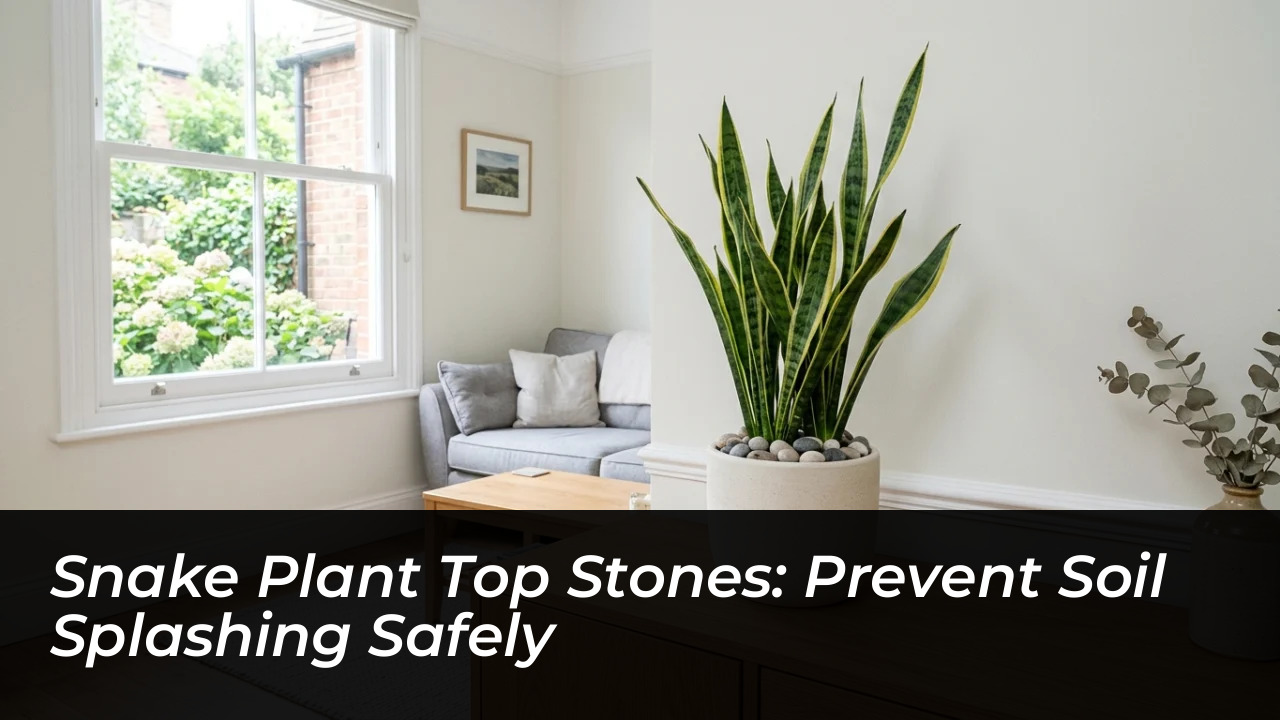

Spreading a thin layer of clean stones across the top of your snake plant potting mix prevents water from splashing messy soil out of the container during maintenance. While this simple touch provides a polished accent with natural white or gray pebbles, packing them too tightly traps moisture against plant tissue and hides critical signs of root distress.
Known botanically as Dracaena trifasciata, this resilient houseplant stores moisture directly inside its thick, upright foliage. Because the species evolved to thrive through extended periods of drought, excess water lingering in the root zone remains its primary environmental hazard. Applying top dressing requires balancing aesthetics with proper aeration to avoid suffocating the root system.
The Practical Benefits and Limits of Decorative Pot Stones
Adding a light layer of chemical-free gravel over container soil offers several distinct advantages for everyday indoor gardening. Natural pebbles create an attractive visual contrast against deep green foliage while weighing down loose organic matter.
- Prevents soil splashing: Water droplets hit the smooth stone surface rather than loose dirt, stopping muddy splatter on windowsills and leaves.
- Maintains surface order: A thin top dressing keeps light soil particles contained and delivers a neat, uniform container appearance.
- Reduces rapid surface evaporation: Depending on rock density, pebbles help shade the upper substrate layer from direct heat.
- Enhances interior decor: Neutral gray, beige, or white river rocks accentuate the upright vertical lines of structural foliage.
These surface enhancements, however, do not improve subterranean soil aeration or shield vulnerable underground roots from decay if moisture management is flawed.
The Drainage Myth: Rocks Do Not Prevent Root Rot
A widespread misconception suggests that adding stones inside a pot prevents moisture damage. In reality, covering soil completely prevents indoor gardeners from inspecting dryness, while placing gravel inside the base of a container is an outdated practice that fails to replace porous potting media.
A common mistake in container care is placing rocks in the bottom of a pot to improve drainage. This creates a perched water table and pools stagnant moisture directly beneath the roots. To keep a snake plant healthy, the container must feature functional drainage holes paired with a light, aerated substrate that allows excess water to escape immediately.
| Placement Practice | Impact on Plant Health |
|---|---|
| Thin top layer with open gaps | Controls soil displacement while allowing airflow and moisture checks |
| Dense layer against leaf bases | Traps ambient humidity against foliage tissue and invites rot |
| Gravel layer at pot bottom | Displaces soil volume and creates a stagnant moisture pool |
| Porous potting mix throughout | Maintains root oxygenation and promotes rapid water transit |
Early Warning Signs of Underground Damage
When moisture remains trapped beneath dense stone layers or heavy substrate, the root network quickly begins to suffocate. Visual cues on the foliage serve as an urgent warning that the underground system is compromised.
Watch for foliage turning pale yellow, leaves developing a soft or mushy texture, and dark patches forming along the base. If these symptoms appear, lift the root ball immediately to inspect for decay and recalibrate your watering schedule.
How to Apply Stones and Water Correctly
You can safely enjoy decorative pebbles by following a disciplined placement method that prioritizes plant physiology over pure aesthetics.
- Wash the stones thoroughly: Use only clean rocks free of chemical residue, dyes, or fine powders before placing them near plant roots.
- Spread a sparse single layer: Leave intentional gaps across the soil surface so you can see and touch the potting mix underneath.
- Keep foliage collars clear: Never press pebbles directly against the base of the upright leaves, as lingering humidity can deteriorate plant tissue.
- Confirm dry soil before watering: Insert a wooden skewer or your finger into an uncovered soil patch to ensure the substrate has dried completely.
- Drench thoroughly and empty drainage trays: Pour water until it runs out the container holes, then discard all standing runoff from the saucer below.
Check your plant’s soil moisture beneath the stones with a wooden probe before offering another drop of water. Inspect the base of each leaf every month to confirm the tissue remains firm, dry, and free of persistent dampness.