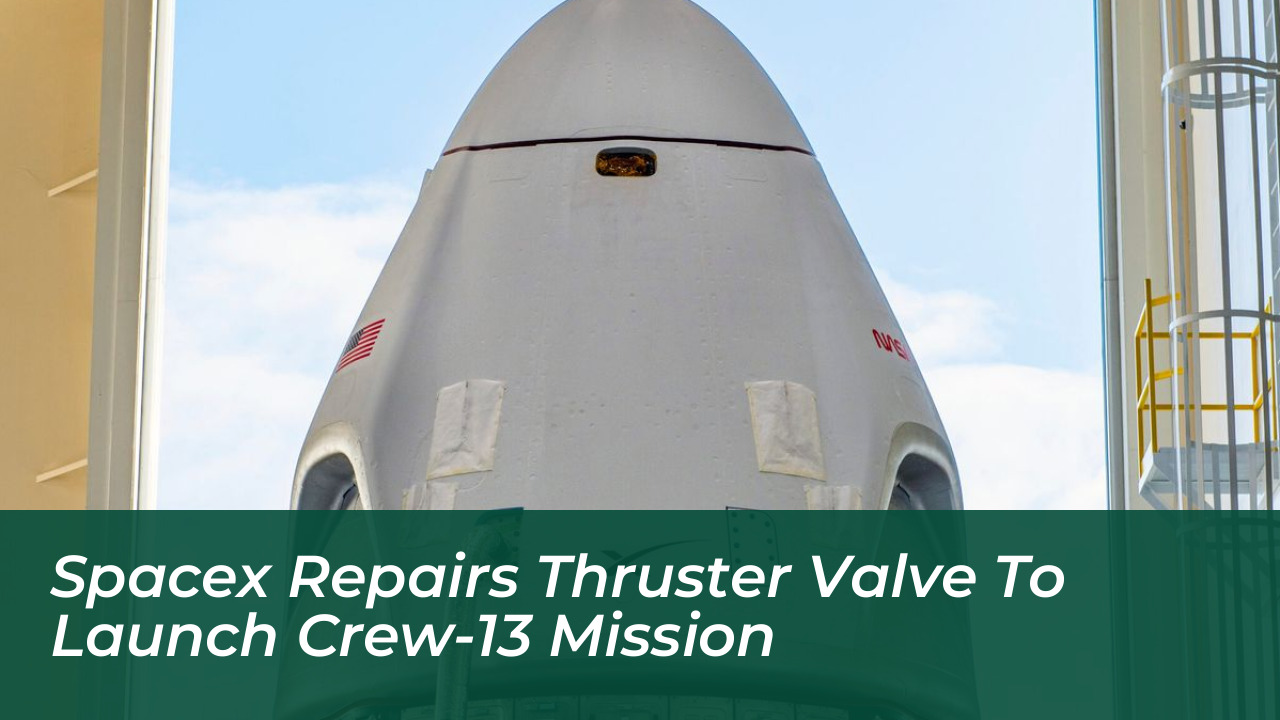
Engineers executed unprecedented pre-launch propulsion repairs on the Crew Dragon spacecraft before launching four astronauts to the International Space Station from Space Launch Complex-40 at Cape Canaveral Space Force Station on Thursday at 11:10 a.m. EDT. The launch had been delayed from mid-September after ground teams detected an oxidizer leak inside the spacecraft’s propulsion system during preparations at Cape Canaveral.
Due to high traffic on this story, please verify you are not a bot to instantly unlock the remaining content. Takes only 5 seconds!
Verify & Continue ReadingTo fix the faulty valve without draining volatile nitrogen tetroxide propellant or disassembling the vehicle, technicians cut directly into the propellant line, replaced the component, and re-welded the system. Bill Gerstenmaier, vice president of build and flight reliability at SpaceX, detailed the complex technical intervention during a prelaunch briefing. He highlighted the unique engineering challenge of performing hot work with propellant onboard.
Overcoming Prelaunch Technical Delays
The mission was originally slated to launch no earlier than September 12. During standard prelaunch processing in late August, engineering teams detected an oxidizer leak within the Dragon spacecraft’s propulsion system. This discovery prompted a delay to allow for troubleshooting and hardware repairs.
On September 16, NASA announced that ground teams had resolved the technical issue. The team successfully replaced an oxidizer valve in Dragon’s propulsion system after a leak was detected earlier in processing. With the hardware repaired, the spacecraft underwent final prelaunch testing and readiness reviews. This ensured all systems met strict flight safety standards before receiving special permission from the Space Force’s Eastern Range to conduct the surgical repair.
Crew-13 Roster and Mission Objectives
The four-member Crew-13 roster includes NASA astronaut Jessica Watkins, serving as spacecraft commander, and Luke Delaney as pilot. They are joined by mission specialists Joshua Kutryk of the Canadian Space Agency and Sergey Teteryatnikov of Roscosmos. Watkins made history on the flight by becoming the first Black woman to command a spacecraft.
To ensure their health and prevent the introduction of illnesses to the orbital laboratory, the crew officially entered routine prelaunch quarantine on September 17 at NASA’s Johnson Space Center in Houston, Texas. Upon arrival at the ISS, the four spacefarers integrated into Expedition 75. Their scheduled microgravity research includes studies focusing on stem cell growth, fluid shifts in the human body, and plant habitats.
Technical Details of the Surgical Valve Replacement
The propellant that failed to stay contained was nitrogen tetroxide (NTO), the oxidizer half of Dragon’s Draco thruster system. Crew Dragon carries 18 Draco thrusters, each producing 400 Newtons of thrust, using NTO paired with monomethylhydrazine as fuel. Because nitrogen tetroxide is extremely corrosive and attacks metal seals, executing a repair while the tanks remained fully loaded with the toxic oxidizer required extraordinary safety precautions.
Gerstenmaier noted that technicians accessed the vehicle inside SpaceX’s fueling and hazardous processing facility, known as Area 59, at Cape Canaveral Space Force Station. By cutting out the welded valve, replacing it, and re-welding the line in place, engineers avoided a much longer stand-down that would have disrupted station handover schedules.
Frequently Asked Questions
Why was the Crew-13 launch delayed?
NASA and SpaceX detected a nitrogen tetroxide oxidizer leak in the Crew Dragon spacecraft’s propulsion system during standard prelaunch processing at Cape Canaveral, requiring an engineering hold and repair.
How did SpaceX fix the propulsion valve?
Technicians performed an unprecedented surgical repair by cutting directly into the propellant line, replacing the faulty valve, and re-welding the system while the spacecraft’s oxidizer tanks remained full.
Who is on the Crew-13 flight roster?
The crew consists of Commander Jessica Watkins, Pilot Luke Delaney, and Mission Specialists Joshua Kutryk and Sergey Teteryatnikov.
When did Crew-13 launch to the ISS?
The mission successfully lifted off from Space Launch Complex-40 at Cape Canaveral Space Force Station on Thursday at 11:10 a.m. EDT.
What is the primary focus of the Crew-13 mission?
The crew is conducting a six-month expedition on the International Space Station supporting Expedition 75, focusing on microgravity research including stem cell growth, fluid shifts, and plant biology.