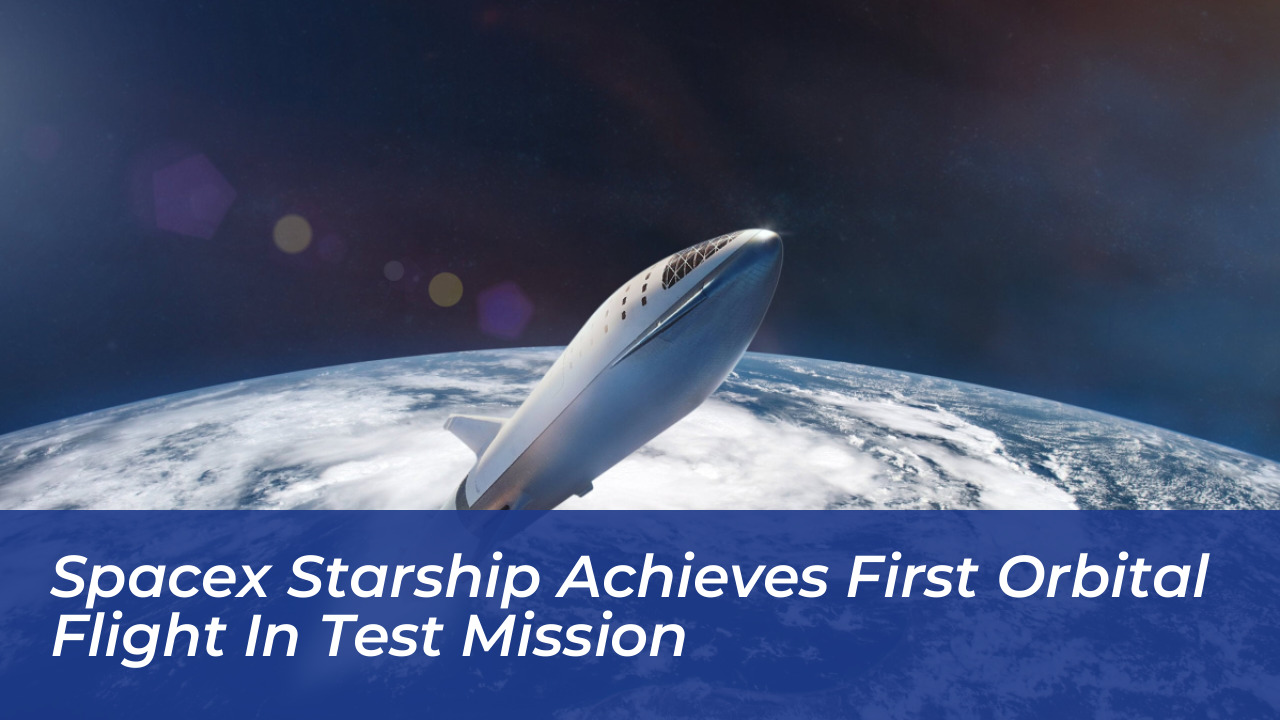
SpaceX achieved a major milestone on the morning of September 28, 2026, when its massive Starship rocket successfully completed its first-ever orbital mission during its 14th integrated test flight. Launching from the company’s Starbase facility in Cameron County, Texas, the 407-foot-tall vehicle powered through an uncrewed ascent, overcoming early engine anomalies to reach space and deploy its first operational payload.
Overcoming Early Engine Setbacks During Ascent
The mission lifted off at 7:48 a.m. CDT (8:48 a.m. EDT). During the initial minutes of flight, the vehicle experienced technical hiccups when one of the Raptor engines on the Super Heavy booster shut down early. A similar issue struck the upper-stage spacecraft, known as Ship 41, which also lost one of its six Raptor engines shortly after stage separation.
Despite these anomalies, the Super Heavy booster completed its designated boostback burn and executed a controlled splashdown in the Gulf of Mexico approximately seven minutes after liftoff. Meanwhile, flight controllers evaluated telemetry data from the remaining engines on the upper stage and determined the trajectory remained safe. Mission Control gave a “go” for orbit, and roughly 25 minutes into the flight, Starship executed a successful orbital insertion burn using a single sea-level Raptor engine.
“Starship is orbital,” Mission Control announced, sparking cheers from SpaceX teams watching live at Starbase and prompting CEO Elon Musk to confirm the milestone on social media.
Deploying First Operational Starlink V3 Satellites
Operating at an altitude of approximately 170 miles (275 kilometers), Starship achieved its secondary primary objective by successfully deploying a commercial payload. Over a 30-minute window, the spacecraft released 26 next-generation Starlink V3 broadband satellites into low Earth orbit. SpaceX confirmed that the Starlink team established contact with all deployed units, which are designed to significantly expand the company’s orbital internet constellation capacity.
Three of the newly deployed satellites featured integrated camera suites designed to capture imagery of Starship’s heat shield while in space. Engineers will analyze this data to evaluate tile performance and assess potential design improvements for future thermal protection systems.
Mission Abbreviated After Successful Checkpoints
Although initial mission plans projected a duration of nearly ten hours spanning roughly six orbits, SpaceX flight controllers elected to curtail the flight following the first major operational checkpoint. Roughly two and a half hours after liftoff, the team initiated a deorbit burn using a single Raptor engine.
Starship reentered Earth’s atmosphere and splashed down intact in the northern Pacific Ocean, north of Hawaii, approximately three hours and eight minutes after launch. While the shorter duration trimmed hours off the planned flight profile, company representatives emphasized that the mission fully validated the core architecture needed for future orbital operations and vehicle reusability.
Significance for NASA Artemis and Future Exploration
Reaching orbit marks a critical threshold for SpaceX as it works toward establishing full and rapid reusability for the Starship system. The capability is foundational not only for scaling the Starlink network but also for fulfilling multi-billion-dollar NASA contracts under the Artemis program.
NASA selected a specialized variant of Starship to serve as the Human Landing System (HLS) for upcoming crewed lunar missions. Achieving reliable orbital insertion and payload deployment eases immediate technical hurdles facing the broader exploration timeline, though significant challenges, including orbital propellant transfers and life-support integration, remain ahead for future test campaigns.