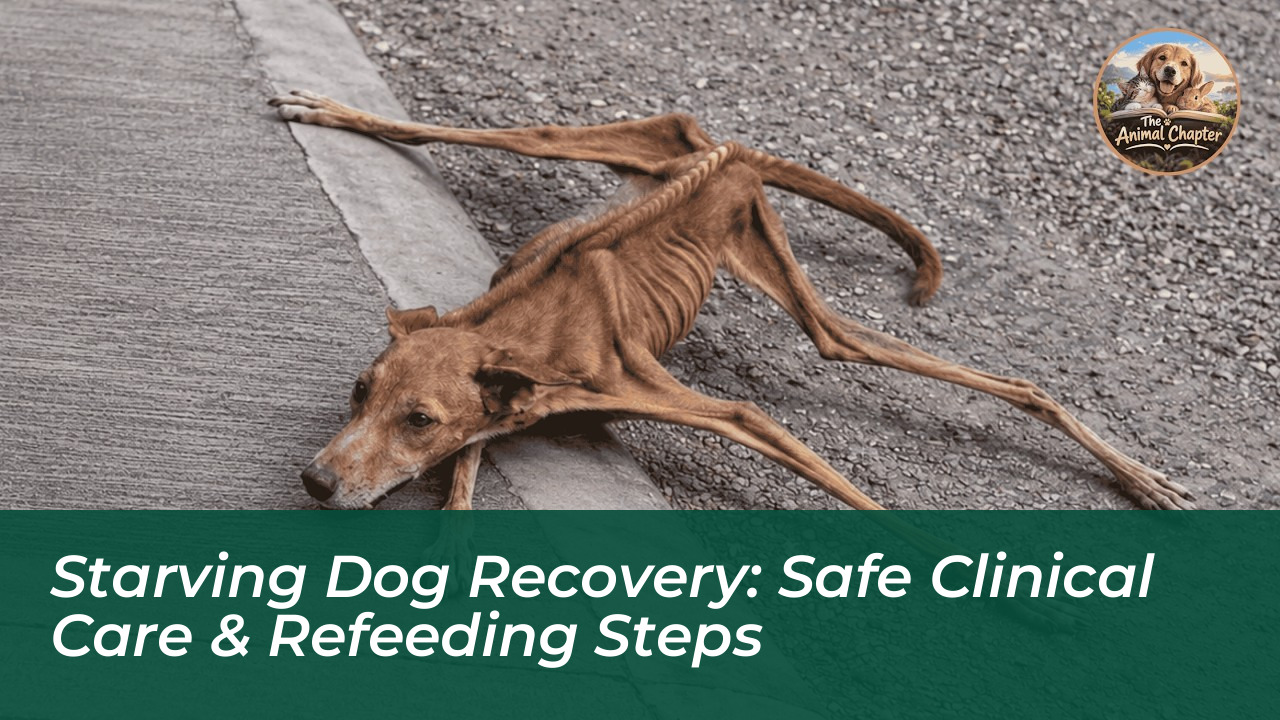

When an emaciated rescue dog named Blair was found collapsed, severely dehydrated, and unable to support her own weight, her survival depended on an immediate medical intervention rather than a full bowl of food. Severe canine emaciation disrupts core organ systems. Because of this, the process of starving dog recovery requires a precise clinical protocol to prevent sudden cardiac and metabolic collapse. Through methodical hydration, controlled refeeding, and targeted medical treatment, even dogs on the brink of death can rebuild muscle mass and regain total mobility.
Street rescues often present animals suffering from prolonged caloric deprivation, internal parasites, and extreme muscle wasting. When an animal reaches the point of recumbency-the medical term for being too weak to stand or walk-every hour without structured veterinary support drastically reduces survival odds. Understanding the underlying physiological crises is essential for anyone involved in animal rescue and rehabilitation.
The Hidden Danger of Refeeding Syndrome
The instinct of well-meaning rescuers is frequently to offer an abundance of nutrient-dense food immediately upon discovery. However, veterinary clinicians warn that sudden carbohydrate intake after chronic starvation triggers a fatal metabolic shift known as refeeding syndrome.
During prolonged starvation, the animal’s body shifts from metabolizing carbohydrates to burning fat and internal muscle tissue for baseline survival. When a large meal introduces sudden glucose spikes, the pancreas releases massive amounts of insulin. This surge forces essential electrolytes-specifically phosphorus, potassium, and magnesium-out of the bloodstream and directly into the cells.
- Offering large, rich meals to a severely starved animal can trigger rapid electrolyte crashes, leading to acute heart failure or respiratory arrest within thirty-six hours.
- The sudden drop in serum phosphorus levels starves red blood cells of energy, causing systemic hemolytic anemia and neuromuscular paralysis.
- To prevent this crisis, modern veterinary protocols mandate introducing small, frequent meals formulated with low carbohydrate and high fat contents, calibrated strictly to resting energy requirements rather than full caloric targets.
Clinical Milestones: The Phases of Physical Rehabilitation
Reversing severe emaciation requires weeks of calculated medical management. Rescue organizations regularly document how patient, systematic care transforms bedridden animals into active, thriving pets. The rehabilitation roadmap follows clear physiological stages designed to protect delicate internal organs before muscle rebuilding can begin.
Phase 1: Intravenous Stabilization and Fluid Therapy
Correcting severe dehydration and restoring electrolyte balance using balanced crystalloid solutions before introducing solid nutrients.
Phase 2: Micro-Enteral Feeding
Serving tiny portions of high-calorie, easily digestible veterinary prescription diets up to six times daily to gently reactivate gut motility.
Phase 3: Parasite and Infection Eradication
Administering dewormers, antibiotics, and tick-borne disease therapies only after the gastrointestinal tract tolerates food without vomiting.
Phase 4: Musculoskeletal Reconditioning
Encouraging passive range-of-motion exercises and assisted standing to rebuild atrophied limb muscles once strength returns. Dogs suffering from advanced atrophy often exhibit knuckling or severe tremors in their hind limbs, symptoms stemming from electrolyte depletion combined with severe protein catabolism.
Recovery Timeline and Phased Protocol
Managing a starving dog requires tracking progress against specific milestones. The following framework outlines expected physical targets during the initial weeks of veterinary intervention:
| Recovery Stage | Primary Clinical Objective |
|---|---|
| Days 1 to 3 | Electrolyte stabilization, fluid rehydration, and micro-feeding at 25% caloric needs. |
| Days 4 to 10 | Gradual caloric escalation to 100% maintenance; monitoring serum phosphorus. |
| Weeks 2 to 4 | Treatment of underlying infections, skin healing, and controlled weight gain. |
| Weeks 5 and Beyond | Physical conditioning, full muscle restoration, and behavioral socialization. |
Myth vs. Fact in Canine Starvation Cases
Widespread misconceptions persist regarding how street animals recover from critical neglect. Understanding the physiological truth helps rescuers make sound decisions under pressure.
Myth: A starved dog’s primary hurdle is simply an empty stomach requiring an immediate large meal.
Fact: Starvation suppresses the immune system and shrinks the digestive lining, leaving the patient vulnerable to secondary septic infections from normal gut bacteria. Deworming or bathing an animal while it remains hypothermic and dehydrated can trigger fatal shock.
Another common belief suggests that physical weakness signals irreversible neurological damage. While severe tick-borne illness or neurological deficiencies can occur, profound weakness is frequently reversible once metabolic balance and systemic protein levels stabilize under veterinary supervision.
Frequently Asked Questions
What is the most immediate danger when feeding a starving dog?
The primary danger is refeeding syndrome, a fatal metabolic shift caused by a sudden insulin surge that drives vital electrolytes out of the bloodstream and into cells, leading to potential heart failure.
How much food should be given during the first 48 hours?
Veterinarians recommend micro-meals consisting of tiny, measured portions of easily digestible, low-carbohydrate food fed up to six times a day, restricted to roughly 25% of the dog’s resting energy requirements.
Why do severely malnourished dogs experience tremors or inability to stand?
Recumbency and tremors result from a combination of severe electrolyte depletion, potassium and phosphorus imbalances, and extreme protein catabolism where the body has broken down skeletal muscle for fuel.
When is it safe to treat a rescued dog for intestinal parasites?
Deworming and parasite treatments should generally be delayed until the gastrointestinal tract is stable, hydration is restored, and the animal can tolerate food without vomiting, preventing further shock to a fragile system.
What is a safe weekly weight gain target during rehabilitation?
A safe and sustainable weight gain target is roughly 1% to 2% of the dog’s body weight per week. Faster weight gain is often dangerous fluid retention rather than true tissue restoration.