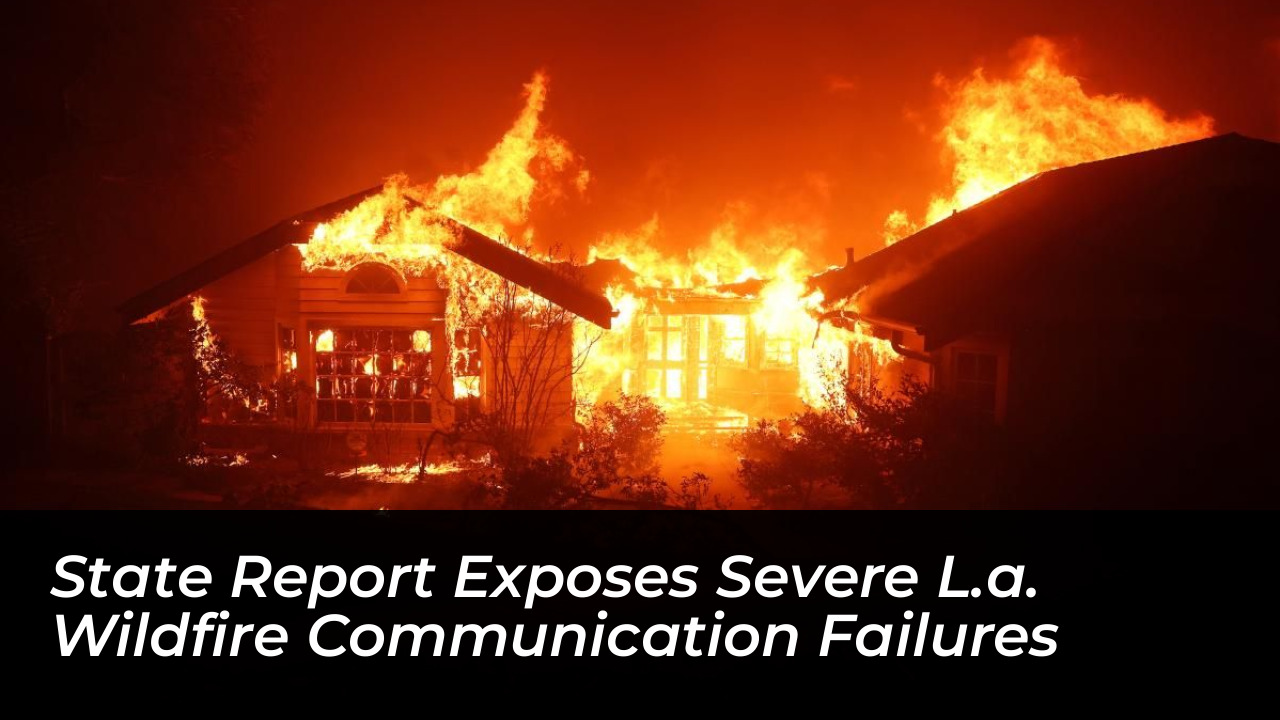
A long-awaited independent state report commissioned by California Gov. Gavin Newsom and released on October 2, 2026, revealed that severe communication breakdowns, poor preparation, and disorganized leadership compromised the emergency response to Los Angeles County’s fatal Eaton and Palisades fires.
Due to high traffic on this story, please verify you are not a bot to instantly unlock the remaining content. Takes only 5 seconds!
Verify & Continue ReadingThe 724-page assessment by UL Research Institutes’ Fire Safety Research Institute detailed how chaotic conditions hampered evacuations and firefighting operations during the January 2025 windstorms. The disasters resulted in 31 deaths and destroyed over 16,250 homes and commercial structures across Pacific Palisades and Altadena.
Critical Communication Breakdowns Overwhelm Emergency Systems
During the height of the crisis, emergency communications systems were overwhelmed by high call volumes. Police dispatchers routed 911 calls through a single captain’s personal cellphone to manage the influx. The system load became so severe that dispatchers lost track of several firefighter units, causing on-the-ground crews to operate independently of top commanders.
Derek Alconis, a senior research program manager and lead investigator at ULRI, stated during a news briefing that the speed and scale of the Eaton Fire overwhelmed the 911 system. Calls came in faster than dispatchers could manage, resulting in a fragmented response where a unified command structure could not be maintained.
Key Findings on the Palisades and Eaton Fires
The extensive evaluation confirmed several previous assessments regarding how the disasters escalated:
- Unmonitored Hot Spots: The Los Angeles Fire Department (LAFD) failed to fully mop up or monitor the earlier Lachman Fire, an alleged arson site that later erupted into the catastrophic Palisades Fire.
- Delayed Evacuations: In the Eaton Fire, critical reports of an ember storm from paramedics in west Altadena never reached incident commanders, leading to delayed evacuation alerts for residents in vulnerable neighborhoods.
- Interagency Disconnect: The LAFD and the Los Angeles Police Department operated in parallel rather than under a unified command, occasionally utilizing conflicting evacuation maps.
- Lost Tracking: Up to 26 fire units deployed independently without the knowledge of incident command due to a breakdown in radio tracking and institutional trust.
Agency Responses and Corrective Actions
In response to the report, the LAFD acknowledged responsibility for the findings that applied to its operations. The agency noted that it has already implemented changes regarding staffing procedures during red flag weather and protocols to ensure fires are completely extinguished. The department emphasized that the report holds it to a high standard and that it will evaluate every recommendation.
The Los Angeles County Sheriff’s Office reported that it is updating its 38-year-old dispatch system, onboarding 80 new dispatchers, equipping patrol vehicles with specialized evacuation warning sirens, and strengthening overall emergency communications. Meanwhile, the Los Angeles County Fire Department integrated advanced tracking mechanisms like the federal FireGuard program into its operational protocols following the disaster.
Recommendations for Future Wildfire Resilience
The ULRI report outlines 266 recommendations aimed at preventing similar tragedies as wind-driven urban firestorms grow common across the American West. Key proposals include increasing wildfire and incident management training throughout California, equipping command staff with portable satellite internet kits to bypass local communication failures, and training personnel to effectively utilize water from residential swimming pools during shortages.
Steve Kerber, a vice president at ULRI who leads its Fire Safety Research Institute, emphasized that future resilience depends on coordinated action across the entire regional system rather than relying on isolated improvements by single property owners or individual agencies.