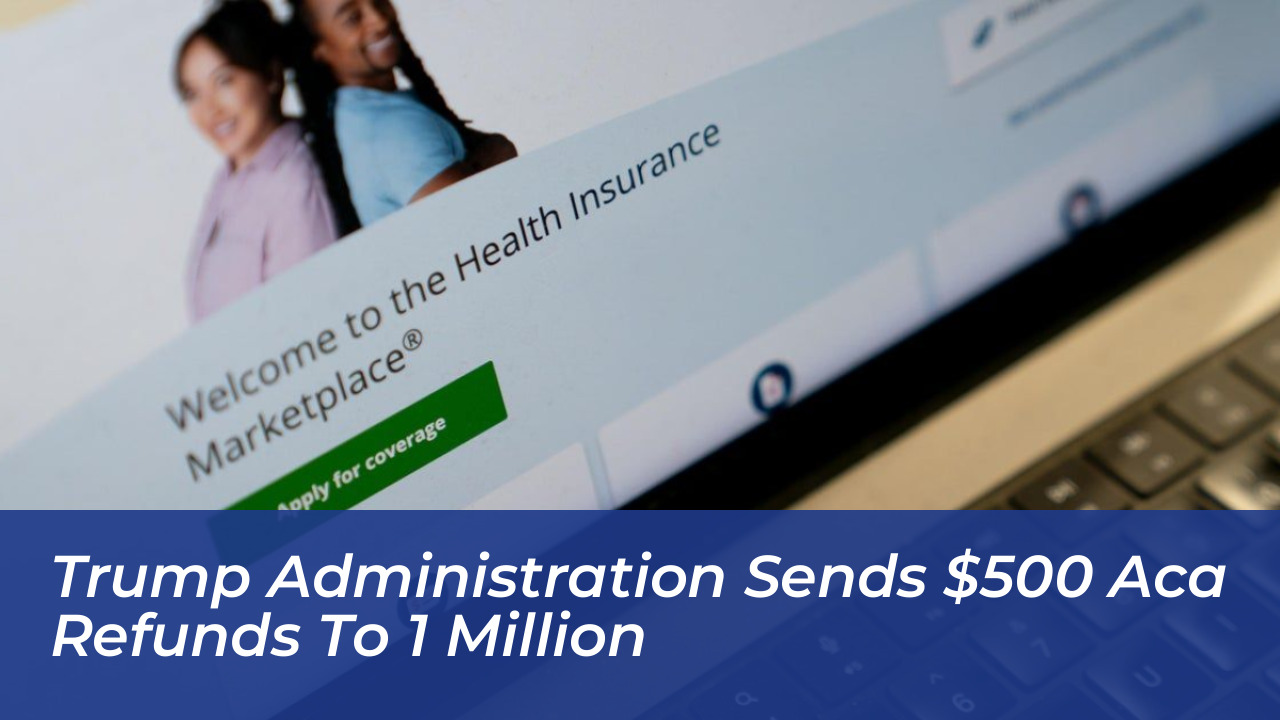
The Trump administration began distributing $500 refund checks on September 30 to nearly 1 million Americans across 30 states. These individuals were allegedly overcharged under the Affordable Care Act’s federal insurance exchange. Administration officials announced that the Treasury Department is rolling out the payments to more than 950,000 individuals who purchased health insurance through HealthCare.gov without receiving premium assistance.
The primary recipients of these one-time payments are individuals earning above 400% of the federal poverty line. This equates to roughly $63,000 to $64,000 for single individuals or $129,000 to $132,000 for a family of four. According to榴 the White House, families with multiple affected persons could receive multiple payments via direct deposit or check.
Details of the Working Families Obamacare Refunds
President Donald Trump included a signed letter with each check to explain the rationale behind the payouts. In the letter, President Trump stated, “For years, the Biden administration overcharged you to fund the operation of HealthCare.gov. That money belongs to hard-working Americans, not the Government, and now I’m returning it to you!”
The administration asserted that the prior administration collected excessive user fees from health insurance companies. This occurred through the federal exchange administered by the Centers for Medicare & Medicaid Services (CMS). These surplus fees were allegedly passed down to consumers through higher premium costs, resulting in accumulated funds that the White House described as a management failure.
Eligible States for the $500 ACA Refunds
The refunds are exclusively targeted at residents in 30 states that rely wholly or partially on federal exchanges administered by CMS. These are the areas where user fees were collected and retained by the federal government. Residents of the remaining 20 states that operate their own state-level health insurance exchanges are not eligible for these specific checks.
The 30 eligible states include:
- Alabama
- Alaska
- Arizona
- Arkansas
- Delaware
- Florida
- Hawaii
- Indiana
- Iowa
- Kansas
- Louisiana
- Michigan
- Mississippi
- Missouri
- Montana
- Nebraska
- New Hampshire
- North Carolina
- North Dakota
- Ohio
- Oklahoma
- Oregon
- South Carolina
- South Dakota
- Tennessee
- Texas
- Utah
- West Virginia
- Wisconsin
- Wyoming
Broader Political and Healthcare Context
The rollout of the $500 refunds arrives just over a month before the midterm elections. It coincides with widespread public anxiety over high inflation, household costs, and medical expenses. Millions of ACA enrollees have faced elevated premiums following the expiration of enhanced subsidies at the end of the previous year.
In addition to the refund initiative, the administration has highlighted ongoing efforts to curb healthcare expenses. These efforts include the enforcement of hospital and insurance price transparency rules, the expansion of health savings accounts, and negotiations with pharmaceutical manufacturers to lower prescription drug costs.