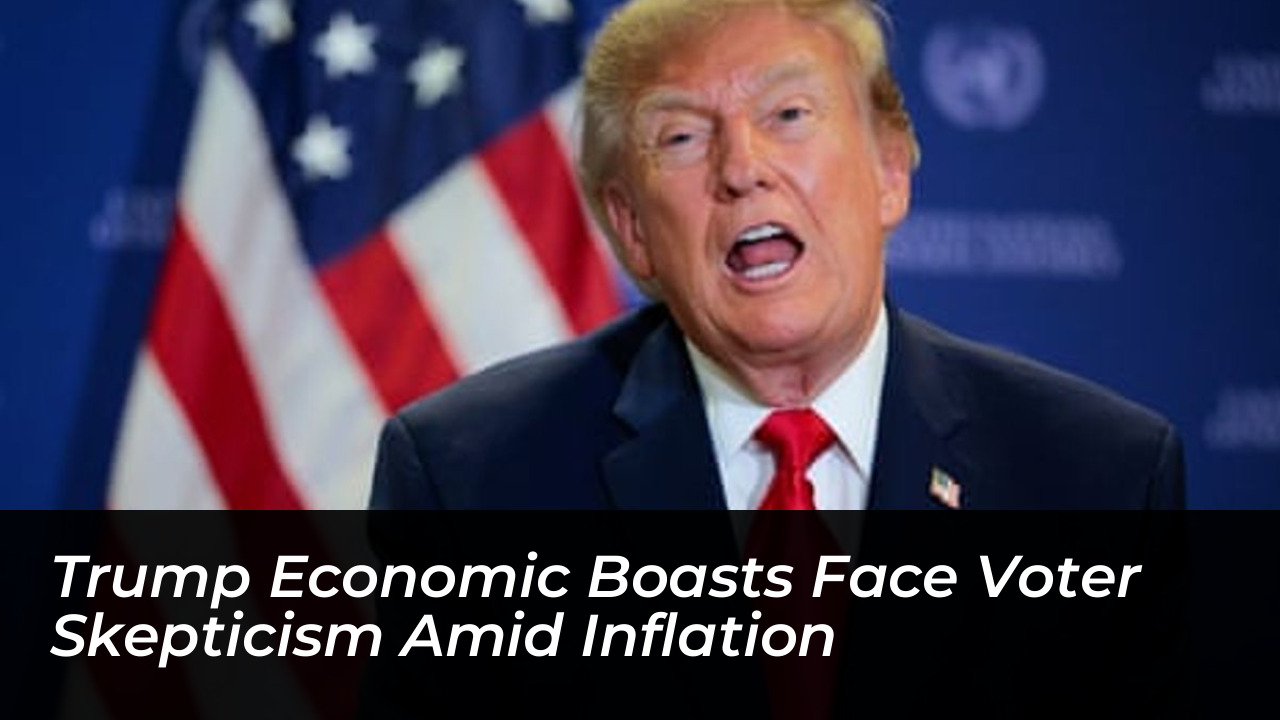
President Donald Trump continues to tout his economic record as the “greatest economy in history.” However, persistent inflation and slowing growth weigh heavily on voters ahead of the U.S. midterms. Official figures show inflation running at 3.4 percent, up from 3.0 percent when Joe Biden left office. This increase is driven largely by tariff policies and a military conflict with Iran that sparked energy price spikes.
Economic indicators present a complicated picture of the national landscape. While the unemployment rate remains low at 4.1 percent and business investment has been bolstered by artificial intelligence developments, broader consumer realities tell a different story. A University of Michigan poll recorded consumer sentiment falling in September to its second-lowest level in the poll’s 74-year history.
Voter Discontent and Polling Metrics
Public dissatisfaction with the cost of living has translated into sharply negative approval ratings for the administration’s economic stewardship. A New York Times/Siena poll revealed that 71 percent of voters disapprove of how Trump is handling the cost of living. Additionally, a Marquette Law School poll recorded his overall economic approval rating at just 28 percent.
Households across the country are grappling with significant price increases on everyday essentials. According to Bureau of Labor Statistics data, fuel oil prices surged 52 percent over a 12-month period. Meanwhile, ground beef rose 7.2 percent, fish and seafood climbed 6.5 percent, and electricity increased 3.8 percent. Average national gasoline prices have climbed to approximately $4.47 per gallon, compounded by disruptions from the ongoing conflict involving Iran.
Policy Drivers and White House Defense
Independent economists and think tanks point directly to administration policies as key contributors to affordability pressures. Analysts at the Yale Budget Lab estimate that the average American household will spend $1,100 more this year due to new tariffs. , Moody’s Analytics attributes an extra $1,000 in household expenses to energy and food price hikes stemming from the Middle East conflict.
White House officials strongly defend the administration’s record, emphasizing private-sector job growth, deregulation, and targeted price drops in specific categories. Kush Desai, a White House spokesman, stated that consumer spending remains robust and that the administration stays laser-focused on its long-term economic agenda. Administration defenders also point to recent month-over-month price reductions in items like beef, prescription drugs, and auto insurance as proof that targeted interventions are delivering results.
Despite these defenses, the convergence of high interest rates-following a recent Federal Reserve hike-and a modest second-quarter GDP growth rate of 1.5 percent leaves many families feeling financially squeezed. As the November midterm elections approach, the widening gap between official administration optimism and everyday consumer reality remains a central political battleground.