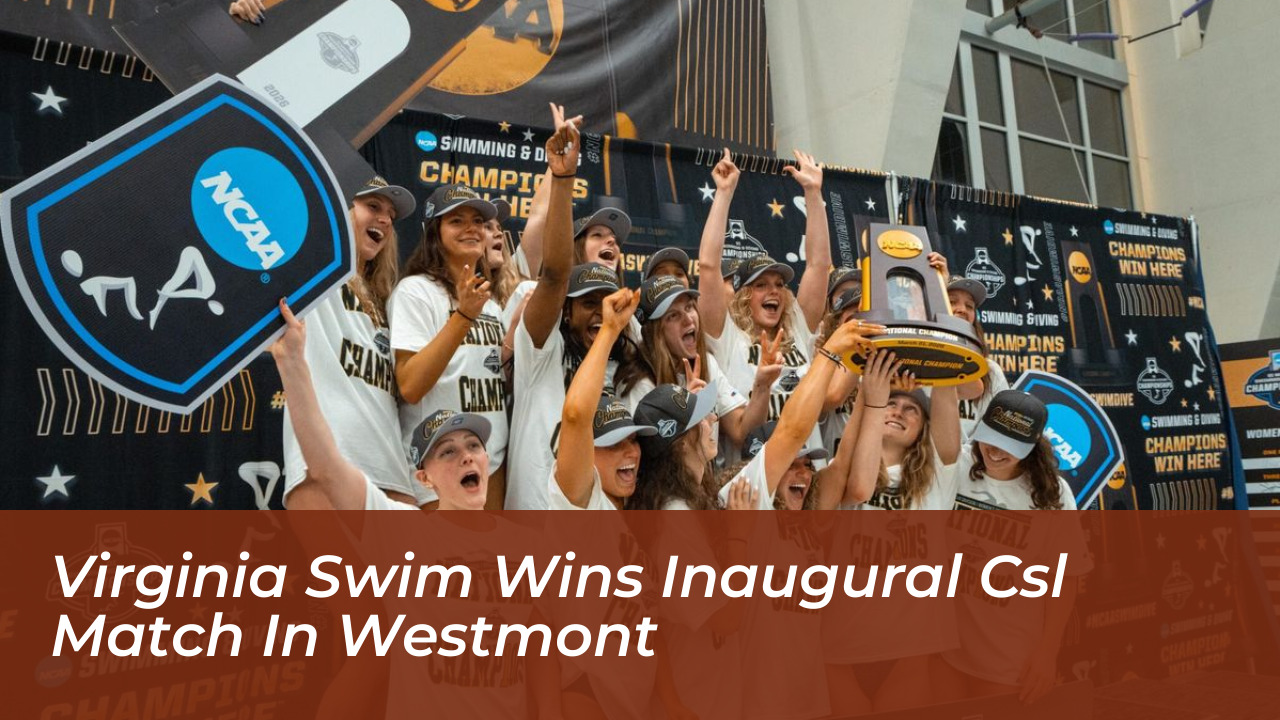
The collegiate swimming landscape underwent a massive transformation when the inaugural College Swimming League match descended upon the FMC Natatorium in Westmont, Illinois. Bringing a high-stakes, coed team format to an otherwise quiet early-season training window, the event redefined how elite programs prepare for national competition. The University of Virginia swim team delivered a masterclass in depth, conditioning, and sheer speed to capture top team honors with a dominant 666 points. Broadcast globally via digital platforms, this single-day competition proved that fan-focused, head-to-head racing creates immediate electrical tension in the pool.
- Anatomy of a Victory: How Virginia Secured 666 Points
- Roster Depth and Sprint Conditioning
- Team Standings Breakdown
- Claire Curzan Sets the Tone With Historic 200 Backstroke Performance
- Chasing History in the 200-Yard Backstroke
- Skins Race Dominance and Versatility
- Thomas Heilman Leads the Men’s Squad With Butterfly Dominance
- Butterfly Mastery and Stroke Efficiency
- Securing the Men’s MVP Title
- The College Swimming League Model: Revolutionizing the Sport
- Shifting from Traditional Dual Meets to Fan-Focused Racing
- Commercial Viability and Prize Money
- Key Takeaways and Season Outlook for Virginia
- Challenging Early-Season Polls
- Physical Demands of Modern Collegiate Racing
- Frequently Asked Questions
- What was the final score of the CSL Match in Westmont?
- Who earned MVP honors at the Westmont CSL match?
- How does the College Swimming League scoring work?
Anatomy of a Victory: How Virginia Secured 666 Points
Winning a modern coed team league match requires more than a few standout individual stars. It demands total roster utilization across fourteen men and fourteen women per team. Virginia head coaches leveraged their extraordinary sprint depth and endurance engines to pile up points from the opening bell. Every race counted directly toward both the team tally and official NCAA dual-meet requirements, while times also qualified for NCAA Championship consideration.
The scoring system rewarded aggressive racing and stamina. Throughout the evening, tactical races devolved into all-out sprint battles. The Cavaliers capitalized on high-pressure formats like skin races and medley relays. While other powerhouse programs suffered from early-season fatigue or unexpected roster scratches, Virginia maintained relentless momentum. The final standings showed the sheer scale of their dominance over elite competition from across the country.
Roster Depth and Sprint Conditioning
- How fourteen men and fourteen women per team maximized points across high-pressure heats.
- The physical toll of racing multiple rounds and maintaining stamina against early-season fatigue.
Team Standings Breakdown
- University of Virginia: 666 points
- NC State Wolfpack: 554.5 points
- Alabama Crimson Tide: 263 points
- Georgia Bulldogs: 207.5 points
Claire Curzan Sets the Tone With Historic 200 Backstroke Performance
Virginia senior Claire Curzan provided the defining moment of the entire Westmont match during the very first major individual test. Swimming the women’s 200-yard backstroke, Curzan put on a clinic. She touched the wall in a blistering 1:46.85, securing a vital jackpot swim for her team. This stellar mark stands as the fourth-fastest performance in history for the event.
More impressively, it landed just 0.76 seconds shy of her own lifetime best and NCAA record of 1:46.09. The gap between Curzan and the rest of the field highlighted her current level of dominance. NC State runner-up Leah Shackley finished more than three seconds behind, and no other competitor in the field managed to break the 1:50 threshold.
Curzan refused to slow down after her opening-event heroics. She embarked on a grueling schedule, racing eleven high-intensity heats across a demanding two-hour window. Her night included a flawless victory sweep in the women’s 50-yard backstroke skins race. She consistently posted sub-twenty-four-second swims through four consecutive rounds, clocking 23.50, 23.59, 23.47, and 23.74 to defeat opponents four straight times.
Chasing History in the 200-Yard Backstroke
- Curzan touching the wall in 1:46.85, marking the fourth-fastest performance in history.
- Comparison against her personal best and the gap separating her from the rest of the field.
Skins Race Dominance and Versatility
- Breaking down her four consecutive sub-twenty-four-second swims in the 50-yard backstroke skins.
- Securing the 100-yard butterfly victory and anchoring the Super Skins relays for a total of 95 MVP points.
Thomas Heilman Leads the Men’s Squad With Butterfly Dominance
While Curzan dominated the women’s events, Virginia standout Thomas Heilman put on an equally impressive show for the men’s squad. Heilman finished the evening with 64 points, earning men’s MVP honors through a lethal combination of stroke efficiency and tactical racing. He kicked off his individual campaign by claiming victory in the 200-yard butterfly.
He touched the wall in 1:40.54, finishing a full second and a half ahead of Georgia competitor Jacob Johnson. Heilman followed this performance with a gritty showing in the men’s 50-yard freestyle skins race, placing third across the first three rounds with times of 19.76, 20.17, and 20.20 seconds.
Completing a clean sweep of his primary butterfly disciplines, Heilman secured first place in the 100-yard butterfly. He clocked a 45.19, holding off a strong challenge from NC State’s Isaiah Aleksenko. In the final event of the night, Heilman swam the butterfly leg on all four rounds of Virginia’s Super Skins relay, providing the Cavaliers with an insurmountable lead.
Butterfly Mastery and Stroke Efficiency
- Winning the 200-yard butterfly in 1:40.54 with a comfortable margin over the field.
- Executing a strong tactical performance in the 50-yard freestyle skins race.
Securing the Men’s MVP Title
- Claiming the 100-yard butterfly crown in 45.19 seconds against top competitors.
- Powering the butterfly legs on all four rounds of Virginia’s Super Skins relays to seal 64 total points.
The College Swimming League Model: Revolutionizing the Sport
The success of the Westmont match validates the core mission of the College Swimming League. For decades, the NCAA swimming calendar relied on low-profile dual meets where training blocks took precedence over racing. Coaches routinely treated autumn meets as mere preparation phases for winter championships, leaving fans with predictable outcomes and zero immediate stakes.
The CSL introduces a fan-focused, high-octane format designed to alter this dynamic. Featuring a six-match regular season and a two-match postseason culminating in a four-team championship match in Indianapolis, the league injects genuine consequence into early-season racing. , corporate sponsorship from brands like Nike Swim brings commercial viability to the sport.
Shifting from Traditional Dual Meets to Fan-Focused Racing
- Eliminating predictable outcomes by introducing immediate stakes and fast-paced elimination formats.
- The structure of the six-match regular season and the upcoming postseason championship in Indianapolis.
Commercial Viability and Prize Money
- The role of corporate sponsorship from Nike Swim in funding the inaugural series.
- Financial incentives, including the 25000 dollar prize pool for championship-qualifying programs.
Key Takeaways and Season Outlook for Virginia
Virginia’s dominant performance in Westmont sends a clear warning shot to the rest of the NCAA. Both the men’s and women’s programs are firing on all cylinders despite the early calendar date. The women’s squad entered the match ranked No. 1, while the men held the No. 10 spot in national polls. These rankings clearly understate the true depth of the roster.
Elite athletes adapt quickly to high-volume heat racing and intense aerobic workloads under this modern competitive schedule. The long-term impact of the CSL model on NCAA championship preparation will likely change how coaches taper and train their athletes throughout the autumn months.
Challenging Early-Season Polls
- Why the top women’s ranking and men’s ranking understate the true depth of the Cavaliers.
- Preparing for the second and final regular-season CSL match on October 9.
Physical Demands of Modern Collegiate Racing
- How elite athletes adapt to high-volume heat racing and intense aerobic workloads.
- The long-term impact of the CSL model on NCAA championship preparation.
Frequently Asked Questions
What was the final score of the CSL Match in Westmont?
Virginia won with 666 points, followed by NC State with 554.5, Alabama with 263, and Georgia with 207.5.
Who earned MVP honors at the Westmont CSL match?
Claire Curzan claimed women’s MVP with 95 points, and Thomas Heilman secured men’s MVP with 64 points.
How does the College Swimming League scoring work?
The league combines traditional dual-meet scoring with high-pressure skin races and relays, rewarding roster depth and aggressive sprint pacing.