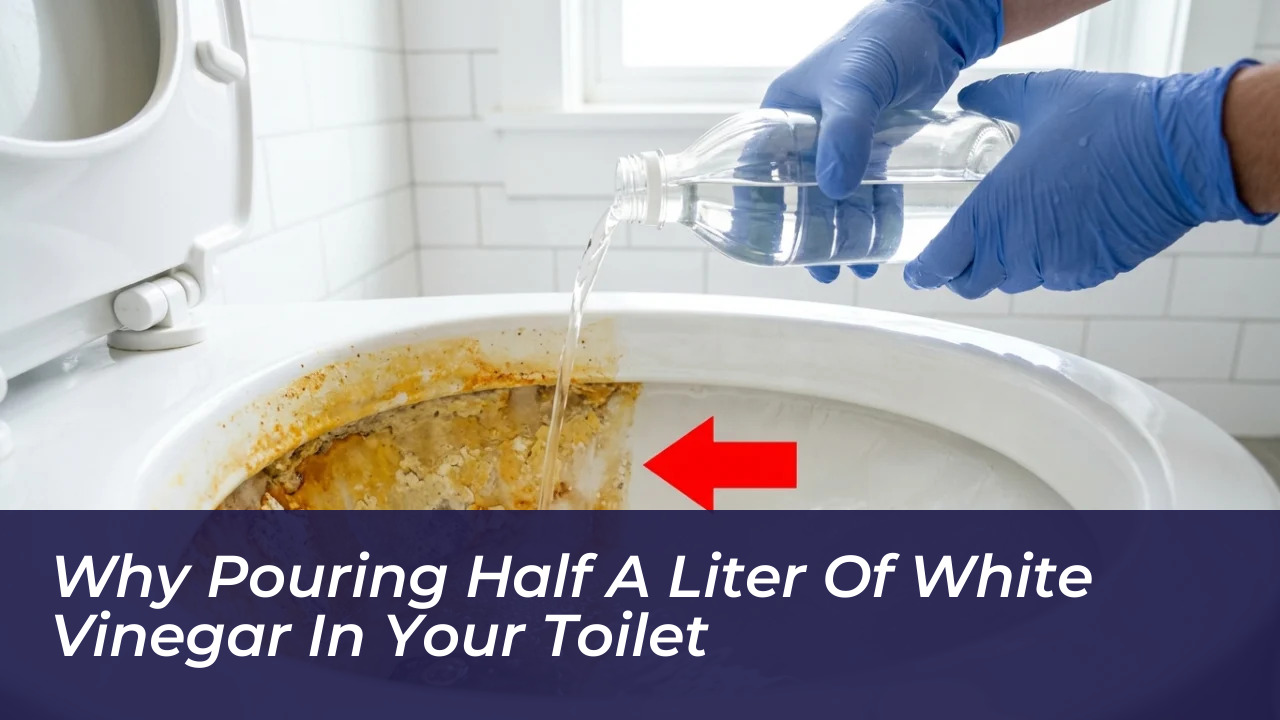

Cleaning the bathroom toilet is often considered one of the most dreaded household chores, especially when stubborn yellow rings and hard water stains begin to form along the waterline. While many homeowners immediately reach for corrosive bleach formulations or heavy industrial detergents, a growing number of people are turning to a much simpler, budget-friendly kitchen staple: pure white vinegar. Pouring roughly half a liter of white vinegar into your toilet bowl once a week offers an efficient, low-cost maintenance routine that dissolves mineral deposits, breaks down limescale, and eliminates foul odors without relying on harsh chemicals.
Understanding why this method works so effectively requires looking at the chemistry behind hard water and porcelain care. Rather than masking unpleasant bathroom smells with artificial fragrances, vinegar targets the root cause of the issue, altering the environment where bacteria thrive and ensuring your porcelain surface stays smooth and grime-free.
The Chemical Mechanism Behind Weekly Descaling
The entire efficacy of this household maintenance routine relies on natural acidity. Hard tap water frequently sits in plumbing fixtures, leaving behind an alkaline crust commonly recognized as limescale. This crust is formed by dissolved calcium and magnesium that bond directly to ceramic surfaces. The mild acetic in white vinegar chemically dissolves these alkaline mineral bonds, turning stubborn crust back into a liquid solution that easily rinses away upon flushing.
A pristine porcelain bowl is naturally non-porous and slick, but mineral buildup creates microscopic ridges where bacteria nest. As limescale thickens, standard plastic cleaning brushes skim right over the surface without touching the stained base layer. Regular descaling strips those deposits down to bare ceramic, allowing bristles to make direct physical contact with every square inch of the fixture. , vinegar alters the pH balance inside the bowl, creating an inhospitable zone for odor-generating bacteria.
Weekly Maintenance vs. Heavy-Duty Limescale Treatment
Knowing when to use a quick weekly rinse versus an intensive monthly restoration prevents unnecessary scrubbing and keeps your plumbing pristine throughout the year. The table below outlines the differences in application:
| Cleaning Approach | Application Details |
|---|---|
| Weekly Routine | 0.5 liters white vinegar poured around rim; scrub with plastic brush; immediate flush. |
| Heavy Buildup Method | 1 liter heated vinegar mixed with 3 tablespoons coarse salt; soak 3+ hours or overnight. |
The Step-by-Step Weekly Application
Establishing an effective weekly routine takes less than two minutes of direct effort and requires minimal preparation:
- Put on cleaning gloves and open a window or turn on the exhaust fan to maintain adequate bathroom ventilation.
- Pour approximately half a liter of pure white vinegar directly around the upper rim, ensuring it coats the interior bowl walls, the underside of the lip, and the waterline.
- Allow the liquid to run down the ceramic, then thoroughly scrub the entire bowl using a standard plastic toilet brush.
- Flush the toilet to clear away dissolved minerals and loosened surface debris.
- If you prefer a milder scent during application, add several drops of lemon, lavender, or tea tree essential oil directly into the bowl before scrubbing.
The Reinforced Method for Stubborn Yellow Rings
For toilets that have accumulated thick, discolored rings over months of neglect, a standard cold pour will not suffice. You need an amplified thermal and abrasive reaction to crack hardened scale. Heat approximately 1 liter of pure white vinegar on the stove until hot, then stir in 3 tablespoons of coarse salt until dissolved. Pour this warm mixture along the dry bowl walls, targeting the waterline where limescale forms most aggressively.
The heat accelerates the vinegar’s descaling action, while the salt acts as an abrasive agent against tough patches. Allow the warm salt-and-vinegar solution to sit untouched for at least 3 hours, or ideally overnight while the bathroom is out of use. Once the resting period concludes, scrub vigorously with a stiff brush and flush to reveal a bright, polished porcelain base.
The Critical Safety Rule: Never Mix With Bleach
While vinegar is an effective household asset, combining it with other domestic chemicals can be catastrophic. You must never mix white vinegar with chlorine bleach or any cleaner containing chlorinated compounds. Combining an with sodium hypochlorite creates dangerous toxic fumes that cause severe respiratory tract irritation, especially in enclosed, poorly ventilated bathrooms.
If your cleaning routine alternates between acidic treatments and conventional store-bought disinfectants, thoroughly flush the toilet bowl several times between applications to eliminate any chemical residue. Vinegar serves strictly as an ongoing surface maintenance tool; it will not repair structural porcelain cracks or unclog blocked primary drains, which require licensed professional plumbing services.
Frequently Asked Questions
Can I use apple cider vinegar instead of white vinegar?
No. Apple cider vinegar contains sugars and colorings that can leave sticky residues and stain porcelain surfaces. Always use clear, distilled white vinegar for cleaning tasks.
How often should I pour vinegar into my toilet?
Pouring about half a liter of white vinegar into the bowl once a week is ideal for preventing mineral buildup and maintaining a fresh scent without harsh chemicals.
Will vinegar harm my plumbing or septic system?
No. The mild acetic in white vinegar is completely safe for standard household plumbing, PVC pipes, and septic tank bacterial ecosystems.
Can I leave vinegar in the toilet overnight?
Yes. Leaving vinegar to soak overnight is an excellent strategy for tackling stubborn hard water rings and heavy mineral crusts without aggressive scrubbing.
Does vinegar disinfect the toilet bowl?
While vinegar is not a registered hospital-grade disinfectant, its natural acidity effectively kills many common household bacteria and neutralizes organic odor sources.