October marks a critical turning point in the garden calendar. As active vegetative growth winds down, still-warm soil and returning autumn moisture create a brief, highly strategic window to eliminate diseased stems, trim outgrown hedges, and prevent wind damage before plants transition into deep dormancy. Targeting the right plants to prune in October shields home gardens from harsh winter storms while locking in critical energy reserves for spring.
Due to high traffic on this story, please verify you are not a bot to instantly unlock the remaining content. Takes only 5 seconds!
Verify & Continue ReadingA widespread misconception is that gardeners should prune everything back as soon as cool temperatures arrive. Aggressive, untimed shearing can expose delicate internal wood to hard frosts or strip away vital wildlife food sources prematurely. October represents a deliberate pause where specific structural trims take precedence while major renovation cuts wait for full leaf drop.
The pruning cycle reaches a low ebb in October, as gardeners wait for leaf fall before beginning the main winter pruning season. Once the leaves have fallen, deciduous plants will have drawn their stored resources back into the roots, where they remain ready to fuel new growth in spring. To help you navigate this seasonal transition, here are 8 essential plants and plant groups to prioritize for a thriving landscape next year.
1. Tall Shrubs Prone to Windrock (Butterfly Bush and Mallow)
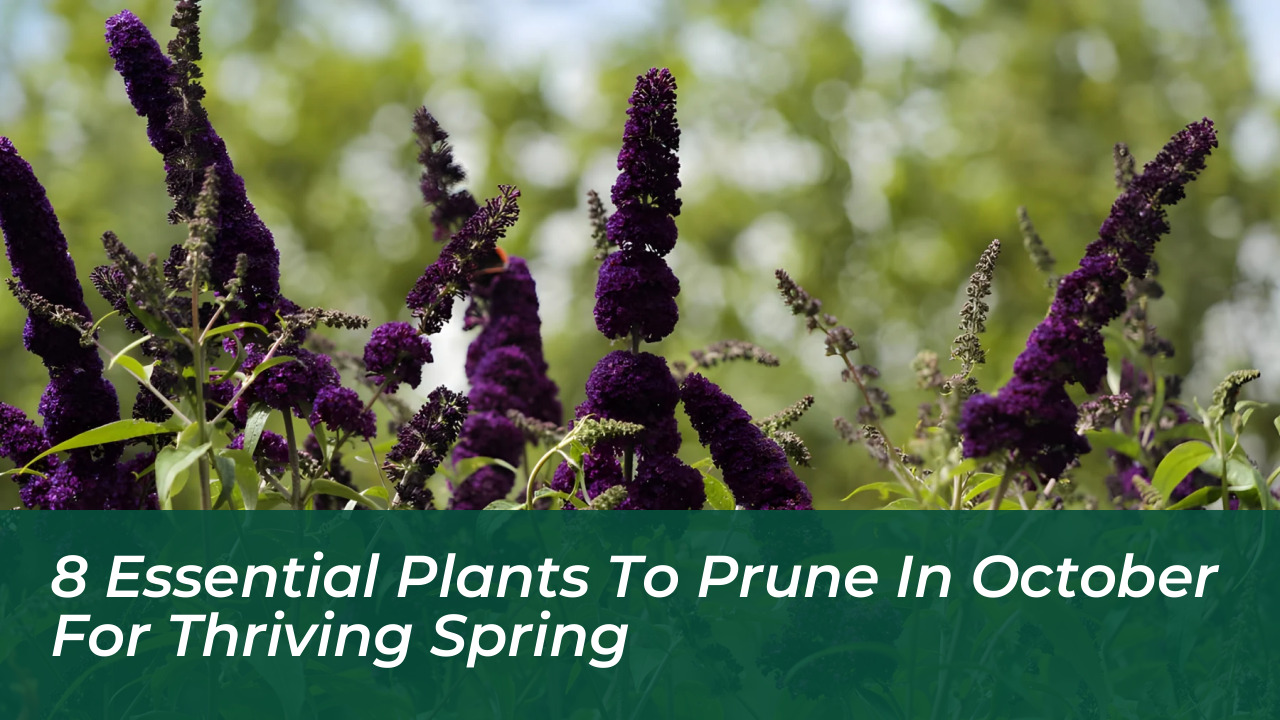
Autumn gales pose an immediate threat to lanky, brittle shrubs by creating windrock, a mechanical stress where top-heavy stems rock back and forth, loosening root plates in rain-soaked soil. Butterfly bush (Buddleja) and mallow (Lavatera) are particularly vulnerable to this structural failure as autumn storms gather strength.
Shortening both specimens by roughly half stabilizes their root ball and keeps them tidy throughout high-wind events. This preliminary cut also clears away messy outer foliage, offering a clear vantage point to inspect the underlying woody framework before full winter management.
2. Deciduous Boundary Hedges (Beech and Hornbeam)
Deciduous boundary hedges such as beech and hornbeam benefit from a tidy trim in October to establish crisp, tight lines before harsh weather sets in. Keeping these formal hedges trimmed now preserves their clean architectural presence across the garden all winter long.
By contrast, berried hedges require a completely different approach. Species like hawthorn should remain completely untrimmed until wild birds have fully stripped the berries, preserving a critical late-season food supply. Deeper structural renovations and heavy reshaping across all deciduous hedges should wait until leaves drop completely next month, when bare branch frameworks are fully exposed.
3. Rambling and Climbing Roses
Pruning technique shifts significantly depending on whether a garden features rambler or climbing varieties. Ramblers produce vigorous replacement shoots straight from ground level, requiring selective thinning to maintain balance.
When healthy young shoots are plentiful at the base of rambler roses, cut out the older, spent flowered stems completely. If replacement growth looks sparse, retain the strongest mature stems to carry next season’s blooms, clearing out faded flower shoots first to retain a balanced framework.
Climbing roses follow a more structured training regimen. Gardeners should address climbers with a precise routine:
- Tie in primary stems: Secure new, flexible shoots to garden supports and trellises to guarantee uniform wall coverage.
- Shorten flowering spurs: Cut back spent flowering side shoots by roughly two-thirds, directing the cut just above an outward-facing bud.
- Thin congested bases: Remove a few of the thickest, oldest canes flush with the ground level to stimulate new basal growth and maximize airflow.
4. Summer-Fruiting Berry Canes
Cultivated hybrid berries, including modern blackberries and loganberries, require swift post-harvest cleanup. All canes that bore fruit this past summer should be cut down directly at soil level, while vigorous new green canes must be securely tied into wire trellises to carry next year’s crop.
Pruning these early prevents spring “bleeding,” an issue where sap weeps heavily from late-winter cuts. Similarly, summer-fruiting raspberries benefit from removing spent canes to clear the way for productive primocanes.
5. Blackcurrant Bushes
Blackcurrants demand an aggressive pruning approach once leaves drop completely. Removing one-third to one-half of the oldest, darkest branches right back to ground level opens the center of the bush and triggers strong renewal shoots from the crown, preserving productive bearing wood.
6. Gooseberries
Gooseberries require a far more measured touch because they yield fruit on older, mature wood. Heavy shearing will decimate the coming season’s harvest. After leaf fall, remove a few of the oldest or most congested shoots, cutting them back to their point of origin.
Because gooseberry branches naturally weep downward, trim off trailing tips that threaten to contact the ground. When stems touch moist soil, they quickly root, creating tangled, diseased thickets that complicate harvesting. Maintaining clear space between main branches ensures superior sunlight penetration, healthy air circulation, and effortless picking next summer.
7. Select Herbaceous Perennials (Iris, Peonies, and Phlox)
While many perennials are best left standing to provide winter interest or wildlife shelter, certain varieties require October cleanup to prevent fungal diseases. Bearded irises should have their leaves cut back to 3-4 inches to eliminate borer eggs and leaf spot fungus.
Peonies should be cut down entirely to soil level once frost blackens their foliage, removing all debris to prevent botrytis blight. Phlox and bee balm showing signs of powdery mildew must also be cut back hard and cleared from the garden bed.
8. Mediterranean Herbs (Lavender and Rosemary)
Woody Mediterranean herbs like lavender and rosemary appreciate a light, protective trim in October. Shear off faded blooms and reduce the season’s soft, green growth by about one-third, stopping where stems begin to turn woody. This keeps the mound compact, prevents snow from splitting brittle stems, and ensures better air circulation through wet winter months.
October Pruning Action Matrix
| Plant Variety | Recommended Action |
|---|---|
| Buddleja & Lavatera | Cut stems back by roughly half to eliminate windrock risks. |
| Beech & Hornbeam | Perform light trimming for shape; delay hard renovation until leaf fall. |
| Rambler Roses | Cut away flowered shoots; remove older wood if new basal canes are plentiful. |
| Climbing Roses | Tie in new shoots; shorten flowering side growth by two-thirds. |
| Hybrid Berries | Cut fruited canes to ground; tie in young replacement canes to supports. |
| Blackcurrants | Remove one-third to one-half of oldest wood down to ground level after leaf fall. |
| Gooseberries | Prune selectively after leaf fall, targeting drooping and overcrowded branches. |
| Lavender & Rosemary | Shear back green growth by one-third; avoid cutting into old wood. |
Frequently Asked Questions
Should I fertilize plants after pruning them in October?
No, you should avoid fertilizing in October. Adding fertilizer stimulates tender new growth that cannot harden off before winter frost, leaving the plant vulnerable to severe damage.
Can I prune my spring-flowering shrubs like lilacs in October?
It is best to avoid pruning spring-flowering shrubs like lilacs, forsythia, and spring-blooming hydrangeas in October. These plants form their flower buds on old wood during the summer, so fall pruning will eliminate next season’s blooms.
Why is it important to sanitize pruning tools in autumn?
Fungal spores, bacteria, and viral pathogens like blackspot or blight spread easily on damp October mornings. Sanitizing your blades with isopropyl alcohol between plants prevents transferring diseases across your garden.
What should I do with diseased plant debris after pruning?
All diseased or pest-infested leaves and stems should be thrown away in the household trash rather than added to your compost pile. Fungal spores and overwintering pests can survive standard composting temperatures and re-infect your garden next year.
How do I protect freshly pruned shrubs from winter damage?
Apply a 2-to-3-inch layer of organic mulch around the base of your plants, keeping it a few inches away from the stems to prevent rot. Ensure plants receive deep watering before the ground freezes to prevent winter desiccation.