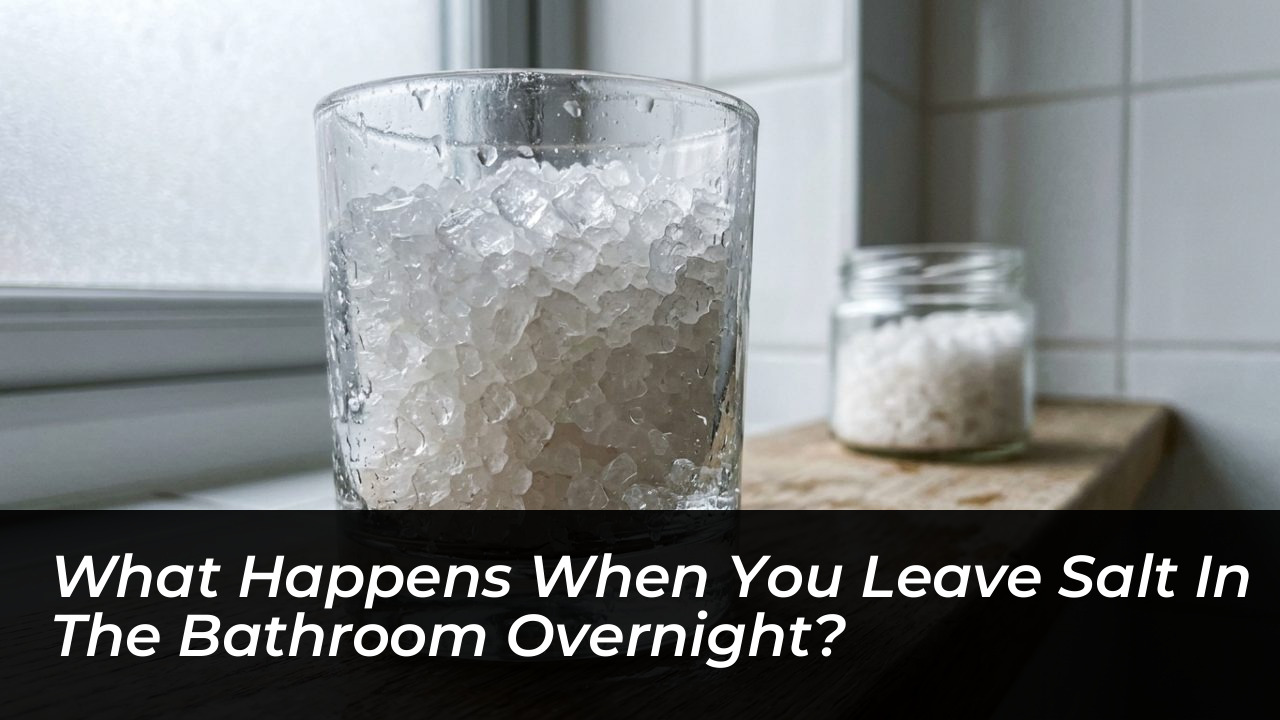

Leaving a glass of salt on a bathroom shelf causes the dry crystals to steadily bind water molecules from the surrounding air. The salt gradually clumps and turns damp. Because kitchen salt is naturally hygroscopic, it acts as a zero-cost, passive sponge for excess humidity in tight spaces. This gives you a quick visual indicator of your room’s baseline moisture levels. The trick is growing popular among households looking for simple, chemical-free living hacks, but the real science reveals strict physical limitations. Knowing what happens to those crystals overnight explains why the method works wonders in a cabinet under the sink, yet struggles against the steam of a hot shower.
The Science of How Salt Traps Ambient Humidity
Common salt pulls water vapor directly out of the atmosphere through a physical process known as hygroscopy. When coarse salt-such as rock salt or kosher salt-sits in an open container in a humid room, the exposed surface area of the mineral attracts ambient moisture. The grains dissolve slightly and fuse into a hardened mass. Commercial disposable moisture absorbers rely on this exact scientific principle, though they typically use calcium chloride, an industrial compound with a vastly higher absorption capacity than basic kitchen sodium chloride.
Even so, ordinary kitchen salt offers an accessible, electricity-free way to monitor stagnant humidity in compact, unventilated spaces. Examples include powder rooms, linen closets, or beneath the sink vanity. Commercial chemical absorbers work on the same principle as kitchen salt, but standard sodium chloride operates at a much slower absorption rate in high-humidity zones. The rate at which the salt hardens tells a diagnostic story about the room itself. When a freshly prepared glass solidifies within just a few days, it signals persistent moisture accumulation that requires structural airflow intervention.
How to Set Up the Salt Trick at Home
Getting the best results from this method requires coarse grains rather than finely ground table salt. Larger crystals resist immediate liquefaction and allow air to circulate through the container. Follow these steps for an optimal setup:
- Fill a clean, dry glass or small mason jar roughly two-thirds full with coarse rock salt or kosher salt.
- Place the container on an elevated shelf or vanity counter, keeping it well clear of direct shower spray and out of reach of pets or small children.
- Optional: Stir in two to three drops of pure essential oil, such as eucalyptus or lavender, turning the salt into a passive scent diffuser.
- Stir the crystals once a week to expose fresh, dry surfaces to the air. Discard the batch once it turns visibly wet or rock-hard.
While this simple setup handles stale odors and slight dampness in enclosed corners, relying on it to safeguard your bathroom against heavy mold reveals a major performance gap.
Testing the Numbers: Salt vs. Active Dehumidification
Independent testing reveals a stark contrast between passive mineral absorption and mechanical extraction. In lab testing conducted by the consumer advocacy group CHOICE, a standard calcium chloride chemical absorber collected roughly 2 ml of water per hour in an environment with 65% relative humidity. Meanwhile, electric dehumidifiers pulled between 113 ml and 388 ml of water from the air per hour under similar conditions.
Because common grocery salt is significantly less hygroscopic than calcium chloride, its hourly moisture collection rate is even lower. A single glass simply lacks the mechanical power to strip gallons of airborne water vapor generated by a running shower.
| Moisture Removal Method | Performance Profile |
|---|---|
| Glass of Coarse Salt | Pulls trace moisture; serves as visual indicator; zero operating cost |
| Chemical Absorber (Calcium Chloride) | Removes ~2 ml of water per hour; passive chemical reaction |
| Electric Dehumidifier | Removes 113 to 388 ml of water per hour; active mechanical extraction |
| Standard Exhaust Fan | Evacuates humid air volume continuously; primary mold prevention tool |
What Kitchen Salt Cannot Fix
A widespread misconception is that placing salt bowls around a bathroom can eliminate existing mildew or purify contaminated indoor air. A glass of salt does not kill mold spores, clean embedded grout stains, or solve hidden plumbing leaks behind drywall. The EPA advises homeowners to keep indoor relative humidity strictly between 30% and 50%-and never consistently above 60%-to actively prevent mold reproduction. When dealing with heavy steam buildup, passive salt dishes must take a back seat to proven ventilation mechanics.
The Essential Routine for a Dry, Mold-Free Bathroom
To keep humidity within safe thresholds, combine simple passive indicators with proven mechanical ventilation habits every day:
- Turn on the mechanical exhaust fan before stepping into the shower and let it run for at least 20 minutes after you turn off the water.
- Leave the bathroom door cracked open or open a window immediately after showering to create cross-ventilation.
- Use a squeegee on wet glass doors and tile walls, directing excess water down the drain before it evaporates into the room.
- Hang wet bath towels to dry in a well-ventilated bedroom or laundry area rather than letting them trap humidity in the bathroom.
A glass of coarse salt remains one of the simplest, lowest-cost tools to flag damp spots in neglected cabinets, closets, and powder rooms. Pair it with consistent ventilation habits to protect your walls, grout, and ceilings from persistent moisture damage.
Frequently Asked Questions
Can I use fine table salt instead of coarse salt?
Fine table salt lacks the surface area structure of coarse salt. It tends to liquefy much too quickly and clump into a solid, impenetrable block, restricting airflow through the container.
Does leaving salt out overnight eliminate bathroom odors?
Salt can absorb minor trace odors associated with stagnant humidity, especially when combined with a few drops of essential oil. However, it does not replace proper cleaning or heavy-duty odor elimination.
How often should I change the salt in my bathroom?
You should replace the salt once it has completely hardened into a solid block or shows visible liquid accumulation at the bottom of the container. This usually happens within one to two weeks depending on room humidity.
Is leaving a glass of salt dangerous for pets?
Small amounts are generally harmless, but you should avoid leaving an open container of salt where cats or dogs can ingest large quantities. Excessive sodium intake can make pets sick.
Will a bowl of salt prevent mold on my shower walls?
No. A bowl of salt cannot handle the massive volume of water vapor generated by a hot shower. Preventing mold requires active ventilation, exhaust fans, and maintaining humidity below 60%.