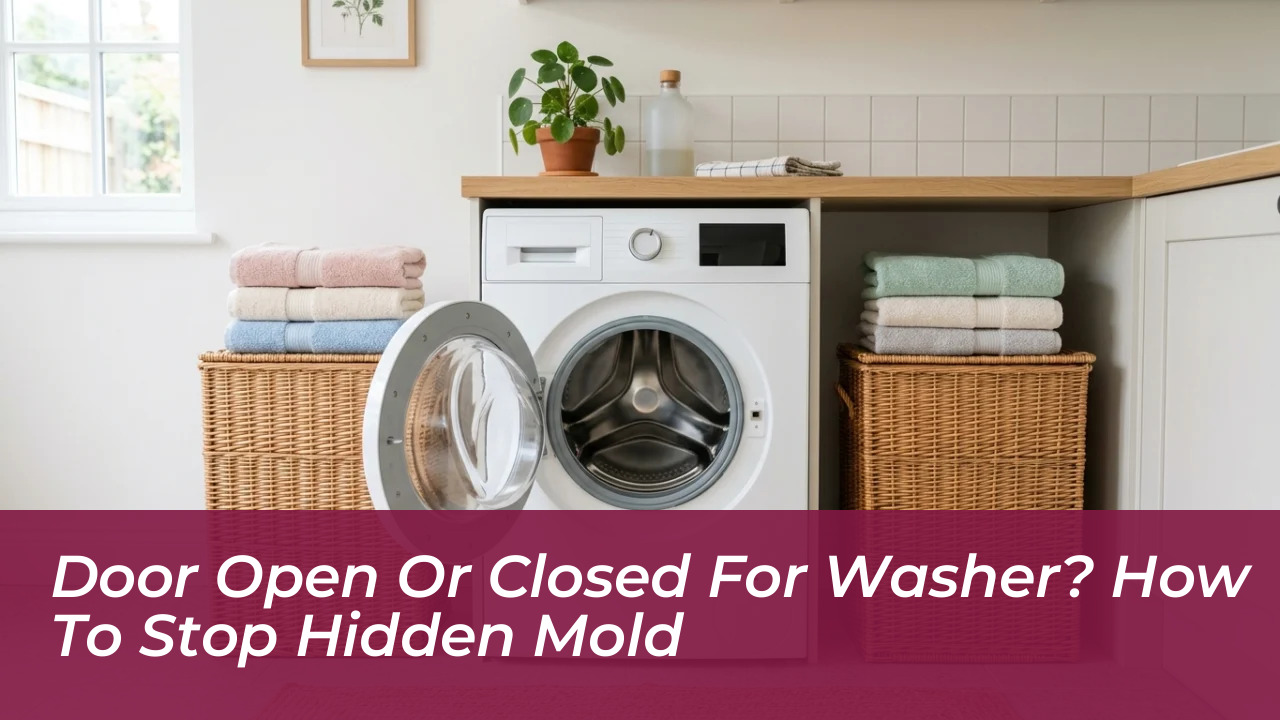

Leaving the door open after running a wash cycle is the single most effective choice for maintaining your washing machine. Sealing it shut traps lingering moisture inside the drum and creates the ideal breeding ground for stubborn mold and sour odors. While many homeowners instinctively close the appliance to keep the laundry room neat, locking in damp air triggers bacterial blooms within hours. Modern high-efficiency appliances use airtight rubber gaskets to prevent water leaks during operation. However, that same watertight seal turns the interior into an artificial greenhouse the moment a cycle finishes. Understanding how moisture behaves inside the drum reveals why this simple daily habit dictates the lifespan of your appliance and the cleanliness of your clothes.
The Physics of Trapped Moisture Inside Appliance Drums
Every standard wash cycle leaves residual water clinging to the stainless steel drum, the dispenser drawer, and the folds of the rubber door boot. When the door remains shut, evaporation cannot occur. The relative humidity inside the sealed chamber stays near 100 percent, creating prime conditions for mildew spores to germinate on damp surfaces.
Over time, lingering moisture combines with detergent film and fabric softener residue, producing a slick organic layer known as biofilm. This buildup embeds itself deep inside drainage channels and behind the outer wash tub where standard rinse cycles never reach. What begins as faint dampness quickly transforms into a persistent rotten smell that transfers directly into your freshly washed fabrics.
- Traps warm water vapor, leading directly to black mold and sour mildew odors.
- Promotes bacterial growth inside internal water injection lines and detergent channels.
- Degrades the elasticity of rubber door seals through chemical and biological breakdown.
Myth Versus Reality: Does Keeping the Door Open Damage the Hinges?
A widespread misconception suggests that leaving the appliance door open puts unnecessary strain on the hinge assembly or invites household dust inside. In reality, appliance hinges are engineered to support the dynamic load of a swinging door and the weight of glass panels without sagging. The minimal clearance needed for airflow exerts zero mechanical stress on the frame.
Conversely, the damage caused by keeping the door sealed is entirely chemical and biological. Acidic residues and fungal growth break down the flexibility of rubber gaskets, causing premature cracking and eventual leaks. Proper washing machine maintenance costs nothing, whereas replacing a compromised door seal or motor housing demands significant time and expense.
Essential Post-Wash Routine to Prevent Mold and Odors
Proper airflow is the first line of defense. Combining it with a quick maintenance routine guarantees an odor-free machine for years. Taking sixty seconds after the final spin cycle eliminates the water pools where bacteria gather first.
Recommended Post-Wash Steps
- Leave the door cracked open: Keep the door open at least a few inches for two to four hours, or permanently when the machine is idle.
- Prop open the detergent drawer: Slide the dispenser tray out slightly so incoming water channels can dry thoroughly.
- Wipe the rubber gasket: Run a clean microfiber cloth along the lower folds of the seal to absorb standing water and trapped lint.
- Inspect the drainage filter: Check the lower maintenance panel periodically to clear trapped debris that obstructs proper drainage.
Natural Cleaning Solutions for Existing Odor
If your machine already emits a musty smell, routine drying alone will not eliminate established mold colonies. Running an empty maintenance cycle with hot water and distilled white vinegar strips away accumulated soap scum and neutralizes organic odors without degrading internal plastic hoses. Pairing this with fresh citrus peels helps cut grease and leaves a neutral scent throughout the drum.
Maintaining basic appliance hygiene protects your wardrobe investment and prevents cross-contamination across delicate fabrics. Consistency remains the decisive factor in keeping mechanical components working as intended. A simple shift in your laundry habits can extend the operating life of your appliance by several years. Inspect the rubber folds of your machine today to catch hidden moisture before mildew takes hold.
Frequently Asked Questions About Washing Machine Ventilation
Should I leave my washing machine door open or closed between cycles?
You should leave your washing machine door slightly ajar between cycles. Propping it open by just a few inches allows air to circulate, evaporating residual moisture and preventing the growth of mold and mildew inside the drum.
Does leaving the washing machine door wide open damage the hinges?
Leaving the door fully extended wide open can place unnecessary strain on heavy glass doors over time. However, leaving the door cracked ajar by a few inches provides excellent ventilation without putting any physical stress on the hinge mechanism.
Why do front-load washers develop mold faster than top-load washers?
Front-load washers rely on a watertight rubber gasket to prevent leaks during high-speed spin cycles. This gasket features deep folds that trap standing water, lint, and detergent residue, creating an ideal environment for mold when the door is sealed shut.
How long should I leave the washer door open after a cycle?
As a general rule, leave the door and detergent drawer open for at least two to four hours after your final load. Alternatively, keep them slightly ajar permanently when the machine is not in use to ensure continuous air exchange.
Can running hot water cycles eliminate musty odors?
Running a monthly maintenance cycle with hot water and a cup of white vinegar helps dissolve accumulated soap scum, bacteria, and mold spores hiding in internal hoses and behind the wash tub.